
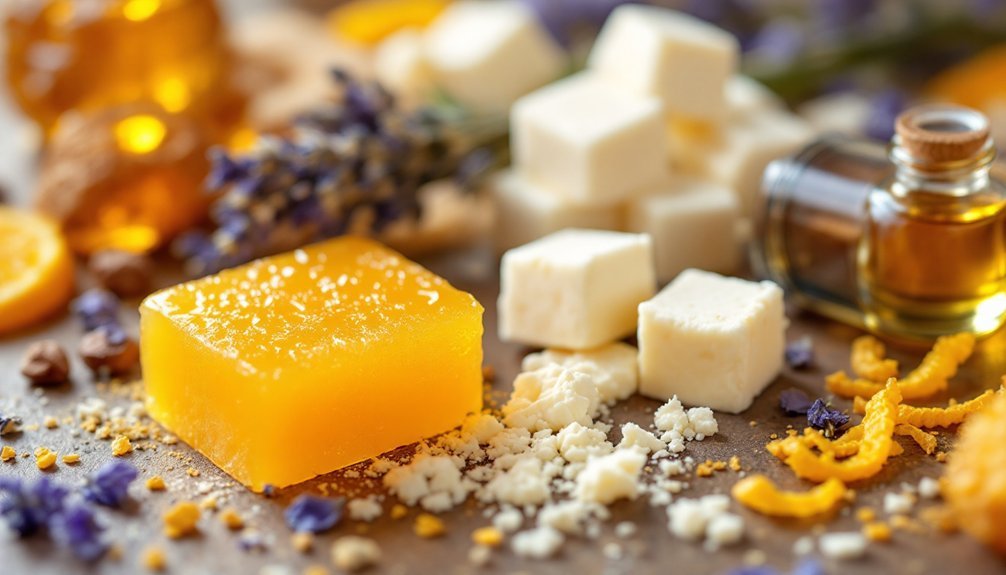
A rich solid cologne combines beeswax or candelilla wax as your base, nourishing carrier oils like jojoba and fractionated coconut oil, and essential oils for fragrance. You'll need moisturizing elements like shea butter or cocoa butter for skin benefits, plus natural fixatives to lock in scent. The magic happens when you blend these ingredients using the 30-50-20 ratio of top, middle, and base notes – there's an art and science to crafting the perfect balance.
The Essential Base Components of Solid Cologne
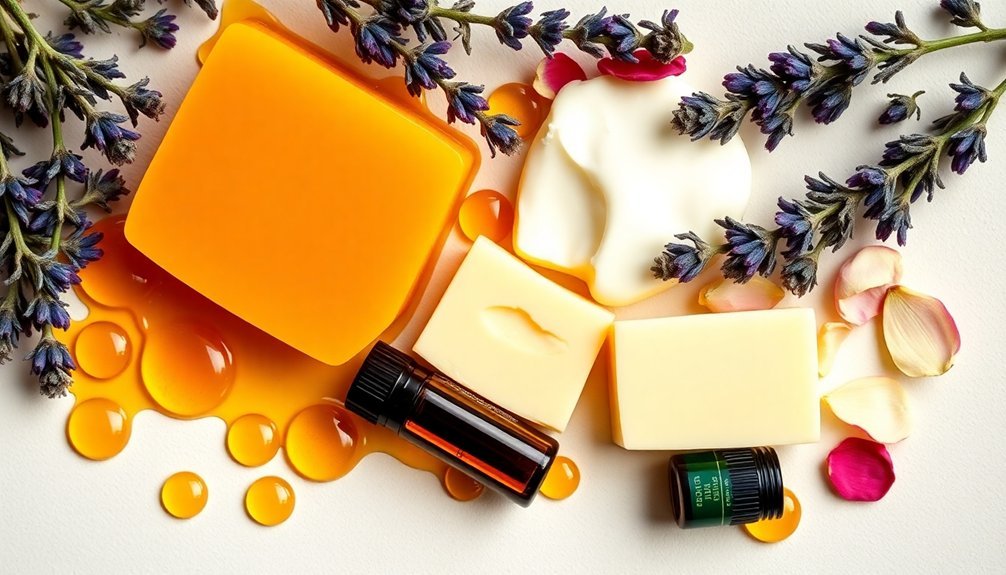
Solid cologne craftsmanship begins with selecting the right base components.
You'll need beeswax as your primary structural element, which provides the firm foundation necessary for a stable product. If you're seeking a vegan alternative, candelilla wax offers similar properties.
To create a rich, moisturizing base, you'll want to incorporate shea butter and shea seed oil, which not only contribute to the cologne's nourishing qualities but also help with smooth application.
Jojoba oil serves as an essential carrier oil, effectively dissolving and distributing your chosen fragrance oils throughout the mixture. A double boiler system is essential for gently melting and combining these ingredients.
For additional skin benefits, you can include cocoa seed butter, which adds extra nutrients and helps maintain the cologne's consistency.
These components work together to create a solid cologne that's both effective and skin-friendly.
Natural Carrier Oils That Enhance Longevity
Carrier oils form the backbone of a long-lasting solid cologne formula. When you're selecting oils for your solid cologne, you'll want to focus on those that excel at fragrance retention.
Jojoba oil stands out as a top choice because it mimics your skin's natural oils, helping lock in scents effectively.
You'll find that fractionated coconut oil and grapeseed oil offer excellent absorption while maintaining a lightweight feel.
For enhanced moisturizing benefits that keep fragrances closer to your skin, consider incorporating apricot kernel or argan oil. These oils won't compete with your chosen scent since they maintain a neutral profile.
To maximize longevity, you'll want to match the oil to your skin type – for instance, choosing grapeseed oil if you have oily skin. Using oils as a base allows for gradual scent release throughout the day, unlike alcohol-based sprays that evaporate quickly.
Key Essential Oils for Masculine Fragrances
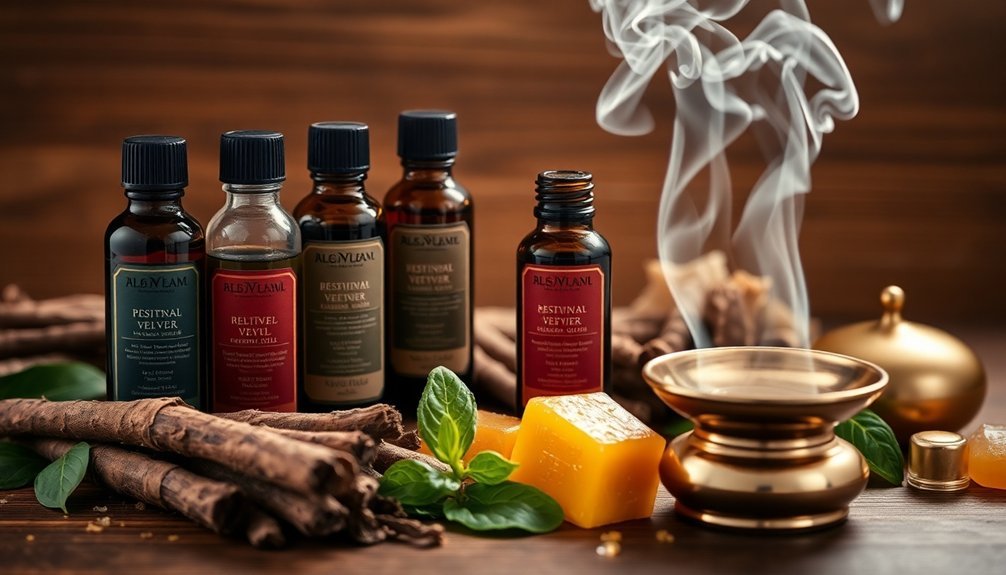
Masculine fragrances rely heavily on the strategic selection of essential oils to create depth and character. You'll find that woody notes like cedarwood and sandalwood form the foundation, while citrus elements like bergamot add invigorating top notes. For a rich, enduring scent, consider incorporating earthy base notes such as patchouli or vetiver. Many of these oils can be found in CleanScent Fragrance line offerings.
| Essential Oil | Character | Best Used As |
|---|---|---|
| Cedarwood | Woody, Grounding | Base Note |
| Bergamot | Fresh, Citrusy | Top Note |
| Sandalwood | Warm, Deep | Base Note |
| Frankincense | Resinous, Woody | Middle Note |
| Patchouli | Earthy, Herbal | Base Note |
When blending these oils, follow IFRA guidelines and allow your creation to mature for several weeks. This aging process enhances the stability and complexity of your solid cologne, ensuring a well-rounded masculine fragrance that lasts throughout the day.
The Role of Beeswax in Solid Cologne Making
Building upon our exploration of masculine fragrances, let's focus on the structural foundation that brings solid cologne to life – beeswax. This natural ingredient plays an essential role in transforming liquid fragrances into portable, solid form while maintaining the integrity of your chosen scent.
Beeswax transforms liquid fragrances into portable solid colognes while preserving their distinctive character and sophisticated scent profiles.
When you're crafting solid cologne, beeswax serves as the primary hardening agent, working alongside carrier oils to create the ideal consistency.
You'll need to carefully balance these components using a double boiler method for best results.
- Use a 2:1 to 4:1 ratio of beeswax to carrier oils, depending on your desired firmness.
- Melt beeswax first before adding other ingredients to prevent uneven mixing.
- Consider your climate when adjusting ratios – warmer regions require more beeswax for stability.
Understanding Fragrance Notes and Layering
While crafting the perfect solid cologne requires quality base ingredients, understanding fragrance notes and how they work together forms the heart of creating a memorable scent.
You'll experience this through the fragrance pyramid, where top notes hit you first with light, citrusy scents that evolve into deeper middle notes of florals or spices. Base notes anchor the fragrance with rich, woody elements that last the longest on your skin.
The key to a well-balanced solid cologne lies in how these layers interact. Think of it as a symphony where each note plays its part at the right time.
You'll find that quality solid colognes blend natural essential oils with carefully selected aromatic compounds to create a harmonious scent that unfolds gradually throughout the day.
Blending Techniques for Lasting Scents
Mastering the art of blending fragrances requires both technical skill and an understanding of scent chemistry.
You'll need to balance volatile and less volatile molecules while incorporating fixatives like orris root and vanilla to stabilize your creation.
When you're crafting a solid cologne, follow the classic 30-50-20 ratio of top, middle, and base notes for ideal longevity.
- Start with precise measurements, testing in small batches using 5-drop increments
- Layer your scents from base notes upward, allowing each layer to settle
- Let your blend mature for several days before making final adjustments
Remember to record all your measurements as you experiment.
Your solid cologne's success depends on the harmonious interaction between ingredients rather than individual components working alone.
Natural Vs Synthetic Ingredients in Men's Cologne

Understanding the distinction between natural and synthetic ingredients marks an essential decision point in crafting solid cologne. Natural components like essential oils and botanical extracts offer authentic scents and skin benefits, while synthetic compounds provide consistency and longevity.
Choosing between natural and synthetic ingredients defines the character of your solid cologne, balancing authenticity with performance.
You'll find that natural ingredients such as beeswax, shea butter, and jojoba oil contribute moisturizing properties alongside their fragrance roles. These elements appeal to those seeking skin-friendly options and sustainable choices.
However, synthetic alternatives often prove more cost-effective and readily available, ensuring consistent scent profiles across production batches.
Your choice between natural and synthetic ingredients may depend on personal preferences and priorities. While natural ingredients deliver nuanced scent evolution and potential skin benefits, synthetic components offer innovative fragrance possibilities and extended wear time.
Moisturizing Elements for Skin-Friendly Formulas
You'll find that solid colognes enriched with natural butters and waxes like shea butter and beeswax create a protective, moisturizing base for your skin.
Nourishing carrier oils, including jojoba and coconut oil, penetrate deeply to provide lasting hydration while helping to distribute the fragrance evenly.
The addition of carefully selected essential oil blends not only contributes to the scent profile but also offers therapeutic benefits that keep your skin healthy and well-moisturized throughout the day.
Natural Butters and Waxes
Natural butters and waxes form the foundation of any premium solid cologne, providing both structural integrity and skin-nourishing benefits.
You'll find luxurious ingredients like shea butter delivering essential vitamins and fatty acids, while cocoa butter improves skin elasticity. The combination of natural waxes, such as beeswax and candelilla, creates the perfect consistency while extending fragrance longevity.
- Shea and mango butters work together to lock in moisture and protect your skin's natural barrier.
- Beeswax and carnauba wax provide stability at different temperatures, ensuring your cologne maintains its form.
- The mix of butters and waxes creates a non-greasy application that's perfect for daily use.
These natural ingredients deliver a sophisticated blend of functionality and skin care, making your solid cologne both effective and nourishing.
Nourishing Carrier Oils
Carrier oils serve as the liquid foundation of rich solid colognes, complementing the structural elements of butters and waxes.
You'll find jojoba oil particularly effective as it mirrors your skin's natural oils, ensuring ideal fragrance retention and absorption. For a lightweight yet moisturizing base, you can rely on sweet almond oil's vitamin-rich properties or fractionated coconut oil's non-greasy finish.
If you're seeking enhanced scent longevity, consider using argan oil's nutrient-dense composition or grapeseed oil's neutral profile. These oils won't compete with your chosen fragrances.
For sensitive skin, you'll appreciate apricot kernel oil's gentle nourishment and silky texture. Each carrier oil brings unique benefits, from avocado oil's deep moisturizing properties to mango seed oil's tropical undertones, allowing you to create the perfect solid cologne base.
Hydrating Essential Oil Blends
While creating a luxurious solid cologne, incorporating hydrating essential oil blends enhances both fragrance and skin benefits.
You'll find that jojoba oil serves as an excellent carrier base, providing a lightweight foundation that won't leave your skin feeling greasy.
When combined with essential oils like geranium and lavender, you're not just crafting a fragrance but also promoting skin wellness and emotional balance.
- Blend geranium and lavender oils for a calming effect that supports skin health
- Add cedarwood for a grounding woody note that offers additional skin benefits
- Include ylang ylang to achieve a floral dimension while boosting hydration
Remember to maintain proper concentration ratios, typically keeping essential oils between 5-15% of your total formula for a balanced and effective cologne.
The Art of Balancing Top, Middle, and Base Notes
Creating a perfectly balanced solid cologne requires understanding the intricate relationship between fragrance notes.
You'll want to start with top notes like citrus essential oils, making up 20-40% of your formula to achieve that initial fresh burst. These blend into your middle notes – typically floral scents like lavender or geranium – which should comprise 50-75% of the mix for a harmonious core.
Base notes, though only 5-10% of the composition, are vital for longevity. Earthy scents like vetiver or sandalwood work well here.
You can customize your blend by adjusting these proportions and mixing natural essential oils with synthetic compounds for consistency. Unlike liquid perfumes, solid colognes don't require alcohol, making them gentler on your skin while maintaining their complex scent profile.
Fixatives and Preservatives in Solid Cologne

When creating a solid cologne, you'll need to choose between natural fixatives like benzoin and musk or synthetic options such as Ambroxan and Galaxolide.
While natural fixatives offer unique, profound scents, synthetic alternatives provide consistent performance at a lower cost.
You can extend your cologne's fragrance life naturally by combining fixatives with ingredients like beeswax and shea butter, which help lock in the scent while nourishing your skin.
Natural Vs Synthetic Fixatives
Understanding the differences between natural and synthetic fixatives in solid cologne can help you make informed choices about your fragrance preferences.
While natural fixatives like essential oils, plant resins, and botanical extracts offer sustainable and eco-friendly options, synthetic fixatives provide consistent, long-lasting results.
You'll find that each type has its unique advantages and applications.
- Natural fixatives include plant-derived ingredients like lavender, rosemary, and conifer extracts, which work harmoniously with your skin but may offer shorter fragrance duration.
- Synthetic fixatives, such as aromatic compounds and synthetic musks, deliver predictable performance and extended longevity.
- Cost considerations often influence manufacturers' choices, as synthetic options typically prove more economical for large-scale production while natural ingredients command premium prices.
Extending Fragrance Life Naturally
To extend your solid cologne's fragrance naturally, you'll need a strategic combination of fixatives and preservatives that work in harmony.
Start with natural resins like frankincense and benzoin, which anchor your scent while adding depth. These powerful fixatives work alongside beeswax, which creates a protective barrier that prevents quick fragrance absorption.
Include natural oils such as jojoba and sweet almond to regulate absorption rates and enhance longevity. You can strengthen your cologne's staying power with vetiver or Tolu balsam, while essential oils like cedarwood and sandalwood provide lasting base notes.
For peak results, let your mixture mature through proper blending and aging. This process stabilizes the scent profile and guarantees your natural ingredients work together to maintain fragrance integrity throughout the day.
The Science Behind Scent Combinations
The complex art of combining scents relies heavily on scientific principles that govern how different fragrances interact.
You'll find that creating the perfect blend requires understanding how top, middle, and base notes work together in what perfumers call the fragrance pyramid. This structure guarantees your cologne delivers a lasting, evolving experience throughout the day.
- Select your base notes first (like musk or amber) as they'll anchor the entire fragrance.
- Layer middle notes (such as florals or spices) to create depth and bridge the extremes.
- Top off with lighter scents (typically citrus or herbal) that provide the initial impact.
When you're working with solid cologne formulas, the wax-to-oil ratio becomes vital, as it affects how these scent combinations are released onto your skin and how long they'll last.
Frequently Asked Questions
How Long Does a Typical Solid Cologne Last Before Needing Replacement?
You'll typically need to replace your solid cologne every 3-6 hours for ideal scent. It's easy to reapply throughout the day, and the compact form makes it convenient to carry around.
Can Solid Cologne Stain Clothing During Application?
While solid cologne rarely stains, you'll want to apply it directly to your skin, not clothing. If you're careful and let it absorb before dressing, you shouldn't experience any staining issues.
What's the Best Temperature for Storing Solid Cologne?
You'll want to store your solid cologne at room temperature, away from direct sunlight and heat above 85°F. Keep it in a cool, dry place and avoid freezing temperatures to maintain its stability.
Are Solid Colognes Safe to Use During Air Travel?
Yes, you'll find solid colognes are perfectly safe for air travel. They're TSA-compliant, won't leak in your bag, and come in compact, spill-proof containers. You can easily apply them during flights.
Can I Melt and Reshape My Solid Cologne if It Breaks?
Yes, you can melt and reshape broken solid cologne using a double boiler. Simply heat it gently until it's liquid, pour into your container, and let it cool completely before using.




Leave a Reply