
You'll find three exceptional fragrance wheel combinations that create stunning perfumes. Pair floral with woody notes to achieve an elegant depth that balances bright and deep elements. Combine citrus with fresh families for an invigorating blend of zesty and herbal accords. Mix spicy with gourmand notes to craft warm, complex fragrances featuring vanilla and cinnamon. These foundational pairings open the door to countless creative possibilities in perfume making.
Complementary Fragrance Pairings Across The Wheel

When creating unique fragrances, understanding complementary pairings on the fragrance wheel opens up endless possibilities for crafting complex and enthralling scents.
You'll find that fragrance families positioned opposite each other create the most intriguing combinations. Try pairing floral scent with ozonic notes for a new, vibrant blend, or combine aromatic notes like mint with warm spices for an invigorating experience.
For depth and comfort, mix woody notes such as sandalwood with gourmand top notes like vanilla.
Citrus notes blend beautifully with herbal elements, creating invigorating yet grounded unique perfumes.
The beauty of complementary blends lies in their ability to balance and enhance each other.
Don't be afraid to experiment with unusual pairings – combining fruity with earthy notes can result in complex blends that truly stand out.
Essential Base-to-Top Note Combinations
To create a well-structured perfume, mastering the ratio of 30% top notes, 50% middle notes, and 20% base notes serves as your foundation for success.
When exploring fragrance families on the fragrance wheel, you'll find that complementary notes create the most compelling fragrance blends.
Start by selecting your base notes, like sandalwood or vanilla, for anchoring the fragrance. These provide depth and longevity to your creation.
Then, choose middle notes such as jasmine or lavender that'll harmonize with your base while supporting your top notes.
Finally, add bright top notes like bergamot or lemon to create that initial burst of freshness.
In perfume making, you'll want to guarantee each note complements the others while maintaining balance across the layers.
Consider pairing floral top notes with woody base notes for a sophisticated blend.
Signature Blends Using Adjacent Scent Families
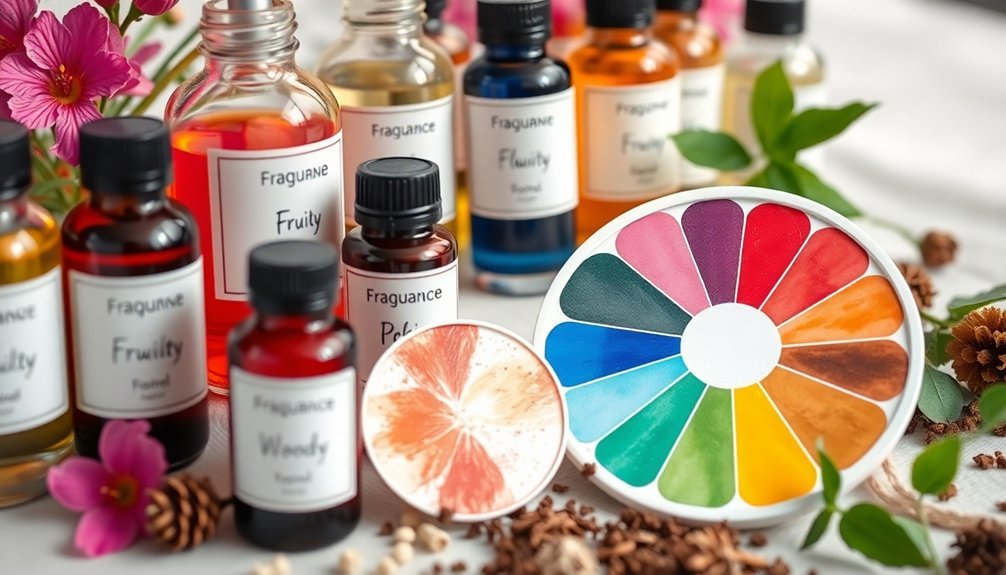
Building on your understanding of note combinations, adjacent scent families on the fragrance wheel offer unique opportunities for creating distinctive signature blends.
You'll find that combining Floral and Woody notes creates harmonious fragrances where bright floral elements dance with deep woody undertones.
When you pair Citrus and Fresh families, you'll achieve invigorating scents that merge zesty top notes with revitalizing herbal accords.
For a cozy experience, try blending Spicy and Gourmand notes, featuring warm elements like vanilla and cinnamon.
If you're seeking luxury, combine Floral and Amber notes to create an opulent fragrance that balances delicate florals with amber's warmth.
For masculine scents, consider pairing Aromatic and Woody notes – the herbal qualities complement the rich woody base perfectly.
Frequently Asked Questions
What Fragrance Blends Well Together?
You'll find that floral-spicy blends like jasmine and clove complement each other, while woody-amber combinations like sandalwood and vanilla create depth. Citrus notes brighten patchouli, and fresh greens pair perfectly together.
What Is the 30/50/20 Rule for Perfume?
The 30/50/20 rule helps you create balanced perfumes by combining 30% top notes (initial scent), 50% middle notes (main body), and 20% base notes (lasting foundation) in your fragrance blends.
What Is the Best Mixture for Perfume?
You'll achieve the best perfume mixture by combining 20-30% essential oils with 70-80% alcohol and a small amount of water. This ratio guarantees your fragrance has ideal strength, longevity, and diffusion characteristics.
What Is the Most Attractive Smell in Perfume?
You'll find vanilla, lavender, and citrus are widely considered the most attractive perfume scents. When combined with floral notes like jasmine or rose, and warm base notes like sandalwood, they're particularly appealing.
In Summary
You've now got the key combinations to create amazing custom fragrances using the wheel's proven pairings. Whether you're blending complementary notes from opposite sides, building complex base-to-top combinations, or working with adjacent scent families, you'll find endless possibilities. Don't be afraid to experiment – start with these foundational blends and let your nose guide you to your perfect signature scent.




Leave a Reply