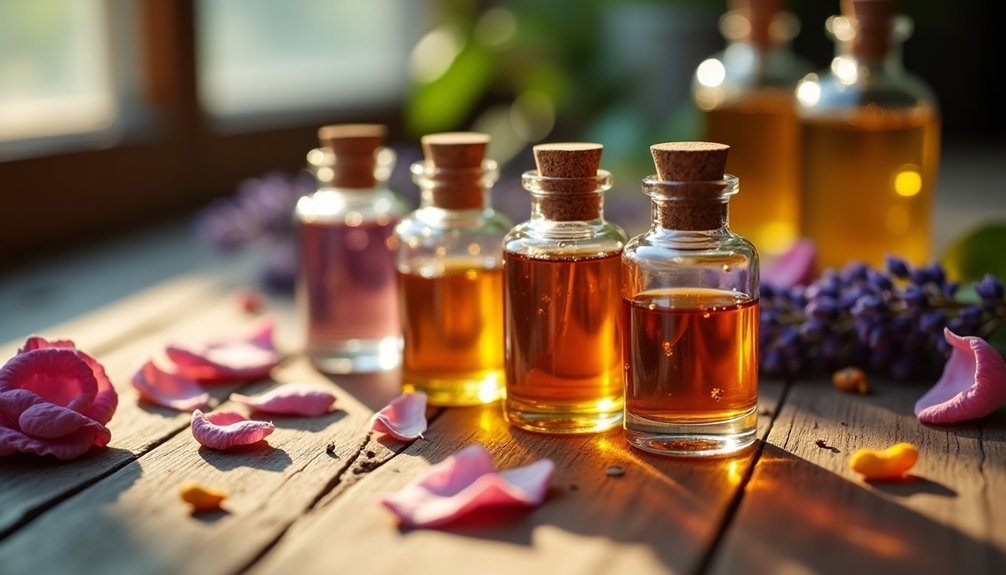
Natural fixatives are essential for creating long-lasting perfumes that maintain their scent profile. You'll find vanilla, patchouli, sandalwood, benzoin, and frankincense to be the most effective options for anchoring your fragrance blends. Start with 3-5% fixatives in your base notes, following a 3:2:1 ratio for top, middle, and base notes. Mix with carrier oils like sweet almond or jojoba for best results. The art of perfume-making opens up endless possibilities when you understand these foundational elements.
Understanding Essential Oil Fixatives and Their Role in Perfumery
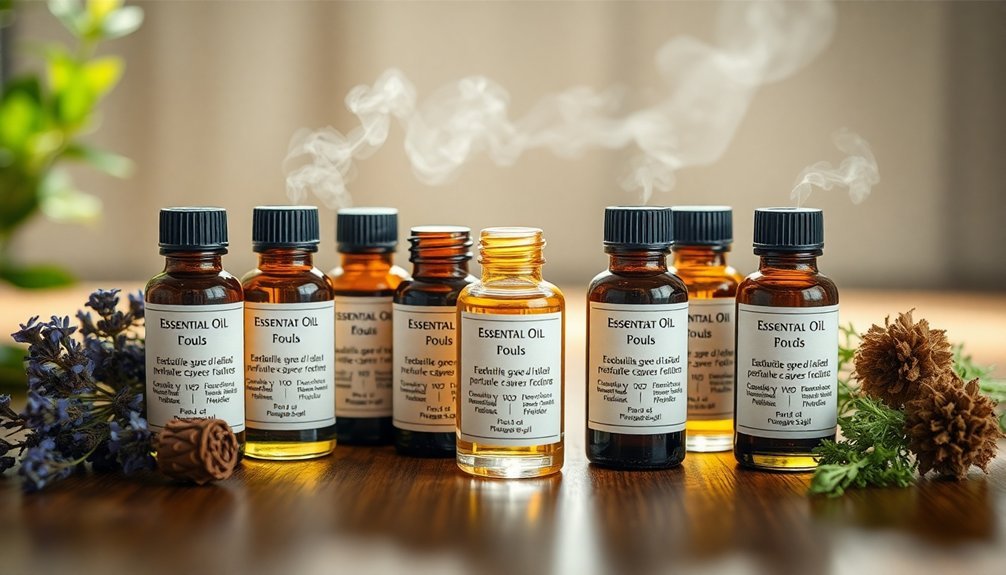
When creating perfumes, understanding fixatives is vital for achieving long-lasting fragrances that maintain their integrity throughout the day.
These specialized substances work by slowing down the evaporation of volatile components in your perfume blend, effectively anchoring the scent to your skin.
You'll find that fixatives do more than just extend fragrance life – they add depth and complexity to your perfume's profile.
They work by equalizing vapor pressures and stabilizing volatile compounds, ensuring a balanced release of scents over time.
Non-volatile fixatives like benzoin, musk, and labdanum are particularly effective due to their high-molecular structures and mild aromas.
They're compatible with other fragrances while providing the stability needed for a lasting impression.
Whether you're working with natural resins, balsams, or essential oils, fixatives are essential for creating professional-quality perfumes.
Arbitrary fixatives like patchouli and oakmoss contribute unique sensory elements while enhancing the overall fragrance composition.
Top 5 Natural Fixatives for Homemade Perfume Blends
Creating your own perfume blends becomes more rewarding once you master these five natural fixatives that consistently deliver outstanding results.
For top-tier longevity, you'll want to incorporate vanilla, patchouli, and sandalwood as your core fixatives, while benzoin and frankincense round out the perfect quintet for homemade perfumes.
- Start with vanilla as your foundation – it's sweet, creamy, and exceptionally stable.
- Layer patchouli for its rich, earthy properties that anchor volatile oils.
- Add sandalwood to achieve that smooth, woody stability that professional perfumers love.
Unlike synthetic alternatives, these natural fixatives offer less odor intensity while maintaining their unique characteristics in your blend.
When blending these fixatives, remember the 3:2:1 ratio rule for top, middle, and base notes.
You'll find these natural options not only extend your fragrance's life but also contribute their own beautiful aromatic qualities to your final creation.
How to Choose the Right Fixative for Your Fragrance
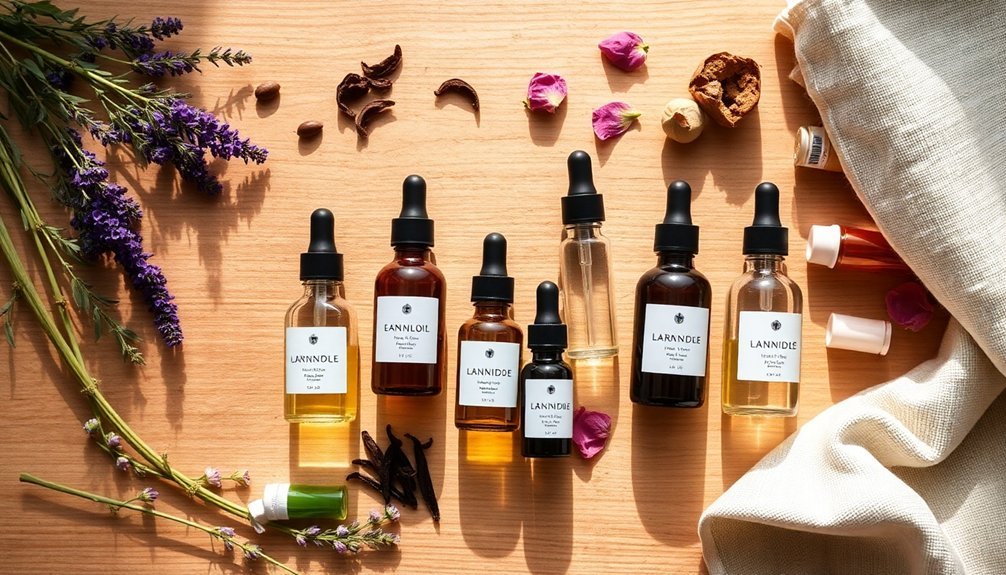
Selecting the perfect fixative for your fragrance requires understanding how different materials interact with your chosen scent profile.
For top notes, you'll want to use lighter fixatives like Hedione or Iso E Super to maintain their delicate character while extending their presence.
When working with middle notes, particularly florals and spices, consider natural resins like benzoin or styrax to stabilize these heart accords.
For base notes, opt for rich fixatives such as patchouli, vetiver, or sandalwood to create a solid foundation. Using anchors lighter notes, cedarwood essential oil works exceptionally well for stabilizing volatile components in your blend.
Remember that your chosen fixative shouldn't overpower the fragrance but rather enhance its longevity and balance.
While fixatives will reduce evaporation rates, they might slightly decrease projection, so you'll need to test different combinations to find the right balance for your desired outcome.
Mixing Ratios and Application Techniques for Essential Oil Fixatives
The precise ratios and application methods of essential oil fixatives determine your fragrance's success.
You'll want to use 3-5% fixatives in your base notes while following a 3:2:1 ratio for top, middle, and base notes. For the best results, guarantee fixatives make up 10-20% of your total blend to effectively slow down evaporation.
When applying your blend, follow these essential guidelines:
- Dilute fixatives to 1-3% for general use, increasing to 5% for therapeutic purposes
- Mix with carrier oils like sweet almond or jojoba to prevent skin irritation
- Let your blend rest for 24-48 hours to allow the constituents to meld properly
Remember to be cautious with sun-sensitive oils and always start with smaller amounts when testing new combinations.
Creating Long-Lasting Perfumes With Natural Fixative Combinations
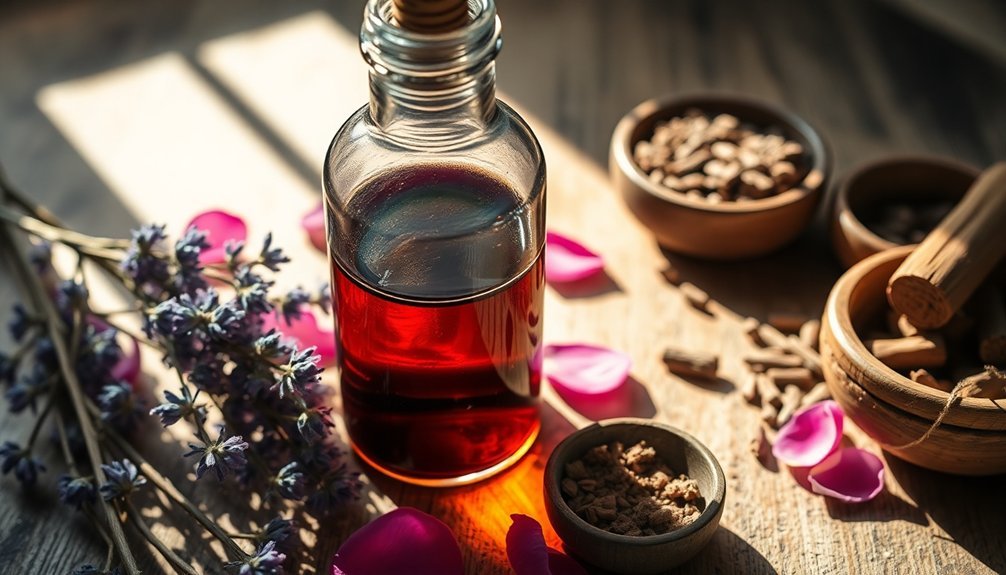
You'll find that combining patchouli and sandalwood creates an exceptionally strong fixative base that anchors your fragrance for hours longer than using either one alone.
When layering natural fixatives, start with heavier base notes like myrrh or frankincense, then build up to lighter ones like cedarwood or vanilla to create a well-rounded foundation that holds your fragrance notes in place.
To mix your base notes effectively, use a 3:2:1 ratio of primary fixative to secondary fixative to accent fixative, ensuring each layer has time to properly bond before adding the next.
Powerful Patchouli-Sandalwood Blend
When creating long-lasting perfumes, combining patchouli and sandalwood delivers one of the most powerful natural fixative blends available.
You'll find this dynamic duo works exceptionally well at stabilizing fragrances while adding depth and complexity to your compositions. Their complementary properties help reduce volatility and enhance the longevity of your perfume on the skin.
For the best results with this blend, remember these key points:
- Start with a 3-5% concentration of the patchouli-sandalwood combination in your fragrance blend.
- Layer these fixatives in your base notes, then build other scents around them.
- Test the blend with compatible essential oils like cedarwood, frankincense, or vanilla to create unique accords.
You can customize your blend further by experimenting with myrrh or galbanum for added complexity and staying power.
Natural Fixative Layering Techniques
Building upon the power of patchouli-sandalwood combinations, mastering natural fixative layering techniques opens up endless possibilities for creating long-lasting perfumes.
You'll want to start by combining complementary fixatives, such as cistus with myrrh or vanilla with cedarwood, keeping the total concentration between 3-5% of your blend.
Add your fixatives early in the composition process to establish a stable foundation. When layering, start with base notes that contain natural fixatives, then build upward.
You can enhance your fragrance's longevity by selecting fixatives that match your perfume's character – woody fixatives for forest scents, or vanilla for sweet compositions.
Remember to experiment with small amounts first, as each fixative interacts differently with other ingredients and affects the overall vapor pressure of your blend.
Base Note Mixing Tips
Mastering the art of base note mixing requires a strategic approach to create perfumes with exceptional longevity. You'll want to combine different fixatives like sandalwood, myrrh, and patchouli in balanced proportions to achieve a stable, harmonious blend.
Remember that base notes typically work best at a 3-5% concentration to maintain the perfect equilibrium.
When mixing your base notes, follow these essential tips:
- Start with your strongest fixative (like patchouli or myrrh) as your foundation, using it sparingly to avoid overpowering other notes.
- Layer complementary base notes (such as sandalwood and vanilla) to create depth while maintaining balance.
- Test your combinations in small batches, allowing them to settle for 24 hours before making adjustments to the ratios.
Common Mistakes to Avoid When Using Essential Oil Fixatives
To create successful essential oil perfumes, you'll need to sidestep several common pitfalls that can diminish your fragrance's quality and longevity. Never use undiluted essential oils, and always maintain proper ratios: 2% for general use and 1% for sensitive areas. Store your blends in dark glass bottles away from light and heat.
| Dilution Type | Ratio | Usage |
|---|---|---|
| General Use | 2% (12 drops/oz) | Most applications |
| Sensitive Areas | 1% (6 drops/oz) | Face, underarms |
| Body Oils | 5% (30 drops/oz) | Full-body use |
Don't overlook the importance of proper fixative selection. Choose fixatives that complement your base notes and understand their vapor pressure characteristics. Natural fixatives like frankincense and myrrh work well, but you'll need to let your blends "marry" for at least a week before final dilution.
Essential Oil Fixative Recipes for Different Fragrance Families
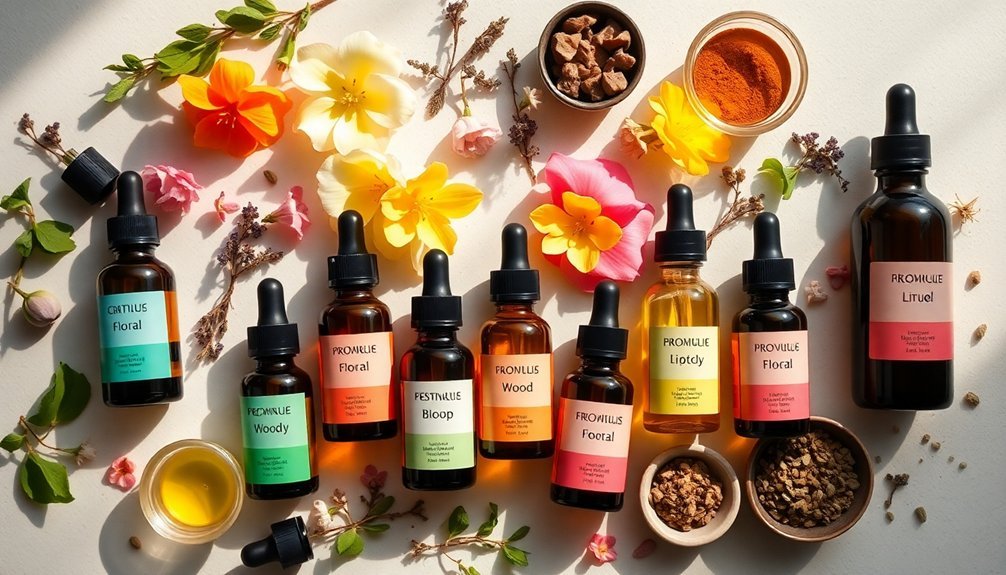
You'll find success creating floral fragrances by starting with a base of sandalwood and patchouli essential oils before adding your chosen floral notes.
For woody-oriental blends, combine frankincense and cedarwood as your foundation, then layer in complementary oils like vetiver to achieve depth and longevity.
When working with citrus scents, anchor their volatile nature using a combination of vetiver and cedarwood fixatives at a 1:3 ratio to your citrus oils.
Floral Fixative Base Recipe
Creating a reliable floral fixative base starts with three essential components: myrrh oil, Peru balsam, and vanilla absolute. You'll want to blend these ingredients in a 2:2:1 ratio to achieve ideal fixation while maintaining a balanced aroma profile that won't overpower your floral notes.
To create your floral fixative base:
- Mix 10 drops of myrrh oil with 10 drops of Peru balsam as your foundation, enhancing longevity and adding depth to your fragrance.
- Add 5 drops of vanilla absolute to introduce a sweet, rich undertone that binds the mixture together.
- Consider incorporating amyris or galbanum (2-3 drops) if you're working with lighter florals like jasmine or lavender.
This base will comprise 15-20% of your final perfume blend, ensuring your floral fragrance stays true and long-lasting.
Woody Oriental Blend Guide
When crafting woody oriental blends, your fixative choices will determine both the depth and longevity of your perfume. You'll want to combine natural and synthetic fixatives strategically, keeping base notes at 10-20% of your total blend.
| Essential Oil | Natural Resin | Synthetic |
|---|---|---|
| Patchouli | Labdanum | Iso E Super |
| Vetiver | Benzoin | Galaxolide |
| Sandalwood | Myrrh | Ambroxan |
| Cedarwood | Styrax | Orrisroot |
| Frankincense | Copaiba | Vanillin |
Start by selecting one item from each column to create your base. For example, combine patchouli with labdanum and Iso E Super for a deep, lasting foundation. You'll need to test your combinations on fragrance strips, keeping detailed notes of each variation. Don't forget to use a solubilizer to guarantee proper blending with your carrier.
Fresh Citrus Anchoring Tips
While woody oriental blends benefit from heavier fixatives, citrus fragrances demand a different approach.
When working with volatile citrus oils like bergamot, lemon, or orange, you'll need to carefully balance your fixatives to maintain the bright, fresh character while extending longevity.
Cedarwood and benzoin are particularly effective for anchoring citrus notes, providing stability without overwhelming the delicate top notes.
- Blend your citrus oils with cedarwood at a 3:1 ratio for a balanced, long-lasting fragrance
- Add a small amount of benzoin (about 5% of your blend) to stabilize the scent while adding warmth
- Include vetiver as a base note (10-15%) to ground your citrus blend while contributing an earthy dimension
Remember that you can combine different fixatives, but always start with smaller amounts to avoid overpowering your citrus notes.
Frequently Asked Questions
Can Essential Oil Fixatives Cause Allergic Reactions on Sensitive Skin?
Yes, you can experience allergic reactions from essential oil fixatives on sensitive skin, including rashes, itching, and irritation. It's important that you always do a patch test before applying new fixatives.
How Long Do Natural Fixatives Remain Effective After Opening the Bottle?
You'll find that natural fixatives typically remain effective for 12-18 months after opening if you store them properly. They'll gradually lose potency over time, especially if you expose them to air and sunlight.
Are Some Fixatives Better Suited for Specific Weather Conditions or Climates?
Yes, you'll find that heavier fixatives like patchouli and myrrh work better in hot weather, while lighter ones like cedarwood suit humid conditions. Synthetic fixatives offer consistent performance across all climates.
Can Fixatives Alter the Therapeutic Properties of Essential Oils?
Yes, fixatives can modify your essential oils' therapeutic properties. You'll find they might enhance or diminish effects through chemical interactions, and while some natural fixatives add benefits, others could reduce the oil's therapeutic potency.
Do Essential Oil Fixatives Interact Differently With Synthetic Versus Natural Fragrances?
Yes, you'll find essential oil fixatives interact differently – they blend more harmoniously with natural fragrances, while with synthetics, they create distinct layers and require careful balancing to achieve ideal longevity and scent stability.
In Summary
By understanding and properly using essential oil fixatives, you'll transform your homemade perfumes from fleeting fragrances to long-lasting signature scents. Whether you're working with orris root, benzoin, or vanilla absolute, remember to experiment with different combinations and ratios. Start with small batches, take detailed notes, and don't be afraid to adjust your formulas. With practice, you'll master the art of creating natural perfumes that truly last.



Leave a Reply