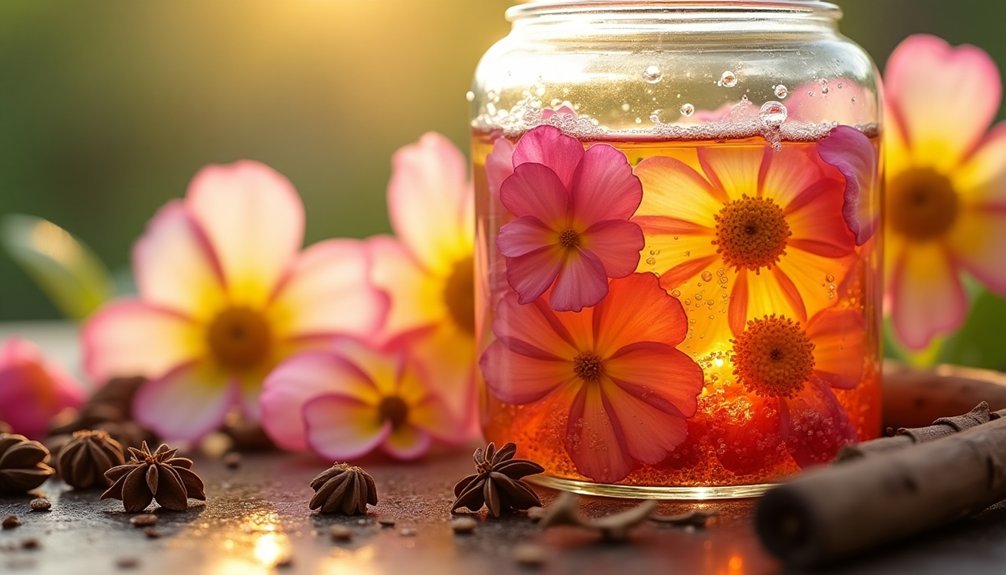
Maceration is your path to creating natural perfumes by soaking botanical materials in high-proof alcohol to extract their aromatic compounds. You'll need fresh or dried fragrant flowers, premium oils, and airtight glass containers for the process. The materials steep for varying periods – from a few weeks to several months – while you monitor temperature, agitate regularly, and test for ideal extraction. This careful process transforms raw ingredients into sophisticated, well-balanced fragrances, with deeper complexity awaiting those who master the technique.
Understanding the Art of Natural Perfume Maceration

While creating natural perfumes requires extensive knowledge of ingredients and techniques, the art of maceration stands as a fundamental process that transforms raw materials into complex fragrances.
You'll need to carefully select your fragrance components, focusing on delicate flowers like jasmine, hyacinth, and tuberose when they're at their freshest and most fragrant.
The process involves soaking these botanical materials in alcohol, which acts as a solvent to extract their aromatic compounds. Regular testing and monitoring throughout the maceration period ensures optimal extraction of the essential oils.
You'll store this mixture in a cool, dark place, occasionally stirring it to enhance extraction. During this time, chemical reactions occur as ingredients interact, creating new compounds that contribute to your perfume's unique character.
Through careful monitoring and patience, you'll witness the gradual transformation of raw materials into a sophisticated, well-balanced fragrance.
Essential Tools and Materials for Maceration
To successfully create natural perfumes through maceration, you'll need an array of specialized tools and high-quality materials. Start with fresh or dried flowers that are fragrant and free from moisture, along with premium fragrance oils and botanical ingredients like musk grains or ambergris.
The extended maceration time helps develop more sophisticated aromas in your perfumes.
You'll also need high-proof ethanol as your carrier solvent.
Essential equipment includes airtight glass containers for storage, precise measuring tools, and stirrers for periodic agitation. While an ultra-sonic bath can speed up the process, it's optional.
You'll need kitchen towels to dry materials and filtration tools like cheesecloth for the final processing. Keep your workspace equipped with proper storage containers that protect your mixture from light and heat.
Remember to maintain consistent temperature control and use quality testing methods to guarantee your final product meets desired standards.
Step-by-Step Maceration Process Guide
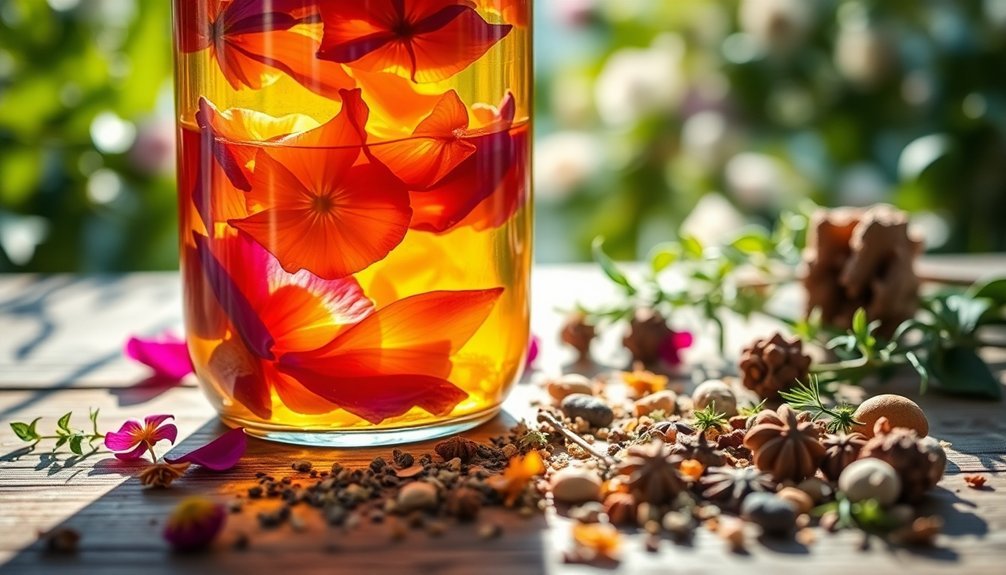
You'll need basic equipment like glass containers, kitchen towels, and a reliable alcohol solvent to begin your maceration journey.
Your timing must be precise – allowing flowers to dry for 3-6 hours before submerging them in alcohol, then maintaining a consistent temperature below 30°C throughout the weeks-long process. The gentle process can take several weeks to months for the oils to fully infuse into the solvent.
While ultra-sonic baths can speed up extraction, you'll achieve the best results by regularly agitating your mixture and monitoring its progress in a cool, dark environment.
Essential Equipment and Materials
Before beginning the maceration process for natural perfumes, gathering the right equipment and materials guarantees successful fragrance extraction.
You'll need fresh, aromatic flowers and plant materials that you've dried for 3-6 hours on a kitchen towel. Select clean, dark glass containers to protect your mixture from light exposure.
For your solvent, choose high-quality ethanol, typically vodka or grain alcohol, ensuring it's pure enough to prevent contamination.
You'll also need filtering materials to separate the liquid from plant matter once maceration is complete.
If you're planning to use an ultra-sonic bath to speed up the process, make sure it can maintain temperatures below 30°C.
Don't forget to prepare proper storage containers for your finished product, keeping them dark and airtight to preserve the fragrance.
Timing and Temperature Control
Since successful perfume maceration hinges on precise timing and temperature control, understanding these critical factors will determine your fragrance's final quality. You'll need to maintain temperatures between 77-86°F (25-30°C) in a controlled environment, away from direct sunlight and fluctuating conditions.
| Maceration Type | Duration | Best For |
|---|---|---|
| Short | 1-2 weeks | Citrus, florals |
| Standard | 3-6 weeks | Most perfumes |
| Extended | 2-3 months | Woods, spices |
During the process, you'll want to store your perfume in its original box or a cool, dark place. Monitor your fragrance regularly and give it a gentle daily swirl to encourage blending. For lighter scents, you'll notice results within weeks, while complex fragrances with woods or resins may require several months to achieve peak complexity.
Time and Temperature Factors in Maceration
The success of natural perfume maceration hinges heavily on the delicate balance of time and temperature control.
You'll find that maceration periods can vary considerably, ranging from days to months, depending on your desired fragrance intensity and complexity. During this time, you'll need to monitor the process carefully to avoid exceeding the saturation point, which could compromise your perfume's balanced composition.
Temperature management is equally important.
You'll want to maintain a controlled environment to guarantee the best extraction of aromatic compounds and preserve their delicate balance. The right temperature helps you achieve efficient extraction while preventing degradation of the fragrance oils.
As your perfume matures, you'll notice its character developing, with improvements in strength and longevity.
Botanical Selection and Preparation Methods
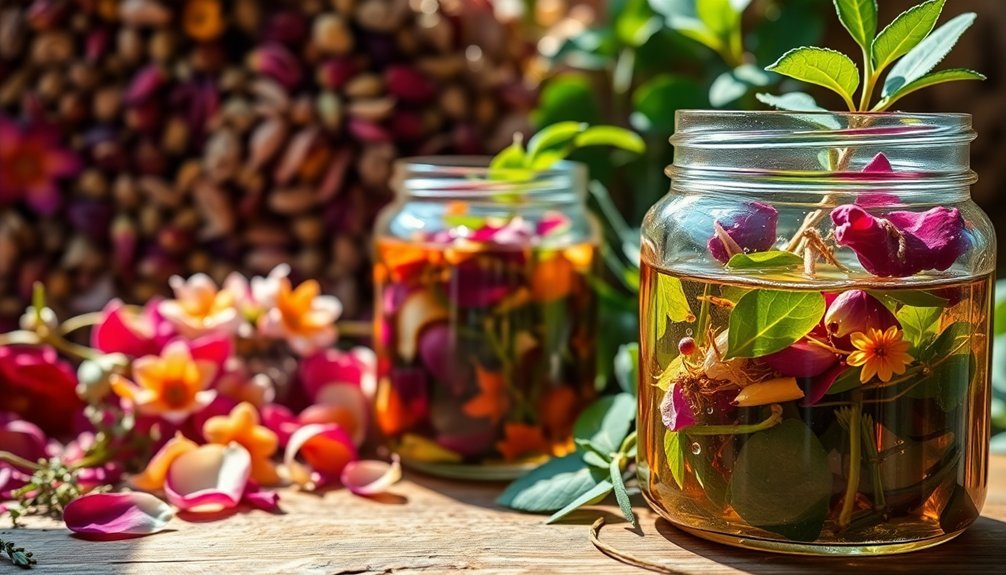
When crafting natural perfumes, selecting high-quality botanicals forms the foundation of a successful maceration process. You'll need to source essential oils, resins, concretes, and absolutes that vary in quality based on their seasonal and regional origins.
Consider using organic and sustainably sourced ingredients to guarantee the best results.
Before beginning maceration, you'll want to properly extract and concentrate your botanical oils through methods like steam distillation or solvent extraction.
Creating a harmonious blend requires careful attention to compatibility between ingredients. You'll need to balance top, heart, and base notes while avoiding potential clashes between different fragrances.
Mix your botanicals thoroughly before maceration, using alcohol or appropriate solvents as a medium.
Store your creation in glass containers, keeping them in a cool, dark place to preserve the integrity of your natural perfume.
Monitoring and Testing During Maceration
You'll need to carefully monitor time and temperature throughout the maceration process, ensuring your mixture stays below 30°C in a controlled environment.
Regular quality control checkpoints, including weekly agitation and filtration tests, help maintain the consistency and proper development of your natural perfume.
Your sensory evaluation should include periodic smell tests and visual inspections for color changes, which indicate how well the maceration is progressing.
Time and Temperature Control
Successful maceration of natural perfumes requires meticulous attention to both time and temperature throughout the process.
You'll need to maintain cool, dry conditions and keep temperatures stable between 77-86°F (25-30°C) to guarantee proper fragrance development without compromising potency.
The duration of your maceration will vary based on your specific ingredients and desired outcome. Natural perfumes typically benefit from extended aging periods, which can range from several days to months for a more refined, complex scent.
For best results during maceration, follow these essential steps:
- Store your perfume in a temperature-controlled environment
- Check the fragrance daily with gentle swirling
- Allow extended aging for luxury blends (up to 6-12 months)
- Avoid temperature fluctuations and direct sunlight exposure
Quality Control Checkpoints
Regular monitoring and testing during maceration serve as critical quality control checkpoints that guarantee your natural perfume develops properly.
You'll need to perform periodic visual inspections and take small samples to assess the aroma's intensity and quality. It's crucial to agitate the mixture regularly while maintaining proper storage conditions in a cool, dark place.
You can use an ultrasonic bath to speed up extraction, but you must carefully control the temperature.
Keep your maceration environment clean and free from contaminants that could affect the fragrance. Watch for any signs of spoilage or off-notes developing in your mixture.
As you monitor the process, you'll need to adjust the maceration time based on how well the extraction is progressing, ensuring you don't over-macerate and lose delicate scents.
Sensory Evaluation Methods
Sensory evaluation forms the cornerstone of quality assessment during the maceration process.
You'll find expert evaluators conducting various tests to monitor how your natural perfume develops over time, using comparative and recognition methods to guarantee the fragrance meets quality standards.
During maceration, trained professionals employ these essential evaluation techniques:
- Blind testing to eliminate bias and focus purely on scent development
- Descriptive profiling to track how different notes harmonize
- Hedonic evaluations to assess overall fragrance appeal
- Comparative tests against control samples to maintain consistency
You'll benefit from their continuous monitoring as they use standardized evaluation sheets and olfactory scales to track your perfume's progress.
Their feedback helps determine if adjustments are needed and when your fragrance has reached its prime maturation point.
Storage and Aging Best Practices
The art of perfume maceration demands meticulous storage and aging practices to achieve ideal results.
You'll need to store your perfume blend in a dark, cool place away from direct sunlight and heat sources to minimize oxidation and preserve the fragrance's integrity. Using the original packaging helps maintain favorable conditions.
The aging timeline varies based on your perfume's complexity. Let your initial blend rest for at least 48 hours, then continue aging for 2-4 weeks to harmonize the fragrance notes.
For more complex scents, you might need up to six months of aging. During this period, leave your blend mostly undisturbed, only gently agitating it occasionally to facilitate blending.
This careful process allows your natural oils to mature properly, creating a unified, refined scent while enhancing its longevity.
Frequently Asked Questions
Can Macerated Perfumes Trigger Allergic Reactions Different From Regular Perfumes?
You won't experience different allergic reactions with macerated perfumes versus regular ones. They contain the same ingredients, so if you're allergic to certain fragrances, you'll react similarly to both types.
How Do Seasonal Changes Affect the Success of Natural Perfume Maceration?
You'll notice seasonal changes greatly impact your perfume's maceration. High temperatures speed up the process but risk losing volatile compounds, while cold weather slows maturation. You'll need controlled conditions for ideal results.
What Happens if Different Alcohol Concentrations Are Used During Maceration?
You'll notice higher alcohol concentrations speed up extraction but may create harsh scents, while lower concentrations allow slower, more nuanced development. The key is finding the right balance for ideal fragrance maturation.
Does the Moon Phase Influence the Maceration Process of Natural Perfumes?
No, the moon phase doesn't influence your perfume's maceration process. While some practitioners incorporate lunar cycles into their rituals, there's no scientific evidence showing any direct effect on the chemical reactions during maceration.
Can Previously Macerated Perfumes Be Re-Macerated With New Ingredients?
You shouldn't re-macerate perfumes with new ingredients. It'll likely disrupt the already harmonized blend and create an unbalanced scent. Instead, it's better to start fresh when creating a new fragrance combination.
In Summary
Whether you're a beginner or experienced perfumer, mastering the maceration process is key to creating exceptional natural fragrances. Remember to select quality botanicals, maintain proper temperature control, and exercise patience during the aging period. You'll know you've succeeded when your perfume develops deeper, richer notes and a more harmonious blend. Keep detailed records of your process for future batches, and don't rush the art of natural perfumery.

Leave a Reply