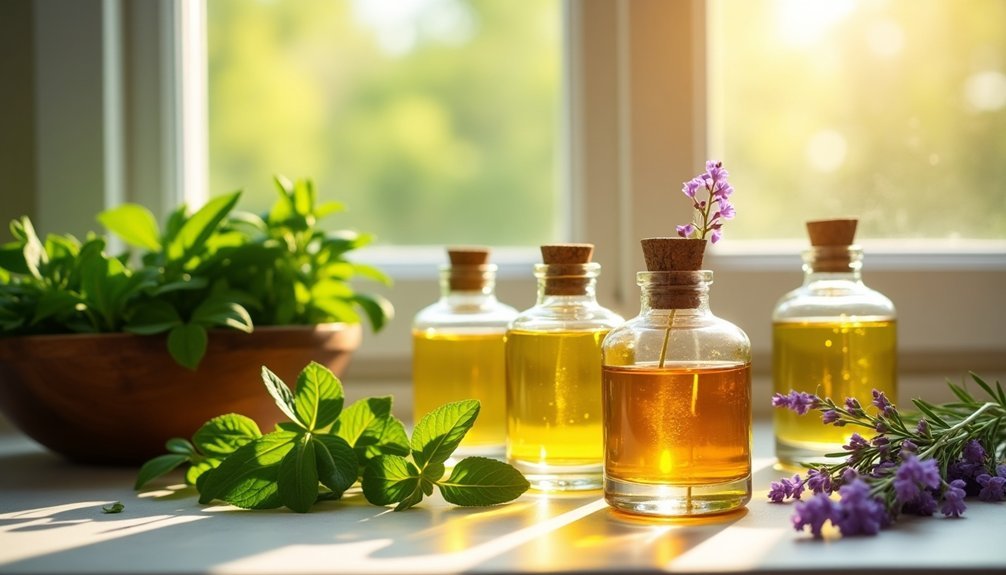
Your homemade perfumes can stay fresh naturally through several key methods. Using vinegar as a base preservative, incorporating antimicrobial essential oils like tea tree and thyme, and following sterile production techniques all help maintain fragrance integrity. You'll also benefit from proper storage in dark glass containers, kept at temperatures between 60-70°F, and ensuring airtight seals. These natural preservation techniques offer just the beginning of creating long-lasting, chemical-free fragrances.
The Power of Vinegar in Natural Perfume Preservation
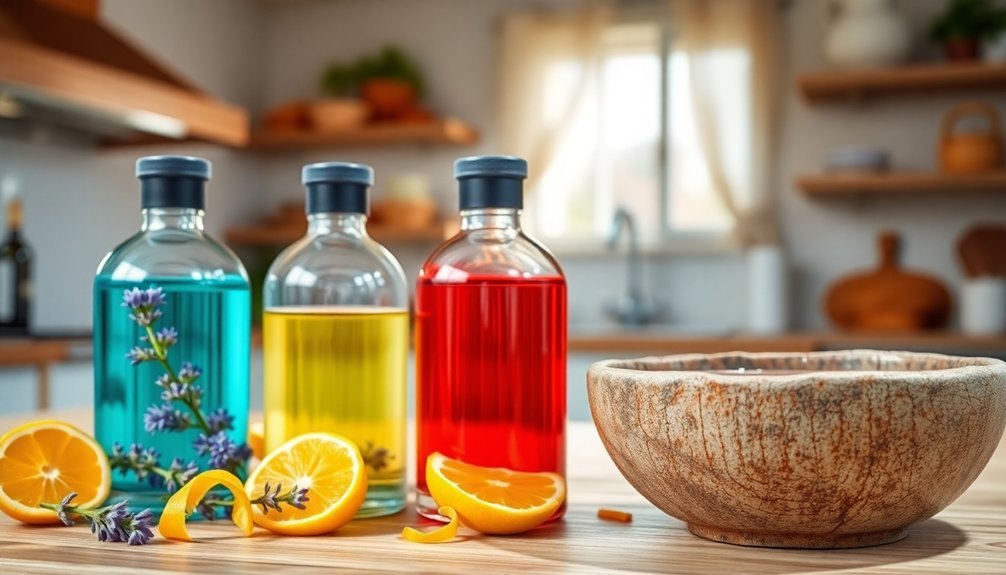
While synthetic fragrances often rely on chemical preservatives, vinegar serves as a natural alternative for creating long-lasting home perfumes.
You'll find that white distilled vinegar's natural properties make it an excellent base for infusing and preserving scents from herbs, citrus peels, and other fragrant ingredients.
To create your own preserved perfume, you can steep your chosen natural ingredients in vinegar for 2-4 weeks in a dark place. Many people combine ingredients like pine and citrus for unique scent combinations.
If you're short on time, heating the vinegar before adding it to your ingredients will speed up the infusion process.
The resulting scented vinegar will maintain its fragrance for up to a year when stored properly in sealed containers.
You can dilute it with water to adjust the intensity and make it gentler on surfaces.
Essential Oils as Natural Antimicrobial Agents
Beyond vinegar's preservative power, many natural fragrance enthusiasts turn to essential oils for their remarkable antimicrobial properties.
You'll find potent protection in oils like tea tree, eucalyptus, thyme, and lemongrass, which naturally fight bacteria, fungi, and viruses.
These oils work through active compounds like aldehydes and phenols that act as natural disinfectants. For safety and effectiveness, these oils should always be diluted with carriers.
When you use thyme or origanum oils, you're harnessing carvacrol's power to combat even antibiotic-resistant bacteria.
Citral in lemongrass and menthol in other oils provide additional antimicrobial benefits.
You can create safer, longer-lasting home perfumes by incorporating these essential oils.
They don't just add beautiful scents – they actively protect your fragrances from microbial growth while offering a chemical-free alternative to synthetic preservatives.
Small-Batch Benefits for Perfume Longevity
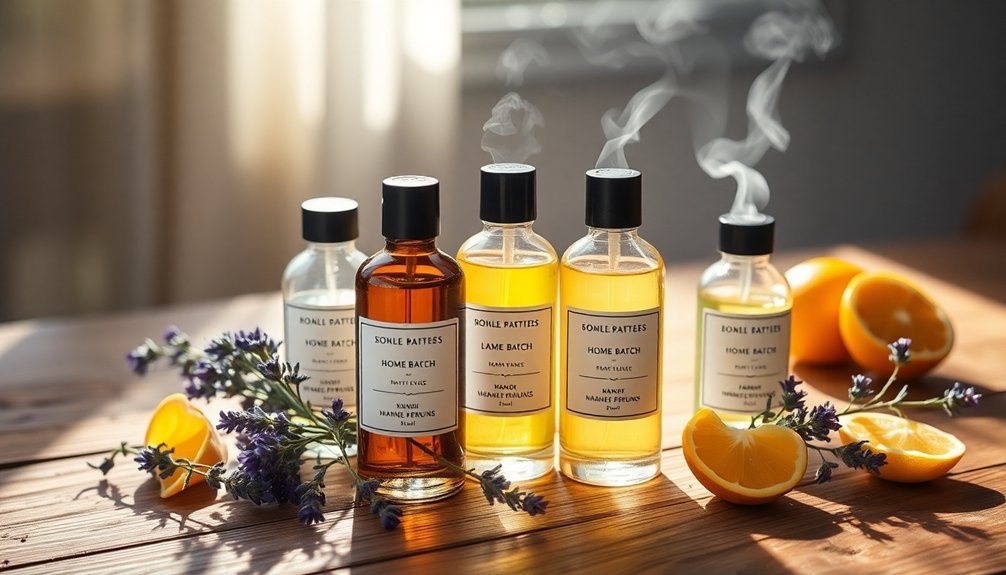
When crafting small-batch perfumes, you'll discover that quality and longevity go hand in hand. The artisanal approach allows you to focus on superior ingredients and meticulous blending techniques that naturally preserve your fragrances without chemical additives. A dedication to artisan craftsmanship ensures each fragrance receives individual attention during production.
- You'll work with pure essential oils and natural absolutes that provide complex molecular structures, helping your perfume maintain its integrity longer.
- Your creative freedom lets you experiment with unique combinations and slow-evaporating molecules that extend scent duration.
- You can implement careful aging processes and precise testing methods to ascertain each batch reaches its full potential.
- Your sustainable sourcing practices guarantee fresh, high-quality ingredients that resist degradation.
Sterile Production Techniques for Home Perfumers
As you venture into home perfume-making, maintaining sterile production techniques forms the foundation of creating pure, uncontaminated fragrances.
You'll need to sterilize all your equipment using a 5% bleach solution, paying special attention to bottles and mixing jars. Glass containers are your best choice due to their non-reactive properties.
Set up your workspace in a dust-free environment and use stainless steel or enamel-lined containers for mixing.
When handling raw materials, verify you're using distilled water and high-quality essential oils. You'll want to filter your perfume through multiple stages, including microfilters, to remove any impurities.
Store your creations in airtight containers, and if you're using clear bottles, protect them from light with aluminum foil.
Keep them in a cool, dark place during the aging process.
Vitamin E: Nature's Perfume Protector
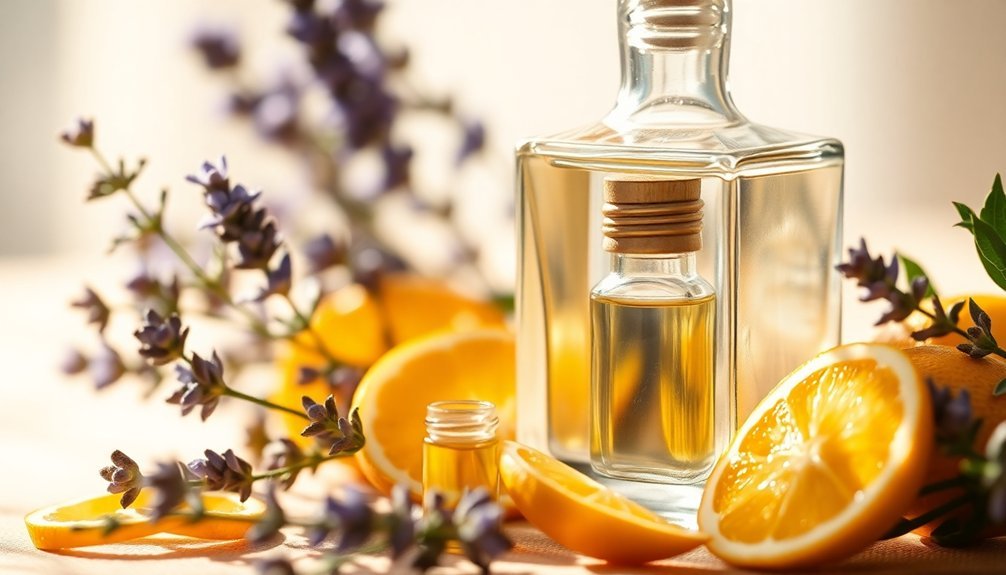
Vitamin E stands as an essential ally in natural perfumery, though its role is commonly misunderstood. It won't prevent bacterial growth, but it's incredibly effective at protecting your oil-based perfumes from oxidation, which can cause rancidity and off-putting scents.
When formulating your natural perfumes, remember these key points about Vitamin E:
- You'll want to use it at 0.04% (400 ppm) for ideal shelf-life extension
- It works best in anhydrous (water-free) perfume formulations
- Gamma tocopherol offers superior protection compared to alpha tocopherol
- You can combine it with other natural ingredients without compatibility issues
Consider using ECOCERT-certified Vitamin E when crafting your perfumes.
Ideal Storage Conditions for Homemade Fragrances
You'll need to store your homemade fragrances in a cool, dark place between 60-70 degrees Fahrenheit to maintain their integrity and prevent rapid deterioration.
Keep your natural perfumes away from direct sunlight and heat sources, as UV rays and temperature fluctuations can break down the fragrance compounds within months.
An airtight container with a reliable seal will protect your creation from oxidation while preserving its original scent profile.
Temperature and Light Control
Two critical factors determine the longevity of your homemade fragrances: temperature and light exposure.
You'll want to maintain a consistent environment between 55 to 60 degrees Fahrenheit to prevent your natural scents from breaking down. High temperatures above 70°F can permanently damage your fragrance molecules and introduce unwanted sour notes.
To protect your homemade perfumes:
- Store bottles in a cool, dark basement or closet away from windows and heat sources
- Consider using a temperature-controlled cabinet or wine refrigerator for maximum stability
- Choose opaque or translucent bottles to shield against UV ray damage
- Monitor storage conditions with a thermometer to maintain ideal temperatures
Airtight Container Benefits
Beyond temperature and light control, proper storage containers play an essential role in preserving your homemade fragrances.
You'll want to use airtight containers to prevent oxidation, which can alter your perfume's chemical composition and diminish its intended scent.
When you store your fragrances in airtight containers, you're creating a protective barrier against external elements. The tight seal prevents moisture from seeping in and keeps unwanted odors from contaminating your perfume.
For best results, choose containers made of glass or stainless steel, as these materials effectively contain smells and maintain the integrity of your fragrance.
Remember to keep your perfume in its original bottle, then place it inside an airtight container for added protection.
This double-layered approach guarantees your homemade fragrance stays fresh and maintains its potency without relying on chemical preservatives.
Grapefruit Seed Extract's Preservative Properties
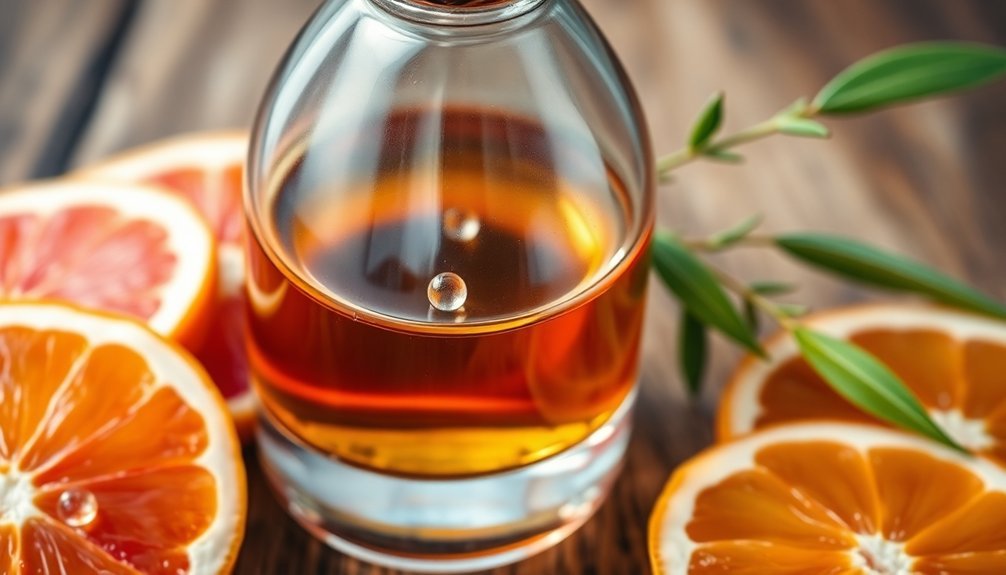
Grapefruit seed extract (GSE) stands as a complex natural preservative derived from citrus paradisi's seeds and pulp. While you might be drawn to its natural origins, it's important to understand both its strengths and limitations when using it in home perfumes.
- Rich in flavonoids, vitamin C, and vitamin E, GSE offers natural antioxidant properties that help protect your formulations.
- Contains powerful compounds like naringin and citric acid that contribute to its preservative effects.
- You'll find it effective against certain bacteria and fungi when used in alcohol-based formulations.
- Works best when you keep concentrations at 0.1% to avoid potential skin irritation.
Be aware that GSE alone isn't enough to preserve water-based perfumes, and you'll need to pair it with other preservative methods like airtight containers and proper storage conditions.
The Role of Proper Container Selection
While GSE offers natural preservation benefits, your choice of container plays an equally important role in maintaining your homemade perfume's quality. You'll want to select glass containers, particularly dark-colored ones, as they're non-reactive and protect against UV damage. Avoid plastic containers since they can interact with your fragrance and compromise its integrity.
| Container Type | Protection Level | Best Uses |
|---|---|---|
| Dark Glass | Excellent | Long-term storage |
| Aluminum | Very Good | Travel containers |
| Clear Glass | Fair | Short-term only |
| Metal | Good | Backup option |
| Plastic | Poor | Avoid using |
Always guarantee your container has an airtight seal to prevent oxidation. You'll get the best results by storing your perfume in a cool, dry place away from sunlight and heat sources. For extra protection during summer months, you might consider refrigeration.
Rosemary Oil's Antioxidant Effects
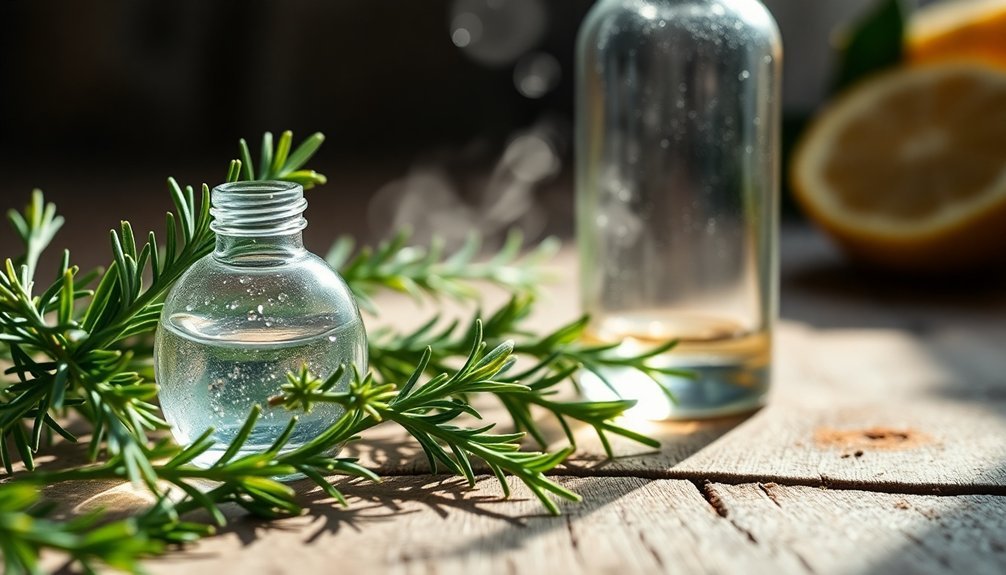
Rosemary oil stands out as a powerhouse of natural preservation in homemade perfumes. Its primary active component, Carnosic Acid, works better than Vitamin E at protecting your fragrances from oxidation and rancidity.
You'll find it's particularly effective at stabilizing other oils in your perfume blend while preventing deterioration.
- Acts as a free radical scavenger, donating hydrogen to stabilize harmful compounds
- Remains stable at high temperatures and dissolves perfectly in oil-based perfumes
- Protects your blend's ingredients from oxidation and microorganism growth
- Works effectively at low concentrations, making it cost-efficient for DIY perfumes
When you're crafting natural perfumes, rosemary oil's antioxidant properties help maintain your blend's freshness without synthetic preservatives.
It's especially valuable because it enhances both the safety and longevity of your homemade fragrances.
Clean Water Sources for Perfume Making
When making natural perfumes at home, you'll need to choose between distilled and filtered water sources, with de-ionized water being your safest option for maintaining fragrance purity.
You can use distilled water, but you'll want to verify it's properly filtered to remove any organic contaminants that share water's boiling point.
For the best results and consistency in your homemade perfumes, make certain you're testing your water source for chemical neutrality and storing it in clean, sealed containers.
Distillation Vs Filtered Options
As you explore natural perfume making, understanding the difference between distillation and filtered water options becomes fundamental for achieving the best results.
Distillation uses water vapor to extract fragrant molecules from plants, creating both essential oils and hydrosol, while filtered water serves as an essential ingredient in the final perfume blend.
- Distillation preserves delicate aromatic compounds and produces solvent-free, high-quality essential oils that capture true plant scents.
- De-ionized filtered water prevents unwanted chemical reactions and maintains perfume integrity.
- The water-to-alcohol ratio you choose affects your perfume's concentration and longevity.
- While distillation isn't suitable for fragile flowers like jasmine, it remains an economical choice for many botanical ingredients.
When creating preservative-free perfumes, both processes play significant roles: distillation for extraction and filtered water for blending your final formula.
Best Water Safety Practices
Selecting the right water source stands at the core of safe, preservative-free perfume making. You'll want to prioritize de-ionized water for your homemade perfumes, as it offers the most chemically neutral foundation and won't interfere with your fragrance oils' integrity.
While distilled water might seem like a good alternative, it can carry trace impurities if organic materials share water's boiling point during the distillation process. If you're using distilled water, verify it's from a reliable source rather than home-distilled.
To maintain safety without chemical preservatives, you'll need to be extra vigilant about water quality and cleanliness.
Remember that water and oils don't naturally mix, so you'll need to incorporate natural emulsifiers to achieve proper blending and prevent separation in your final product.
Temperature Control in Natural Perfume Storage
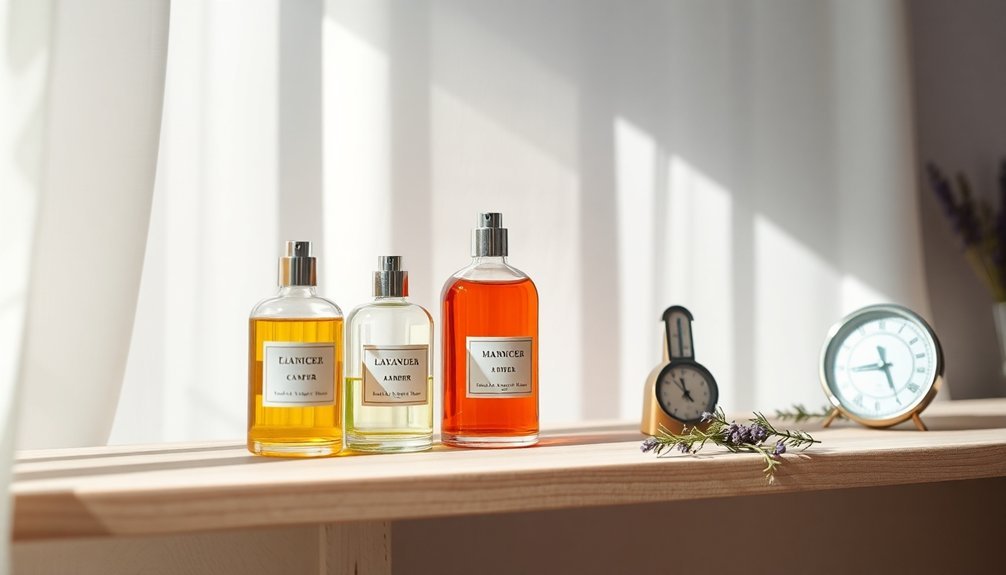
Since natural perfumes lack chemical preservatives, proper temperature control becomes essential for maintaining their quality and longevity.
You'll want to store your perfumes in environments between 55-60°F (13-15°C) to prevent the breakdown of essential oils and natural compounds.
- Keep your perfumes in a basement or interior closet away from external walls
- Monitor storage conditions using a thermometer and hygrometer
- Avoid bathrooms, kitchens, and areas near heat-generating electronics
- Choose drawers or cabinets that aren't exposed to temperature fluctuations
Organic Ingredients and Their Shelf Life
Your natural perfume's longevity depends largely on the organic ingredients you select and how you store them.
Plant-based oils like lavender and bergamot can maintain their potency for up to three years when kept in dark, airtight containers away from direct sunlight and heat.
You'll find that using smaller bottles and proper storage techniques helps preserve the integrity of these organic ingredients without relying on chemical preservatives.
Natural Longevity Factors
While natural perfumes offer a chemical-free alternative to conventional fragrances, their longevity depends on several key factors.
When you're crafting home perfumes, understanding these elements will help your creations stay fresh naturally.
The concentration of essential oils plays a crucial role in how long your fragrance will last. You'll find that higher concentrations, similar to Eau de Parfum levels, provide better staying power without synthetic preservatives.
- Store your perfumes in cool, dark places to maintain their integrity
- Use natural fixatives like labdanum or musk flowers to bind scent molecules
- Apply to moisturized skin and pulse points for extended wear
- Choose naturally longer-lasting fragrance families like oriental or woody notes
These natural preservation methods can help your homemade perfumes maintain their quality for up to three years when properly stored.
Plant-Based Storage Solutions
Three key factors determine the successful storage of plant-based perfumes: container selection, environmental conditions, and ingredient compatibility.
You'll want to store your natural perfumes in violet glass bottles or protective containers that prevent oxidation and maintain stability. Keep them in a cool, dark, and dry location to extend their shelf life.
If you're working with scented waters, you can refrigerate them between uses, allowing for 2-3 reuses before replacement.
While plant-based perfumes may naturally separate after one to two years, you can maximize their longevity through proper storage.
Don't be alarmed if your scented waters become slightly cloudy after multiple uses – they're still effective if they pass your sniff test.
For best results, use pint-sized jars that are both economical and practical for daily use.
Air-Tight Packaging Solutions
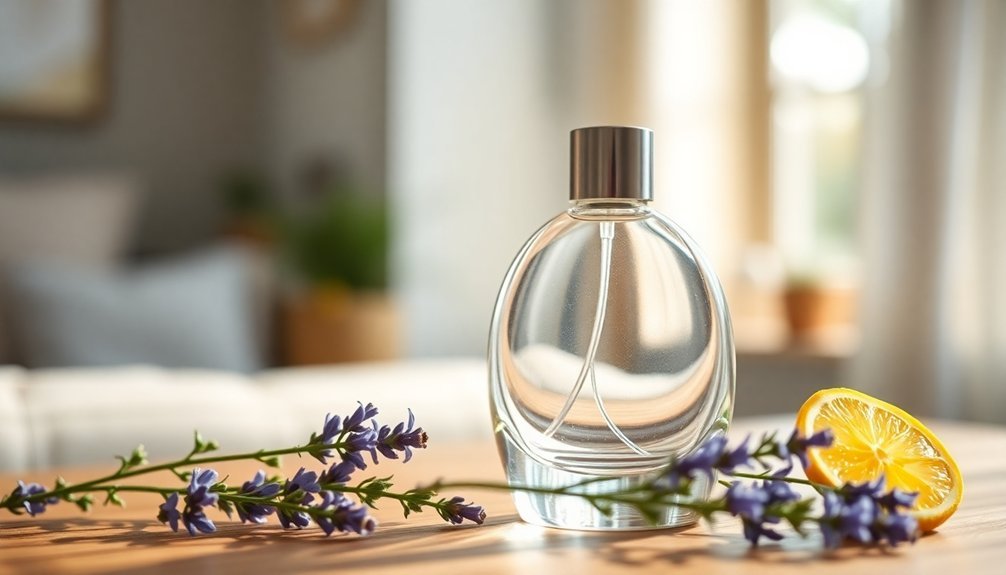
Because fragrance molecules are volatile and easily escape, selecting the right airtight packaging is crucial for preserving natural perfumes. You'll find that glass containers with tight seals offer superior protection compared to plastic alternatives, while keeping your fragrances fresh for longer periods.
- Choose glass bottles with high-quality atomizers to minimize air exposure during transfers and daily use.
- Store your perfumes in vacuum-sealed jars like POP VAC containers for maximum freshness protection.
- Consider multi-layered packaging solutions that combine kraft paper with aluminum foil for enhanced barrier properties.
- Look for containers with airtight zip-lock or grip-seal closures if you need portable options.
Remember to keep your perfumes in a cool, dark place and always verify the caps are tightly sealed after each use to maintain their delicate aromatic profiles.
Frequently Asked Questions
Can I Mix Different Natural Preservatives Together for Better Protection?
Yes, you can mix natural preservatives like vinegar with rosemary oil or salt with grapefruit seed extract. Combining different preservatives enhances protection, but make sure they're compatible and use proper ratios.
How Long Should I Let Natural Preservatives Settle Before Using Perfume?
You'll need to let natural preservatives settle for 24-48 hours before using your perfume. This allows them to fully integrate and stabilize with other ingredients, ensuring proper preservation and scent consistency.
Do Natural Preservatives Affect the Original Scent of the Perfume?
Yes, natural preservatives can slightly alter your perfume's original scent, but the effect is usually minimal. You'll notice vitamin E and rosemary extract might add subtle undertones, while grapefruit seed extract remains nearly undetectable.
What Signs Indicate Natural Preservatives Are No Longer Working Effectively?
You'll notice your product's preservatives failing when you spot visible mold, detect unusual odors, see color changes, experience separation of ingredients, or feel skin irritation after application. These signs need immediate attention.
Can Natural Preservatives Protect Against UV Damage to Perfume Ingredients?
Yes, natural preservatives like Covabsorb® Nature GP can effectively protect your perfumes from UV damage. You'll find they shield fragrance compounds while maintaining scent integrity, though you should still store perfumes away from direct sunlight.
In Summary
You'll find that making natural home perfumes last doesn't require synthetic preservatives. By combining the antimicrobial power of vinegar and essential oils, using vitamin E as a natural stabilizer, and following proper production methods, you're able to create long-lasting fragrances. Remember to store your creations in air-tight containers, keep them at stable temperatures, and work in small batches for the freshest results.

Leave a Reply