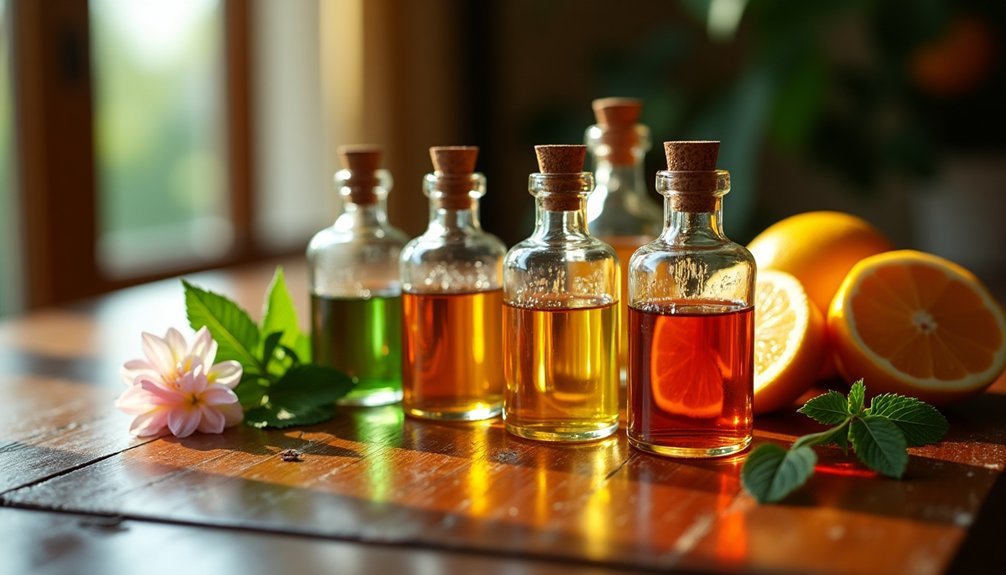
You'll need both artistic intuition and technical precision to create perfect fragrance accords. Start by understanding the interplay between top, heart, and base notes while carefully selecting 6-10 complementary ingredients. Use standardized droppers for accurate measurements and test your combinations on blotter strips to evaluate their harmony. Maintain detailed records of successful formulations and allow proper aging time. Master perfumers know that each blend holds secrets waiting to be discovered through patient experimentation.
The Art and Science Behind Fragrance Accords
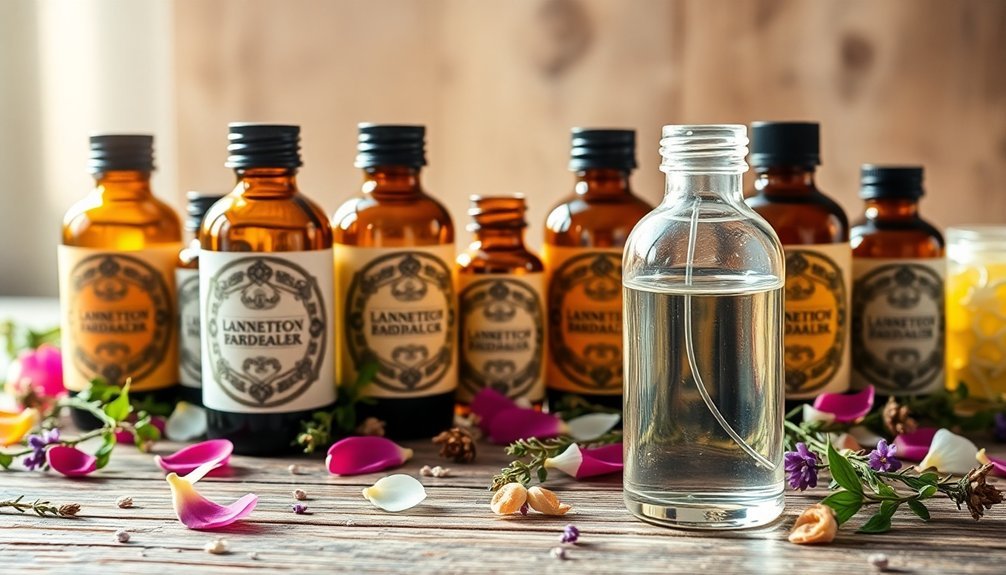
While many people simply enjoy wearing perfume, understanding fragrance accords opens up a fascinating world where art meets science. Much like a musical composer, perfumers blend 6 to 10 different components to create harmonious scent combinations that form the soul of each fragrance.
You'll find that creating accords isn't just about mixing scents randomly. It's a meticulous process requiring hundreds of trials to perfect the balance between components. Master perfumers achieve this through their refined sense of smell and extensive expertise. Perfumers test each combination on strips, carefully adjusting proportions until individual notes become indistinguishable yet work together seamlessly.
The magic happens when science meets creativity – understanding evaporation rates, skin chemistry, and note interactions helps craft accords that tell a complete olfactory story.
It's this delicate balance that transforms simple ingredients into complex, evolving fragrances that uniquely develop on each wearer.
Essential Building Blocks of Perfume Creation
To create enchanting perfumes, you'll need to master the art of layering accords by combining complementary scent families, such as floral with woody or citrus with oriental notes.
You can start building effective accords by selecting essential oils and fragrance materials that share common characteristics, like rose and jasmine for a floral accord or sandalwood and cedar for a woody base.
When blending your raw materials, you'll want to carefully balance the proportions of each ingredient while considering how the top, heart, and base notes will interact over time. Treating the creation process like a musical symphony, you'll discover how each note must harmonize perfectly with the others.
Layering Basic Accords Together
Creating enchanting perfumes requires mastering the art of layering basic accords, much like a painter blends primary colors to achieve stunning compositions.
You'll want to start with base-driven fragrances that anchor your creation, then thoughtfully blend complementary accords to build complexity and character.
When layering accords, dab rather than rub the fragrances to let them unfold naturally. Choose accords that enhance your desired notes – whether floral, spicy, or woody – while taking into account the fragrance's intended personality. The Floral Temptation & Seductive Bliss™ collection demonstrates how sensual spice accords can beautifully enhance pink pepper and floral notes.
You can experiment by combining different ratios of accords with essential oils and fixatives like musk or amber to guarantee longevity.
Start small with your experiments, testing combinations on a limited scale before committing to larger applications.
Remember to reflect on how your layered accords will evolve throughout the fragrance's wear time.
Blending Raw Materials Effectively
The art of blending raw materials stands as the cornerstone of successful perfume creation. You'll need to carefully select ingredients based on their desired smell, duration, and personality, whether they're natural extracts or synthetic compounds.
Begin by creating a simple structure with two or three materials, then build complexity by adding one ingredient at a time using precise measurements.
- Start with equal proportions and evaluate each combination
- Use standardized droppers for accurate measurements
- Document every modification and keep samples for reference
- Add modifiers and fixatives gradually to enhance specific qualities
As you refine your blend, you'll need to incorporate blenders to smooth shifts between notes and use fixation materials for depth and longevity.
Remember to age your creation properly, allowing the components to mature into a cohesive fragrance.
Understanding Base, Heart, and Top Notes
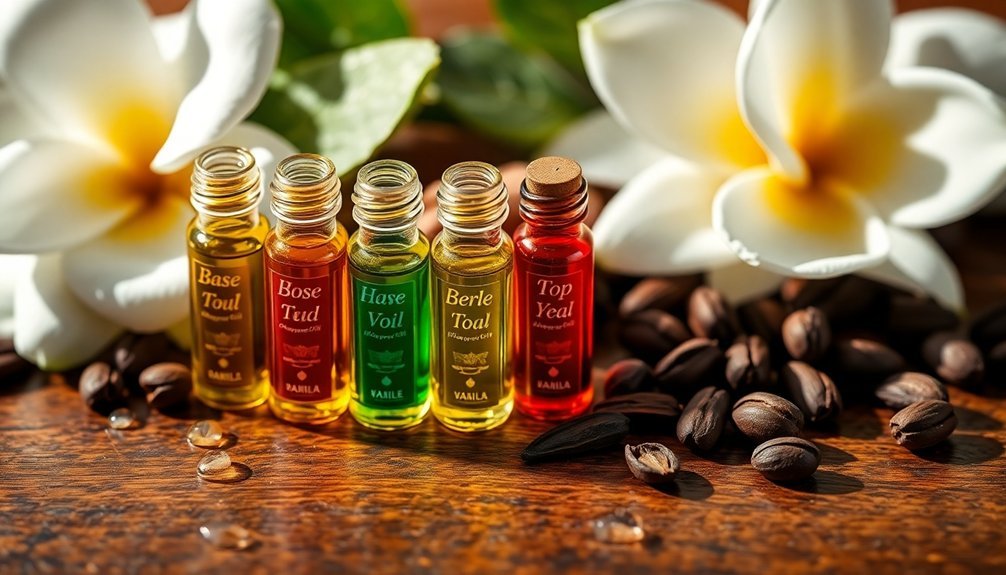
Every perfume composition relies on three distinct layers of fragrance notes that work together to create a harmonious scent experience.
You'll notice top notes immediately after application, delivering fresh, citrusy impressions that last 5-15 minutes. These volatile molecules quickly give way to heart notes, which form the fragrance's core character and make up 70% of the overall scent.
Base notes provide the foundation and lasting impression of your perfume. They're rich, deep scents like woods, musks, and vanilla that emerge as the heart notes fade.
When you're selecting a fragrance, pay attention to how these three layers evolve on your skin. The top notes might catch your attention, but it's the interplay between heart and base notes that'll determine if you'll love wearing the perfume all day.
Classic Accord Families and Their Compositions
Classic perfume accords form distinct families that perfumers have refined over centuries of fragrance creation.
You'll find the Fougère accord, pioneered by Houbigant, combining lavender, sage, and tonka bean to create masculine fragrances. The Chypre accord features bergamot, rose, and moss notes, evoking autumn's earthiness.
Meanwhile, the Oriental accord luxuriates in vanilla, resins, and patchouli, often enhanced with iris for depth.
- Fougère accords blend aromatic herbs with coumarin for a classic masculine scent
- Chypre accords balance bright bergamot with deep moss and labdanum
- Oriental accords layer sweet vanilla with rich resins and patchouli
- Citrus, woody, and floral families round out the perfumer's palette
These foundational accords continue to inspire modern perfumery while maintaining their timeless appeal.
Step-by-Step Guide to Blending Your First Accord
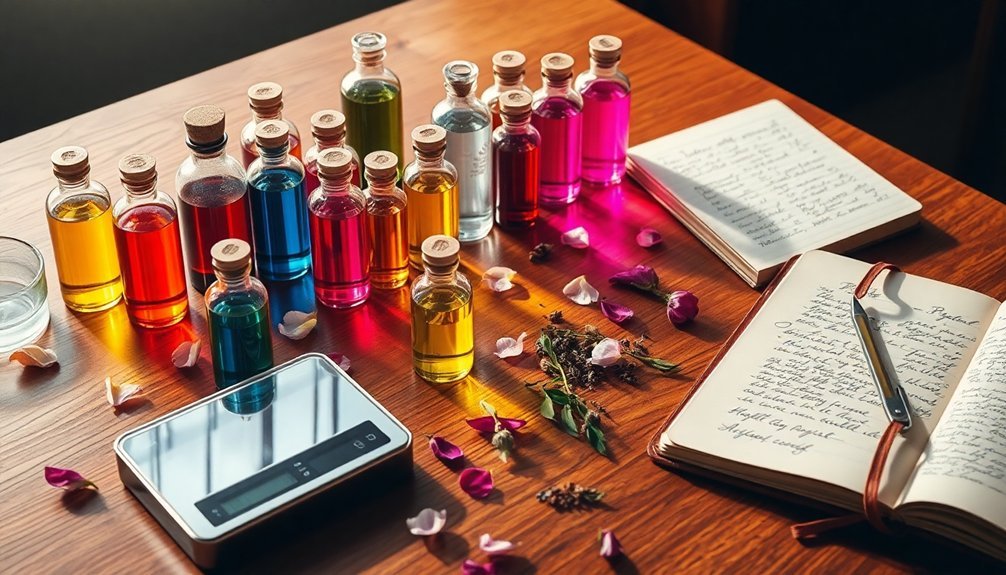
Creating your first accord begins with a focused approach to selecting and combining raw materials. You'll want to start with just two or three complementary ingredients to maintain clarity in your blend. Dilute your chosen materials to workable concentrations, typically 10% or 1%, before proceeding with trial combinations.
| Step | Action | Time |
|---|---|---|
| 1 | Select materials | 30 mins |
| 2 | Test on strips | 15 mins |
| 3 | Create blends | 45 mins |
| 4 | Rest mixture | 72 hrs |
| 5 | Evaluate results | 30 mins |
Mix your materials in small vials using different ratios, and label each creation carefully. After blending, let your accords rest for at least 72 hours. During evaluation, look for harmonious combinations where no single note dominates. Keep detailed records of your blends and assessments to refine your formula effectively.
Tools and Materials for Accord Development
Successful accord development relies on having the right tools and materials at your disposal. You'll need high-quality fragrance oils, essential oils, and carriers like perfumer's alcohol or fractionated coconut oil.
Glass beakers and pipettes guarantee precise measurements, while test strips help you evaluate how different materials interact.
Key tools you'll want to gather:
- Glass beakers and graduated pipettes for accurate measurements
- Smelling strips and blotters for testing combinations
- Notebooks for recording formulas and observations
- Dilution solutions pre-mixed at 10% concentration
Remember to keep your workspace organized and clean.
While both natural and synthetic materials work well, starting with natural ingredients often requires simpler compositions.
You'll need patience and dedication as you work through multiple trials to achieve your desired accord.
Common Mistakes in Accord Creation
When you're creating perfume accords, you'll often face the temptation to overblend your core notes in pursuit of perfect balance.
You might find yourself diluting the distinctive character of key ingredients by trying to harmonize them too much, resulting in a flat, uninspiring composition.
Testing phases require patience and methodical evaluation, so rushing through trials can prevent you from discovering unique combinations and synergistic effects.
Overblending Core Notes
Although perfume creation requires artistic freedom, overblending core notes remains one of the most common pitfalls for both novice and experienced perfumers.
When you combine too many notes or accords, you'll create a confusing scent profile that lacks clarity and definition. This often disrupts the fragrance pyramid structure, causing top notes to get overwhelmed and base notes to dominate prematurely.
To avoid overblending, you'll need to recognize the warning signs:
- Your fragrance lacks a distinct character or clear progression
- Individual components become indistinguishable in a chaotic way
- Test audiences express confusion about the scent
- The overall blend feels heavy or overpowering
Start with a methodical approach: use small amounts, test incrementally, and limit your initial components.
Rushing Test Phases
Creating exceptional accords demands both patience and methodical testing, yet many perfumers rush through vital development phases.
When you skip proper test-strip evaluations, you'll miss important data needed to fine-tune your combinations and ratios effectively. Each modification requires its own test strip and careful comparison to achieve the desired synergy between components.
You'll need to resist the urge to accelerate the blending process, as hasty decisions often lead to unbalanced or discordant fragrances.
Your accord won't reach its full potential if you don't allow time to observe how different notes interact and enhance each other. Remember, you're aiming for a harmonious blend where individual components work together seamlessly.
This may require hundreds of trials, but it's essential for creating an accord that truly represents your intended olfactory profile.
Balancing Ratios for Perfect Harmony
The art of balancing fragrance ratios lies at the heart of successful perfumery. You'll find that achieving the perfect harmony requires careful attention to proportions, with middle notes typically comprising 50-75% of your composition, top notes 20-40%, and base notes 5-10%.
When you're blending different accords, remember that each component must work in symphony with others to create a compelling olfactory story.
- Test your blends incrementally using scent strips to avoid overwhelming combinations
- Start with classic accord families like floral, oriental, or citrus as your foundation
- Pay attention to how top notes shift into middle notes within the first 30 minutes
- Verify your base notes provide adequate longevity without dominating the composition
Testing and Evaluation Methods
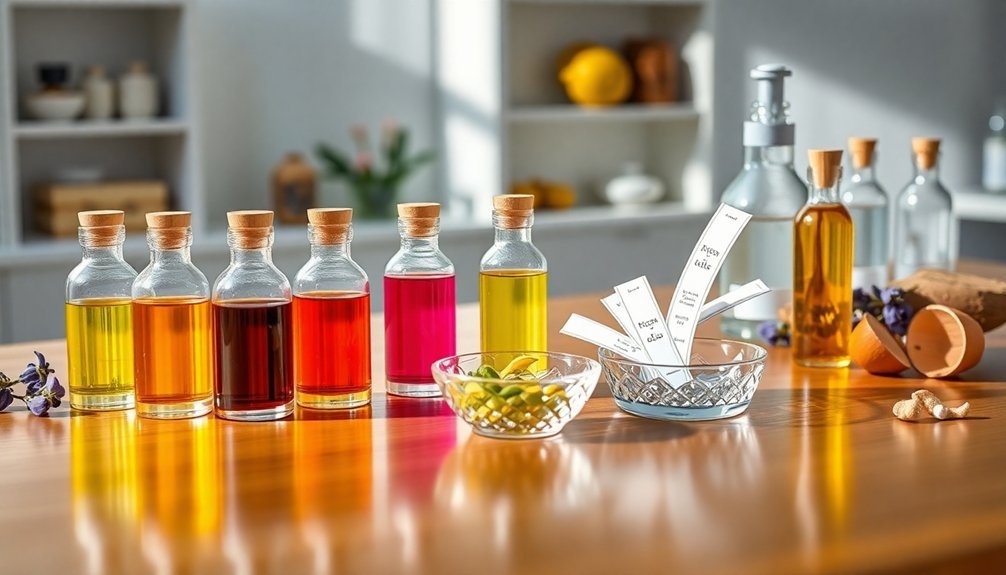
Once you've mastered the art of balancing ratios, proper testing and evaluation become your next focus. You'll need to employ both blotter strip and skin tests to understand how your fragrance performs. Don't rub the perfume – let it dry naturally to maintain its intended profile.
| Test Type | Purpose | Key Focus |
|---|---|---|
| Blotter | Initial evaluation | Top notes analysis |
| Skin | Personal chemistry | Evolution of scent |
| Time | Development tracking | Base notes reveal |
To properly evaluate your creation, you'll need to assess multiple factors: longevity, sillage, and projection. Use a systematic scoring approach, rating each aspect from 1-5 stars. Pay attention to the fragrance's complexity, originality, and emotional impact. Remember to test multiple times under different conditions to guarantee consistent results and stable performance.
Signature Accord Development Techniques
Developing signature accords demands both artistic vision and technical precision.
You'll need to start with a clear concept, drawing inspiration from nature, art, or personal experiences while keeping your target audience in mind. Through careful selection of materials and systematic blending, you can create harmonious combinations that tell your intended fragrance story.
- Begin with a simple palette of essential oils to avoid muddling the scent
- Test combinations using strips and make incremental adjustments to ratios
- Document each trial with detailed notes for comparison and refinement
- Aim for synergy where individual components become undetectable in the final blend
Advanced Layering Strategies
Mastering advanced layering strategies requires an understanding of how different fragrances interact and evolve together over time.
Start by selecting a strong base note like vanilla or sandalwood as your foundation, applying it to well-hydrated skin at your pulse points.
When combining scents, you'll want to work with the fragrance pyramid. Layer your perfumes from heaviest to lightest, allowing each one to settle before adding the next.
You can pair fragrances from the same family or experiment with contrasting notes for added complexity. For example, try combining floral with woody notes or keep it simple with single-note perfumes.
Don't rub your wrists together after application, as this can break down the molecules. Instead, let the fragrances naturally blend on your skin to create your unique signature scent.
Professional Tips for Accord Stability
To achieve lasting and reliable fragrance accords, you'll need to focus on both ingredient selection and precise formulation techniques.
When creating your accords, start with high-quality ingredients and carefully balance their proportions using the Jean Carles method. You'll want to conduct thorough stability checks under various conditions to guarantee your blend performs consistently.
- Test your accords on multiple strips to compare ratios and make incremental adjustments
- Allow your blend to age for several weeks to months, letting the notes fully marry
- Balance your base, modifier, and top notes carefully to maintain proper tenacity
- Consider the impact strength of each ingredient – remember that some oils, like lime, are much more potent than others like mandarin
Your patience during the refinement process will pay off in creating stable, long-lasting accords that perform reliably over time.
Transforming Simple Notes Into Complex Accords
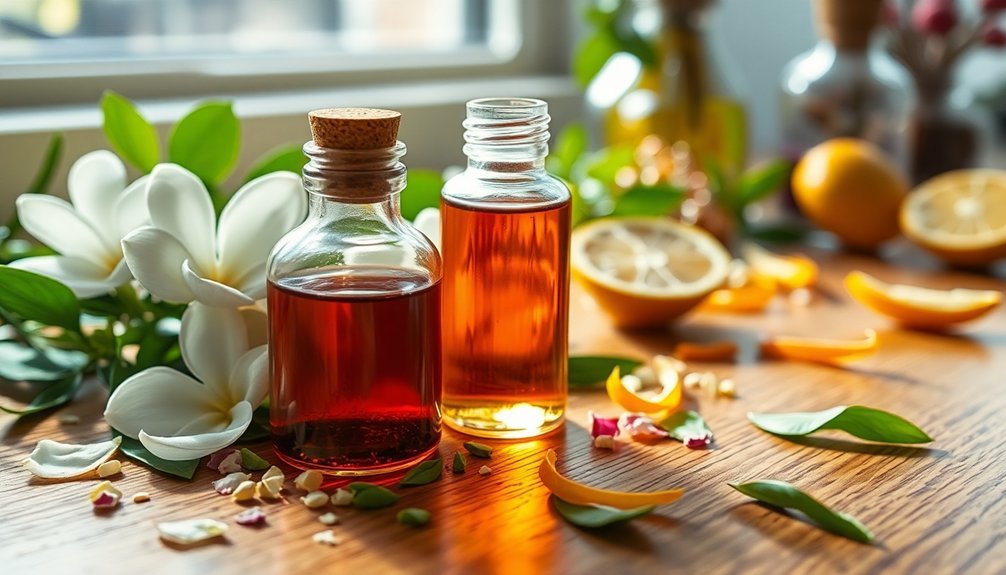
You'll want to start by carefully layering your essential oil components, building from single notes to more intricate combinations through gradual additions and adjustments.
Testing blend harmonies requires patience as you mix different proportions until you achieve the desired synergistic effect.
Finding the right balance of raw material ratios is vital – you can experiment with varying percentages of each component while maintaining the overall harmony of your developing accord.
Layering Essential Oil Components
When crafting complex accords, understanding how to layer essential oil components forms the foundation of successful perfume creation.
You'll need to start with clean skin and unscented lotion to guarantee the best results. Allow each layer to settle before adding the next, as this prevents interference between notes and creates a more harmonious blend.
Through careful experimentation, you can achieve unique, evolving scents that last throughout the day.
- Begin with base notes as your foundation, allowing them to fully develop on your skin.
- Add middle notes strategically to build complexity and character.
- Layer top notes last to create immediate impact and first impressions.
- Test your combinations on perfume strips before applying to skin to perfect your ratios.
Balancing Raw Material Ratios
Building upon your layering techniques, mastering raw material ratios opens up endless possibilities for creating sophisticated accords.
You'll need to start by diluting your raw materials to 10% in alcohol to properly assess their scents and interactions.
When you're working on simple accords, begin with just two or three materials. For instance, you can create an amber accord by combining labdanum absolute with vanillin.
As you gain confidence, you can progress to more complex combinations, like crafting a tea accord using jasmine, bergamot, and violet notes.
Remember to add one ingredient at a time and adjust the ratios methodically. While adding more components creates interesting interactions, it also increases the risk of unwanted effects.
Once you've perfected an accord, you can use it as a foundation for future fragrances.
Testing Blend Harmonies
The art of testing blend harmonies begins with transforming individual notes into sophisticated accords through systematic experimentation. You'll need to carefully combine ingredients drop by drop, evaluating each addition's impact on the overall composition.
As you blend, consider the volatility rates and chemical compatibility of your materials to guarantee a smooth shift between notes.
- Keep detailed records of your formulations, noting successful combinations and areas for improvement.
- Start with 2-3 key materials to form your base, then gradually add modifiers.
- Test different ingredient sequences, as the order of addition can greatly impact the final accord.
- Create multiple samples to compare variations and track your progress.
Remember to trust your nose while testing harmonies, but don't hesitate to make adjustments. The goal is to achieve synergy where your combined materials create something more remarkable than their individual parts.
Frequently Asked Questions
How Long Does a Well-Crafted Fragrance Accord Typically Last on Skin?
You'll find a well-crafted fragrance accord typically lasts 4-8 hours on your skin, but this can vary based on your skin type, the concentration level, and the specific base notes used.
Can Natural Allergies Affect How Fragrance Accords Are Perceived?
Yes, if you're allergic to natural ingredients, your skin's reaction can alter how you perceive fragrance accords. Your body's immune response may cause inflammation and sensory changes that distort the intended scent experience.
Do Temperature and Humidity Impact the Performance of Fragrance Accords?
Yes, temperature and humidity greatly affect your fragrance's performance. You'll notice stronger projection in heat but shorter longevity, while humidity helps lock scents to your skin, making them last longer and project differently.
Are Certain Fragrance Accords More Suitable for Specific Seasons?
Yes, you'll find certain accords work better in different seasons. Light citrus suits summer's heat, while warm spices complement fall. Winter calls for rich woods, and spring embraces fresh florals and bright notes.
How Do Skin Chemistry Differences Affect the Development of Fragrance Accords?
Your skin's pH, moisture levels, and unique biochemistry will dramatically alter how fragrance accords develop. You'll notice different notes emerge based on your natural oils, diet, and hormonal balance when wearing perfumes.
In Summary
You've now mastered the fundamentals of creating fragrance accords, but remember that true artistry comes from experimentation and practice. Don't be afraid to break traditional rules and trust your nose. Whether you're blending florals, woods, or oriental accords, your unique perspective will shape distinctive combinations. Keep refining your techniques, document your successes, and you'll develop your own signature in the world of perfumery.



Leave a Reply