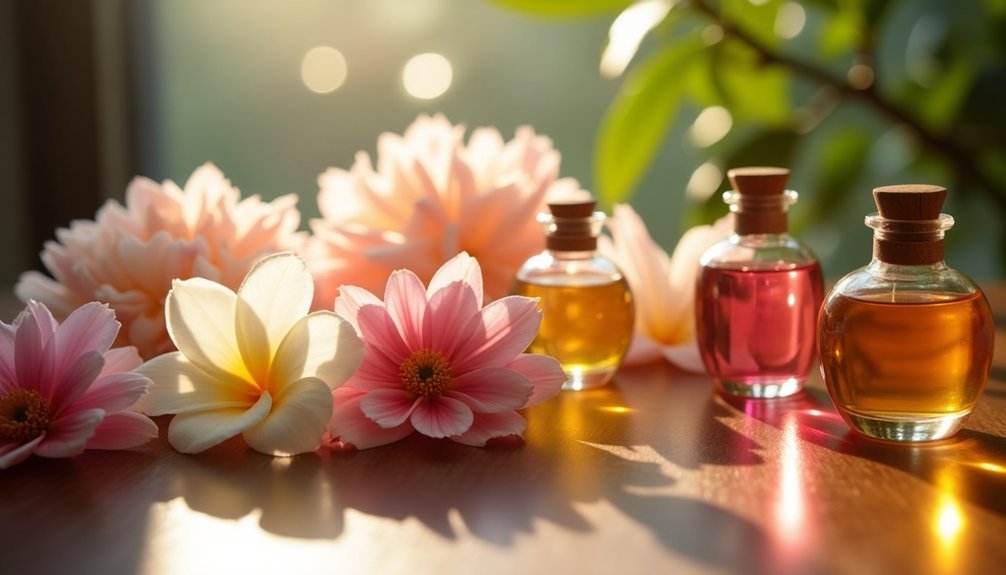
When crafting feminine perfumes, you'll want to focus on floral top notes that make up 30% of your blend. Start with classic essences like jasmine, bergamot, or lavender, and layer them with complementary citrus or herbal accents. Follow the 30-50-20 rule for a balanced composition, and store your creations in dark glass bottles away from heat and light. The art of perfume blending opens a world of sophisticated botanical possibilities.
The Enchanting World of Floral Top Notes
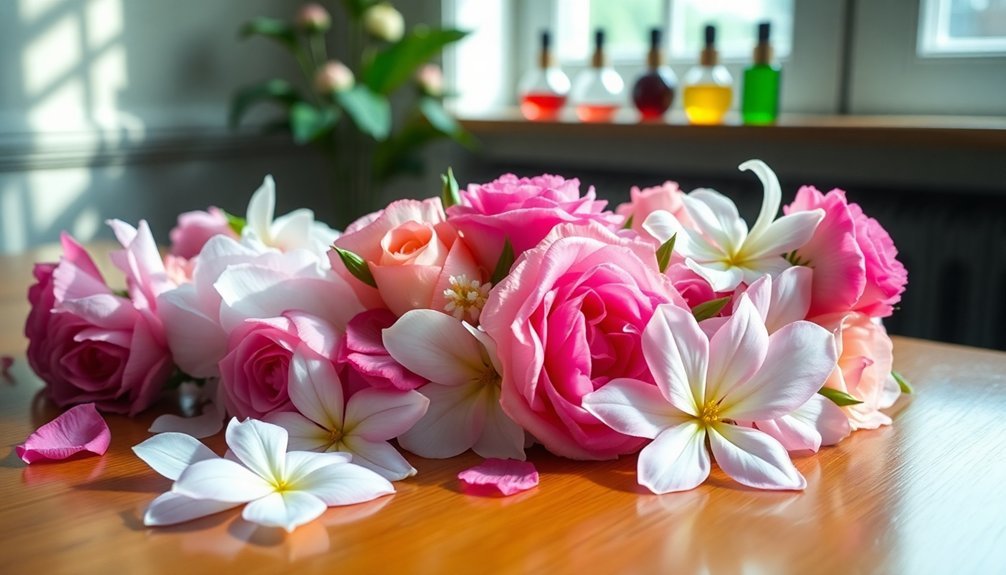
Three key elements make floral top notes truly enchanting in perfumery: their immediate impact, ephemeral nature, and ability to set the tone for an entire fragrance.
When you first apply your perfume, you'll experience the delicate dance of jasmine, bergamot, lavender, or neroli as they introduce your signature scent.
These floral top notes create an intimate connection that lasts about 30 minutes before gracefully fading.
You'll find they're especially powerful when crafted from high-quality essential oils, which add depth and sophistication to your fragrance blends.
If you're seeking a vibrant profile, try combining these florals with citrus or green notes.
The result? A revitalizing yet romantic aroma that perfectly captures feminine elegance while maintaining a modern, dynamic character.
Essential Botanicals for Feminine Fragrances
While creating feminine fragrances requires artistry, understanding essential botanicals serves as your foundation for success.
You'll find that classic floral top notes like rose, lavender, and geranium are your key ingredients for crafting soft, romantic perfume blends. These botanicals typically make up 30% of your composition and will last about 30 minutes on the skin.
To enhance your feminine fragrances, try layering your essential botanicals with complementary citrus or herbal notes. This technique adds depth and creates a more dynamic scent profile.
You'll discover that floral top notes naturally evoke feelings of elegance and beauty, making them perfect for signature women's scents.
Blending Ratios and Techniques for Delicate Scents
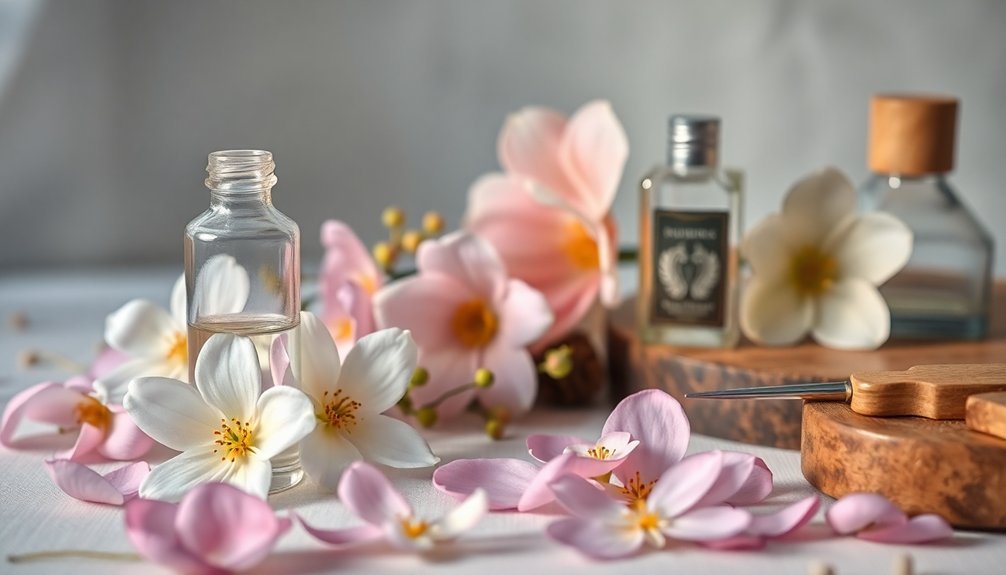
Creating balanced floral perfumes requires mastering precise blending ratios and gentle techniques. When you're blending fragrances, start with the 30-50-20 rule: 30% top notes, 50% middle notes, and 20% base notes. This ratio helps you achieve a well-rounded scent profile.
Since floral top notes are delicate and fade within 30 minutes, you'll want to carefully select lighter essential oil options like bergamot or lavender.
Begin with small amounts—just 5 drops of fragrance oils at a time—to find your perfect blend without wasting materials. Remember to pair your top notes with complementary middle and base notes that'll extend the life of your perfume.
Once you've created your blend, let it rest for several days. This waiting period allows the scents to meld into a harmonious creation.
Seasonal Floral Selections for Year-Round Appeal
Now that you've mastered blending techniques, let's explore how to select the perfect floral notes for each season.
Your fragrance choices should reflect nature's changing moods throughout the year.
Spring floral selections like cherry blossom and lilac capture renewal's essence, while summer calls for exotic jasmine and frangipani that blend well with warm weather.
As autumn arrives, incorporate deeper notes of chrysanthemum and dahlia to mirror the season's rich complexity.
Winter demands elegant choices like honeysuckle and camellia to create comforting scents during cold months.
Layering Floral Notes With Complementary Accents
You'll find endless possibilities when pairing floral top notes with complementary accents, from the classic combination of rose and basil to the unexpected harmony of jasmine and mint.
Your success in blending these notes depends on maintaining the ideal 30-50-20 ratio while experimenting with seasonal variations, such as light citrus additions in summer or warming vanilla undertones in winter.
To guarantee your floral creation lasts throughout the day, try anchoring delicate blooms like neroli or lavender with stronger base notes such as sandalwood, which provides stability without overshadowing the bouquet's natural elegance.
Essential Floral Oil Pairings
The art of layering floral notes demands a thoughtful approach to achieve the perfect balance in your signature scent.
When creating essential oil blends, you'll find that certain floral combinations work harmoniously to enhance your fragrance's complexity.
- Combine jasmine with bergamot or grapefruit for a revitalizing twist that brightens your floral base while maintaining the recommended 30% top note ratio.
- Layer rose essential oil with warm spices like ginger or clove to create an intriguing day-to-evening fragrance that adapts to your personal style.
- Pair ylang-ylang with grounding woodsy notes such as cedarwood or sandalwood to develop a lasting scent that evolves beautifully on your skin.
Remember that these floral pairings serve as a foundation for your unique fragrance journey, allowing you to experiment with different combinations until you discover your perfect blend.
Balancing Strength and Subtlety
When creating an enchanting floral fragrance, striking the right balance between strength and subtlety requires careful attention to complementary accents. You'll want to maintain the recommended 30% ratio of floral top notes while strategically layering them with other elements to achieve the perfect harmony.
During the blending process, you can enhance your fragrance oil composition by introducing citrus or green notes to boost freshness and energy.
To add depth, incorporate woody or musky base notes that'll ground your perfume while maintaining its feminine appeal.
Don't hesitate to experiment with spicy elements like ginger or cardamom – they'll introduce warmth and complexity to your blend.
Seasonal Bloom Combinations
Creating unique seasonal fragrances begins with understanding how different blooms harmonize throughout the year.
You'll discover that seasonal bloom combinations can transform your perfume collection into a dynamic journey through nature's changing scents.
- Spring calls for delicate floral notes like cherry blossom paired with bright bergamot, creating a fresh, awakening signature that captures the season's renewal.
- Summer invites you to blend tropical jasmine with crisp green accents, delivering a light, breezy fragrance perfect for warm days.
- Fall and winter demand rich warm florals – try chrysanthemum with spicy cinnamon for autumn, or deep rose with woody sandalwood for winter months.
Each unique signature scent you create becomes a personal expression of the season, telling your olfactory story through carefully layered combinations.
The Art of Capturing Garden-Fresh Essences
When you're selecting fresh floral notes for your perfume, start with pure jasmine or bergamot to establish a garden-inspired foundation that captures the essence of morning blooms.
You'll want to combine these delicate ingredients using light, circular motions during blending, allowing the natural characteristics of each flower to shine through without overwhelming the composition.
To preserve the fresh, natural qualities of your floral top notes, store your blends in dark glass bottles and keep them away from direct sunlight and heat, ensuring your garden-inspired creation maintains its vibrant character.
Selecting Fresh Floral Notes
The art of selecting fresh floral notes begins with three fundamental principles: purity, proportion, and balance. When you're perfume blending, you'll want to focus on capturing the essence of your chosen flowers through high-quality essential oils.
Remember that fresh floral notes should comprise about 30% of your blend to create that perfect top note impression.
- Choose cold-pressed or steam-distilled essential oils to preserve authentic flower scents
- Mix light and deep florals for a dynamic fragrance profile
- Consider the therapeutic properties: lavender for calm, ylang-ylang for exotic richness
You'll find that experimenting with different combinations, like jasmine, rose, and peony, can create an uplifting garden-fresh essence.
The key is to balance these delicate scents while ensuring they provide that vital initial impression that lasts about 30 minutes.
Garden-Inspired Blending Techniques
To master garden-inspired blending techniques, you'll need to understand how different floral essences interact and complement each other in your perfume creation.
Start by selecting authentic essential oils from garden botanicals like ylang-ylang and geranium to establish your floral top notes.
When crafting your blend, follow the 30-50-20 ratio rule: use 30% floral top notes, 50% middle notes, and 20% base notes. This proportion guarantees a well-balanced garden-inspired fragrance.
Layer your chosen florals with complementary citrus or woody elements to add depth and dimension to your perfume.
Remember to test your creation on your skin, as floral top notes can develop uniquely based on your body chemistry.
This step is essential for understanding how your garden-inspired blend will evolve throughout the day.
Preserving Delicate Scents
Successfully preserving delicate floral scents requires meticulous attention to storage and handling techniques.
You'll need to protect your perfumes from light damage by storing them in dark glass bottles, and always keep them in a cool, dark space to maintain their garden-fresh qualities.
When working with essential oils and creating your own blends, remember these vital steps:
- Choose high-quality essential oils that have been properly extracted through steam distillation or other gentle methods
- Store your finished perfumes in dark glass bottles away from direct sunlight and heat
- Allow your blended fragrances to mature for several weeks, enhancing their complexity
Mastering Light and Airy Top Note Combinations
Creating light and airy top notes requires a delicate balance of floral elements that dance together in perfect harmony.
Start by selecting your favorite floral scents, such as jasmine, neroli, or bergamot, which will make up about 30% of your blend. You'll want to complement these with citrus notes like lemon or grapefruit to achieve that perfect fresh opening.
Remember that your body chemistry will affect how these delicate scents develop, so it's crucial to test your combinations on your skin.
Since top notes typically fade within 30 minutes, you'll need to carefully consider how they'll interact with your middle and base notes.
Creating Signature Floral Impressions
Three essential elements define a signature floral impression: personal connection, unique combinations, and balanced proportions.
When creating your signature floral perfume, you'll want to focus on floral top notes that trigger meaningful emotions and memories.
- Start with classic floral top notes like jasmine, neroli, or bergamot, which comprise 30% of your blend and last about 30 minutes.
- Experiment with alternative combinations, such as replacing jasmine with ylang-ylang, to develop your unique scent identity.
- Apply proper blending techniques by adding essential oils gradually and adjusting ratios to your preference.
Best Practices for Floral Note Preservation
Once you've crafted your signature floral blend, proper preservation techniques will guarantee your perfume maintains its intended character.
Store your floral essential oils in dark glass containers away from direct light to prevent their delicate scent profiles from deteriorating. You'll want to keep your blends in a cool, dry space to avoid oxidation that can compromise their freshness.
When you're perfume blending, select a mild carrier oil like jojoba to dilute your floral notes while preserving their authentic aromas.
Don't rush to judge your creation immediately – let your blend floral notes mature for several days to achieve their full potential.
Remember to protect your mixtures from heat and moisture exposure, as these elements can greatly diminish the potency of your carefully crafted perfume.
Frequently Asked Questions
What Is the Ratio for Blending Perfume?
You'll want to blend your perfume using a 30-50-20 ratio: 30% for top notes that you smell first, 50% for middle notes that give character, and 20% for long-lasting base notes.
What Female Perfume Gets the Most Compliments?
You'll find that perfumes with floral notes like jasmine and rose consistently receive the most compliments. Popular choices include Chanel No. 5, Marc Jacobs Daisy, and Viktor & Rolf Flowerbomb for their enchanting scents.
How to Blend Notes in Perfume?
You'll want to follow the 30-50-20 ratio: 30% top notes for first impressions, 50% middle notes for character, and 20% base notes for longevity. Start with 5 drops and adjust gradually.
What Is the Most Popular Perfume for Ladies Right Now?
You'll find "La Vie Est Belle" by Lancôme leading the popularity charts right now, with "J'adore" by Dior and "Flowerbomb" by Viktor & Rolf following closely behind. These fragrances dominate today's perfume market.
In Summary
You've commenced on a journey into the delicate art of floral perfumery. With these blending techniques, ratio guidelines, and seasonal selections at your fingertips, you're ready to create enchanting feminine fragrances. Remember to trust your nose, experiment with combinations, and maintain proper storage methods. Whether you're crafting light spring bouquets or rich floral orientals, you'll find your signature scent through patient practice and creative exploration.




Leave a Reply