
You'll need just five essential bottle types to start your perfume-making journey: 5ml plastic bottles for testing blends, 10ml glass bottles for personal fragrances, 30ml containers for daily wear, sample vials for evaluating formulas, and larger 100ml vessels for successful signature scents. Start with amber or UV-protective glass to shield your creations from light damage, and guarantee you have quality caps for proper sealing. The right bottles will set the foundation for your perfumery success.
Essential Glass Bottle Sizes for Your First Perfume Kit
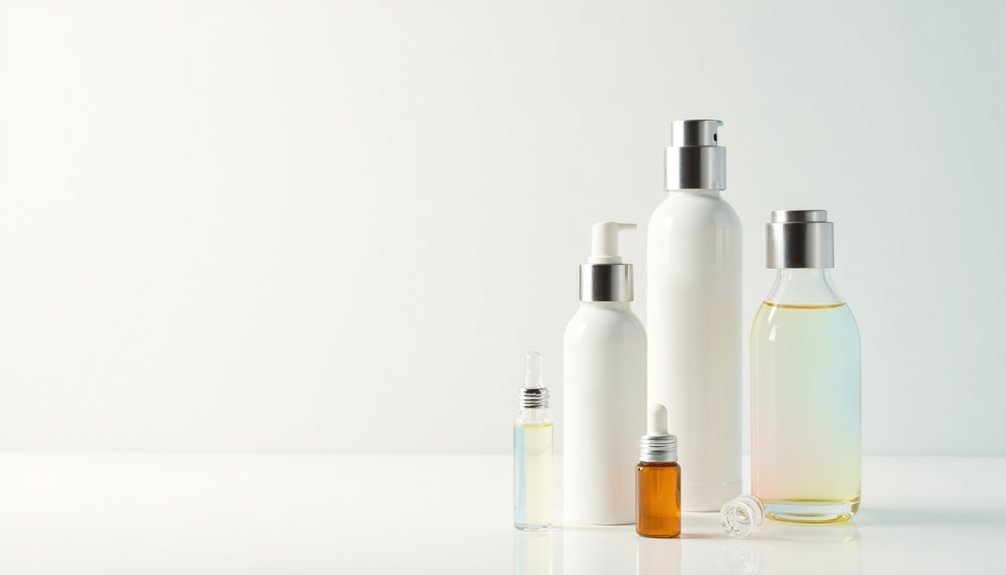
When starting your perfume-making journey, selecting the right bottle sizes can make the difference between wasteful experimentation and efficient creation.
Smart bottle selection is the foundation of successful perfumery, helping you avoid waste while mastering your craft.
While you'll want to begin with 5ml plastic bottles for testing your essential oils blends, you'll soon need to upgrade to glass containers for your successful formulations.
Your starter glass bottle collection should include three key sizes: 10ml bottles for personal fragrances, 30ml containers for daily wear options, and 100ml vessels for larger batches of your signature scents.
Choose amber or UV glass bottles to protect your creations from light degradation, and guarantee each container has an airtight cap to prevent oxidation.
Dark vs. Clear Glass: Making the Right Choice
After selecting your bottle sizes, you'll need to contemplate the most important factor in preserving your perfumes: the glass color. Dark glass bottles, particularly those made from UV glass, offer superior protection for your creations by blocking harmful sunlight that can degrade your fragrances.
| Glass Type | Protection Level | Best Use |
|---|---|---|
| UV Glass | Excellent | Long-term storage |
| Amber | Good | Medium-term storage |
| Clear | Poor | Display only |
While clear bottles might showcase your perfumes beautifully, they won't protect them from oxidation and quality loss. If you're serious about preserving your fragrances, invest in dark glass bottles that'll maintain their integrity over time. Consider amber bottles as a middle-ground option, but remember they still allow some light exposure. Choose based on your storage plans and how light-sensitive your perfumes are.
Selecting Proper Spray Bottles and Atomizers
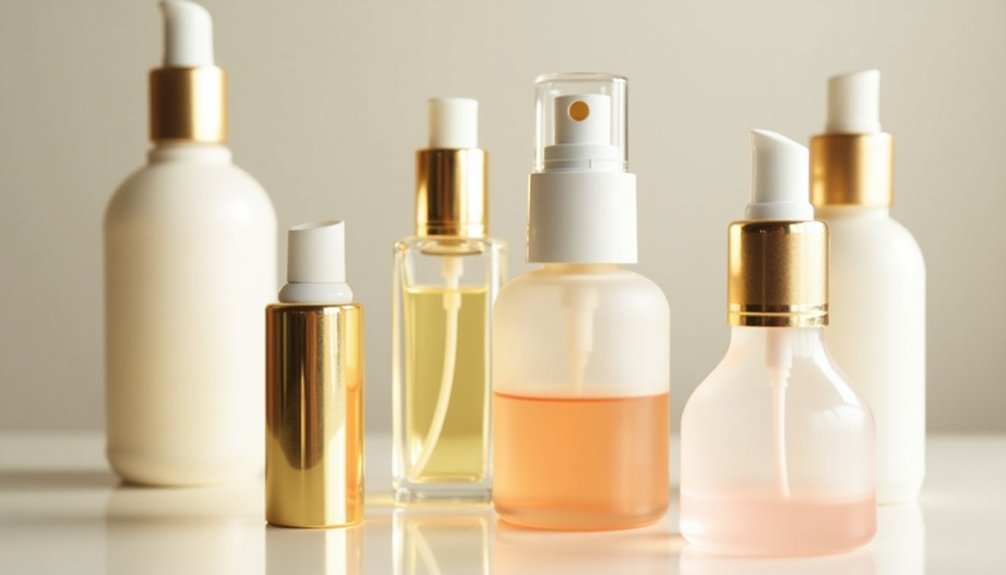
When starting your perfumery journey, you'll want to invest in high-quality glass spray bottles and atomizers rather than plastic ones, as glass prevents unwanted chemical interactions and better preserves your fragrances.
You'll need various bottle sizes to accommodate different stages of your perfume-making process, from small containers for testing to larger ones for final blends.
Make sure your chosen bottles feature reliable pump mechanisms that dispense a fine mist and include airtight seals to protect your valuable creations from oxidation.
Atomizer Materials And Quality
The foundation of successful perfume-making starts with selecting the right atomizer materials and quality.
You'll want to invest in high-quality glass bottles rather than plastic ones, as they prevent unwanted chemical reactions and keep your fragrances pure. Look for bottles with UV-protective glass that shields your creations from harmful light while allowing beneficial light through.
Your atomizer's seal is vital – choose ones with airtight mechanisms to prevent oxidation and maintain your perfume's integrity.
The spray mechanism should be reliable and leak-free to avoid waste and guarantee precise application.
Consider your usage patterns when selecting bottle sizes: opt for travel-sized containers if you're often on the go, or choose larger ones for home use.
These choices will greatly impact your perfume's longevity and your overall experience.
Storage Capacity Guidelines
Selecting the right storage capacity for your perfume bottles involves three essential size categories that serve different purposes.
For your starter kit, you'll want to begin with 5ml to 10ml spray bottles, which are perfect for experimenting with different blends without wasting ingredients.
As you develop your signature scents, upgrade to 30ml to 50ml bottles – they're ideal for personal use and gifting, typically lasting several months.
Once you've perfected a fragrance, consider 100ml bottles for long-term storage or sharing.
Whatever size you choose, make sure you're using high-quality glass bottles with airtight caps and reliable atomizers.
This combination prevents unwanted chemical reactions and protects your perfumes from oxidation, maintaining their quality and extending their shelf life.
Roll-On Bottles for Personal Blends
Starting your perfume-making journey means choosing the right vessels for your creations, and roll-on bottles stand out as an excellent choice for personal blends. You'll appreciate their glass construction, which protects your fragrances from unwanted chemical reactions, while the airtight seals prevent oxidation and preserve your scent's integrity.
| Feature | Benefit | Application |
|---|---|---|
| Glass Material | Prevents contamination | Maintains scent purity |
| Ball Applicator | Even distribution | Perfect for pulse points |
| 5-10ml Size | Portable testing | Ideal for samples |
These bottles offer you precise control over application, making them perfect for experimenting with different formulations. Their compact size lets you carry multiple blends, while the roll-on mechanism guarantees you'll apply just the right amount of fragrance to your pulse points without over-application.
Sample Vials for Testing New Formulas
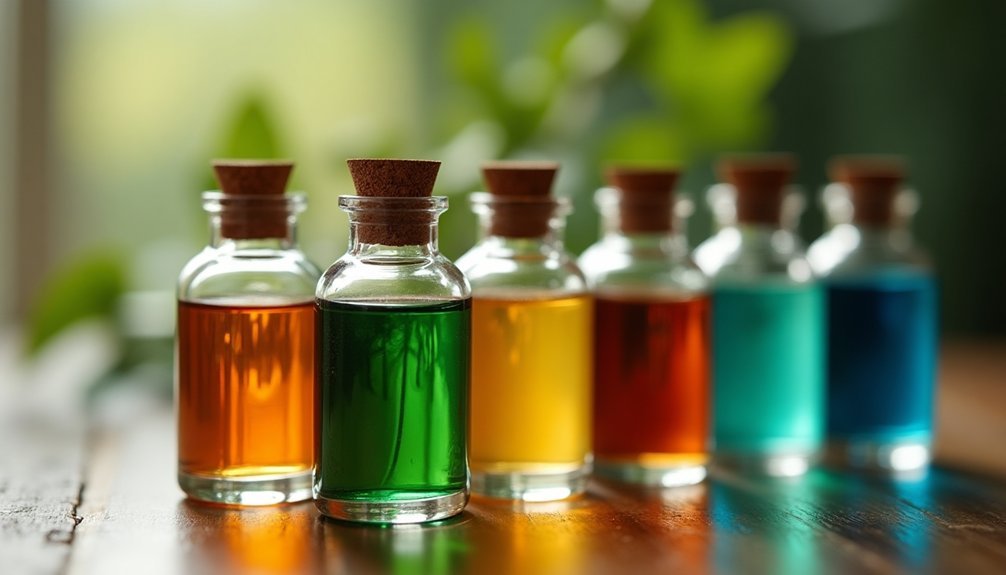
While roll-on bottles serve well for final blends, sample vials become your best friends during the experimental phase of perfume creation.
These small 5ml clear glass containers let you test multiple formulations without wasting precious ingredients. You'll appreciate how the transparent glass helps you examine your creation's appearance while keeping your experiments organized.
When working with sample vials, you'll need:
- A set of precise pipettes or droppers for accurate measurements
- A cool, dark storage space to protect your test blends
- A systematic labeling method to track your different formulations
Using sample vials allows you to perfect your scent combinations before scaling up to larger quantities.
Sample vials are your perfume creation laboratory, letting you master scent combinations with precision before committing to full batches.
You can freely experiment with various ratios and ingredients, knowing you're working with manageable amounts that won't break the bank if a blend doesn't turn out as planned.
Storage Bottles for Base Notes and Carriers
Your storage bottle choices will make an essential difference in preserving your base notes and carriers, with amber or UV glass bottles offering superior protection against damaging light exposure compared to clear glass options.
You'll need bottles equipped with reliable droppers and airtight seals to maintain precise control over dispensing while preventing oxidation that can diminish your fragrances' quality.
When selecting your storage containers, prioritize those with secure screw-top caps or quality dropper mechanisms that create an impermeable seal, ensuring your valuable materials stay fresh and potent for your perfume creation journey.
Dark Glass Vs Clear
When selecting storage containers for your base notes and carriers, the choice between dark and clear glass bottles can greatly impact the longevity of your fragrances.
Dark glass, especially UV-protective varieties, offers superior protection against light degradation that can compromise your precious materials. While clear glass might look appealing, it allows harmful light to penetrate, leading to oxidation and quality loss of your fragrance ingredients.
- Choose dark glass bottles with airtight seals to protect against both light and air exposure.
- Avoid clear glass containers for long-term storage, as they won't shield your oils from damaging light.
- Consider amber glass as a middle-ground option, though it provides less protection than UV glass.
Remember to inspect your dark glass bottles for quality by checking their weight and examining for any defects before use.
Dropper Types Matter
Three main types of droppers are essential for proper perfume-making: glass pipettes, rubber bulb droppers, and integrated dropper caps. When you're starting out, you'll quickly learn that dropper types matter greatly for precise measurements and preserving your oils.
| Dropper Type | Best Use | Key Benefit |
|---|---|---|
| Glass Pipette | Fine Measurements | Chemical-neutral |
| Rubber Bulb | Quick Transfers | Easy Control |
| Integrated Cap | Daily Storage | Airtight Seal |
| Euro Dropper | Base Notes | Consistent Drops |
| Calibrated Tip | Carrier Oils | Measured Pour |
You'll want to choose droppers that pair well with amber or UV glass bottles to protect your materials from light damage. Make sure your chosen droppers create proper seals to prevent oxidation. Start with 10ml and 30ml bottles to experiment with different formulations while maintaining ideal storage conditions.
Airtight Seal Requirements
Selecting storage bottles with proper airtight seals stands as the cornerstone of preserving your base notes and carriers.
You'll want to focus on quality caps that secure easily and create reliable seals to prevent leaks and maintain your fragrance's integrity. Glass containers, especially UV-protective ones, are your best choice since they won't chemically interact with your precious ingredients.
When considering airtight seal requirements, follow these essential guidelines:
- Choose glass bottles with high-quality caps that lock securely and create an unmistakable seal.
- Opt for UV-protective glass that shields contents from harmful light while allowing beneficial light through.
- Minimize how often you remove the cap to reduce air exposure and preserve aromatic properties.
Measuring and Mixing Container Requirements
To create perfumes successfully, you'll need the right measuring and mixing containers in your toolkit. Your measuring tools should include graduated pipettes or droppers for precise oil measurements. Glass mixing jars of at least 4 ounces are essential to prevent unwanted chemical reactions.
| Container Type | Purpose | Size Requirements |
|---|---|---|
| Mixing Jars | Blending | 4 oz minimum |
| Sample Bottles | Testing | 5-15 ml |
| Storage Bottles | Bulk Storage | 30+ ml |
Don't forget to sterilize all your containers before use to maintain perfume integrity. A glass funnel will help you transfer your creations cleanly between containers. You'll want various bottle sizes for different stages: small ones for samples, medium for personal use, and larger ones for storing your successful formulations.
The Role of Dropper Bottles in Perfumery
Beyond your basic measuring containers, dropper bottles serve as a cornerstone tool in perfume making. They'll help you maintain precision while protecting your precious fragrance oils from contamination. Glass dropper bottles are particularly valuable since they won't react with your ingredients like plastic alternatives might.
Glass dropper bottles are essential in perfumery, offering precise measurements and protecting delicate fragrance oils from both contamination and unwanted chemical reactions.
When you're starting your perfumery journey, you'll find dropper bottles indispensable for:
- Controlling the exact number of drops in your formulations
- Creating small test batches without wasting expensive materials
- Diluting concentrated oils to achieve your desired fragrance strength
Whether you're working on tiny samples or larger experimental blends, having a variety of dropper bottles at your disposal will make your perfume-making process more efficient and accurate.
You'll appreciate their versatility as you progress from basic blends to more complex formulations.
Preserving Precious Oils With Specialty Containers
When preserving your precious oils, you'll find UV glass containers to be your best defense against damaging light exposure while still allowing beneficial light to penetrate the bottle.
Your oils need airtight seals to prevent oxidation and maintain their original fragrance profiles over time.
While plastic containers might seem convenient, they can react with your oils, so it's crucial to invest in quality glass bottles that offer both protection and professional presentation for your perfumery work.
UV Protection Matters Most
For beginner perfumers, UV protection stands as the most critical factor in bottle selection.
While clear glass may look appealing, it's your fragrance's worst enemy, allowing harmful sunlight to degrade your precious blends.
UV glass bottles are your best investment, as they'll preserve your creations while still maintaining their aesthetic appeal.
When you're selecting bottles for your perfumery journey, remember these essential points:
- UV glass offers superior protection compared to both clear and amber bottles, keeping your fragrances fresh longer.
- You'll need airtight seals alongside UV protection to prevent oxidation and maintain scent integrity.
- Don't compromise on quality – proper UV-protected containers will save you money by preventing waste of expensive oils.
Airtight Seals Prevent Degradation
Although UV protection safeguards against light damage, airtight seals play an equally essential role in preserving your perfume oils.
When you're selecting bottles for your perfume-making journey, prioritize containers with high-quality caps and closures that create reliable airtight seals.
You'll want to invest in bottles that minimize how often you need to remove the cap, as each opening exposes your fragrance to air that can trigger oxidation.
Look for designs that create a secure seal when closed, preventing unwanted leaks and maintaining your perfume's integrity.
Choose glass containers with precision-engineered closures that you can clean and reuse. This investment not only protects your precious fragrances from degradation but also supports sustainable practices in your perfume-making endeavors.
Glass Vs Plastic Options
While both glass and plastic containers are readily available, glass stands as the superior choice for storing your precious perfume oils.
You'll find that quality glass bottles don't chemically interact with your fragrances, keeping your scents pure and true to their original composition. When selecting glass containers, opt for amber-colored options that shield your creations from harmful light exposure.
Here's why glass is your best investment:
- Creates an impenetrable barrier that prevents unwanted chemical reactions with your perfume
- Offers superior airtight sealing capabilities, protecting against oxidation and maintaining scent integrity
- Provides better sustainability through durability and reusability, making it ideal for long-term perfume making
When examining glass bottles, check for cracks and assess their weight – heavier bottles typically indicate higher quality and better preservation potential.
Travel-Size Options for Your Custom Blends
Travel-size perfume bottles are essential tools for any aspiring perfumer who wants to experiment with custom blends on the go. When selecting travel-size options, you'll want to prioritize screw-top jars that prevent leakage and guarantee your fragrances stay secure during transport.
Consider Infinity Jars' travel-size collection, which offers excellent airtight seals and easy cleaning features. Small glass bottles between 5ml and 30ml are perfect for testing new blends without wasting ingredients.
You'll benefit from choosing dark or UV glass containers, as they shield your creations from light damage that can alter their scent profiles. Look for bottles with wide mouths, making it simpler to fill and access your perfumes.
These practical features will help you maintain the quality of your fragrances while experimenting with different combinations away from your workspace.
Cleaning and Maintaining Your Perfume Bottles
Proper cleaning and maintenance of your perfume bottles guarantees the longevity of both your containers and fragrances.
Taking proper care of perfume bottles through regular cleaning and upkeep ensures your fragrances and containers stay in pristine condition.
You'll want to clean glass bottles using warm, soapy water while avoiding harsh chemicals that could damage the container or affect future scents. After washing, rinse with distilled water to remove any soap residue, and let the bottles air dry completely before adding new perfume.
- Store your bottles in a cool, dark place to protect them from light and temperature changes.
- Check regularly for cracks or damage that could cause leaks.
- Don't skip the drying process – moisture can dilute your next fragrance blend.
Remember to perform routine maintenance checks on your collection.
This simple care routine will help preserve your bottles and guarantee your fragrances remain pristine for continued use in your perfume-making journey.
Frequently Asked Questions
What Do I Need to Start Perfumery?
You'll need UV glass bottles, plastic sample vials, pipettes, mixing jars with airtight seals, and various sized containers. Make sure you're buying from trusted sellers to guarantee quality fragrance storage and preservation.
Is It Better to Get 30ML or 50ML Perfume?
If you're new to perfumes, start with 30ml to test and experiment without waste. But if you've found a scent you'll wear frequently, go for 50ml – it's more cost-effective and practical.
What Alcohol Do Perfumers Use?
You'll primarily want to use 200 proof grain alcohol (ethanol) for perfume making. It's the industry standard, making up 75-95% of most fragrances. High-percentage vodka or Everclear can work as alternatives too.
How to Choose a Perfume Bottle?
You'll want to select UV-protected glass bottles with airtight seals to preserve your fragrance. Check for quality construction, no cracks, and choose appropriate sizes. Avoid plastic containers as they can affect scent integrity.
In Summary
You'll find that building your perfume bottle collection doesn't require every container on the market. Start with a few essential pieces: dark glass bottles for storage, spray atomizers for finished blends, and small sample vials for testing. As you grow more confident in your craft, you can expand your collection. Remember to keep your bottles clean and properly sealed to protect your precious creations.

Leave a Reply