
Those vibrant summer fruits you love release specific volatile organic compounds that trigger your nose's receptors with incredible efficiency. Your brain detects tiny concentrations of esters, lactones, and terpenes that create those unmistakably fresh and zesty aromas. Nature designed these scents to attract animals for seed dispersal, which is why they're so appealing to you. The science behind these irresistible summer fragrances reveals an even more fascinating natural story.
The Science Behind Fresh Fruit Aromas
When you catch the enticing scent of a ripe peach or fresh strawberry, you're actually detecting an intricate blend of volatile organic compounds.
These natural chemicals, including esters, aldehydes, and terpenes, work together to create each fruit's unique aroma signature. You'll find lactones giving peaches their sweet, creamy scent, while specific esters make apples and bananas instantly recognizable.
Nature's aromatic symphony relies on precise chemical combinations, with each fruit conducting its own unique fragrant orchestra through specialized compounds.
Your olfactory receptors are remarkably sensitive, capable of picking up these aromatic compounds even in tiny concentrations.
This heightened sensitivity isn't just a pleasant coincidence – it's nature's clever design. Fruits evolved these appealing scents to attract animals, ensuring their seeds would be dispersed effectively.
Natural Compounds That Create Zesty Scents
Behind every zesty summer fruit lies a sophisticated orchestra of natural compounds working in perfect harmony.
You'll find that these zesty scents come from volatile organic compounds that create the signature aromas you love. When you bite into a fresh citrus fruit, you're experiencing limonene's invigorating punch, while tropical fruits delight your senses through special esters formed by nature's chemistry.
- Citrus fruits showcase limonene, giving you that uplifting burst of vitality
- Esters create the sweet, fruity notes in mangoes and pineapples
- Lactones contribute creamy undertones in peaches and coconuts
- Multiple compounds blend to attract seed-dispersing animals
- These natural aromatics trigger positive emotions in humans
These natural scent combinations aren't just pleasant – they're essential to how fruits interact with their environment and appeal to your senses.
Seasonal Peak Times for Summer Fruit Fragrances
These natural compounds reach their peak potency during specific times of the year, particularly in summer when fruits achieve ideal ripeness.
Nature's timing ensures fruits reach their aromatic peak in summer, when ripeness unlocks their full potential.
You'll notice this especially in summer fruits like mangoes, pineapples, and peaches, whose fragrant profiles become more intense during warm months.
The seasonal availability of these fruits isn't just a matter of timing – it's nature's way of ensuring their aromas are at their most alluring when they're ready for consumption and seed dispersal.
You'll find that the esters and lactones responsible for their sweet, zesty scents are most concentrated during peak ripeness.
This perfect timing extends beyond just smell – it enhances your entire sensory experience, from enjoying invigorating citrus notes that combat summer heat to savoring these fruits in seasonal dishes.
Essential Oils and Their Fruit Counterparts
Natural essential oils capture the vibrant essence of summer fruits through concentrated aromatic compounds. You'll find these powerful extracts contain the very essence of your favorite citrus fruits, delivering a revitalizing aroma that instantly uplifts your mood.
When you experience these scents, you're actually detecting specific volatile compounds like limonene, which gives citrus its characteristic zesty fragrance.
- Bergamot oil helps reduce anxiety and stress levels
- Lemon oil promotes feelings of energy and happiness
- Grapefruit oil enhances mood and mental clarity
- Orange oil creates an uplifting atmosphere
- Citrus oils naturally attract pollinators in the wild
These concentrated essences aren't just pleasant fragrances – they're nature's way of communicating through scent.
Whether you're using them for aromatherapy or simply enjoying their invigorating properties, essential oils from citrus fruits offer a direct connection to summer's brightest offerings.
Blending Summer Fruits for Custom Scents
You'll discover endless possibilities when pairing complementary summer fruits, from combining zesty citrus with tropical notes to matching sweet berries with grounding earthy undertones.
When creating your custom scent, start with familiar combinations like lemon-mango or peach-raspberry before experimenting with more complex blends.
Following essential blending techniques, you can layer your chosen fruit scents gradually, starting with stronger base notes and building up to lighter, more volatile top notes.
Complementary Fruit Pairings
While summer fruits offer delightful scents on their own, combining them strategically can create enchanting fragrances that transport you to a sun-drenched paradise.
When you're crafting your perfect summer scent, consider pairing complementary scents that enhance each other's best qualities.
- Blend citrus fruits with peach or mango to achieve a balanced, invigorating fragrance
- Mix tart raspberry with coconut or pineapple for a tropical cocktail-inspired aroma
- Layer lime with vetiver to create depth and sophistication
- Combine jasmine's floral scent with fruity notes for an uplifting experience
- Pair passion fruit with cardamom for an unexpected twist
These combinations don't just smell amazing – they'll help you create signature scents that capture summer's essence while expressing your unique style.
Essential Blending Techniques
Creating enchanting summer scents requires mastering essential blending techniques that balance fruity notes with complementary aromas.
When blending summer fruits, you'll want to start with vibrant citrus notes like lemon and grapefruit as your foundation. You can then layer in jasmine to enhance relaxation while maintaining energetic undertones.
To achieve a well-rounded fragrance, incorporate vetiver to ground your citrus notes, making your blend more sophisticated. Don't forget to add a touch of vanilla to soften sharp edges and create warmth.
Working with essential oils from seasonal fruits won't just smell amazing – it'll help boost your mood and reduce stress.
Try experimenting with unexpected combinations like pineapple-coconut or raspberry-citrus to develop your own signature summer scent that's both invigorating and complex.
Preserving Fresh Fruit Fragrances Year-Round
You'll find that storing essential oils in dark glass bottles away from direct sunlight helps maintain their vibrant fruit aromas throughout the year.
When dehydrating fruits for aromatic purposes, you can maximize their fragrance by using a low temperature setting and checking regularly for the ideal texture that releases the most concentrated scent.
Creating your own fruit-infused home sprays becomes simple when you combine preserved citrus oils with distilled water in a fine-mist bottle, giving you an instant burst of summer freshness whenever you need it.
Essential Oil Storage Tips
To preserve the vibrant fragrances of your favorite summer fruit essential oils throughout the year, proper storage techniques make all the difference.
You'll want to focus on protecting your oils from their biggest enemies: light, heat, and moisture.
- Store your essential oils in dark glass bottles to shield them from harmful light exposure.
- Keep them in a cool, dry space between 60°F to 70°F to prevent quality degradation.
- Avoid bathroom storage, where humidity can compromise their integrity.
- Use vacuum-sealed containers to minimize air contact and maintain potency.
- Track purchase dates and shelf life, especially for citrus oils that typically last 1-2 years.
Dehydrating For Maximum Aroma
While storing essential oils preserves their natural fragrances, dehydrating fresh summer fruits offers another powerful way to capture and intensify their aromatic qualities.
When you dehydrate fruits, you're not just preserving them – you're concentrating their aromatic compounds into more potent versions of their original scents. The process locks in volatile fragrances that would typically fade in fresh fruits over time.
You'll find that using a food dehydrator or low-temperature oven helps maintain these concentrated scents while preventing spoilage.
Dehydrating fruits creates versatile aromatic ingredients you can use year-round. Try adding dried citrus peels to your potpourri or using them as natural air fresheners.
These concentrated scents work beautifully in perfumes and cooking applications, where their intense aromatic compounds add complex, fruity notes to your creations.
Fruit-Infused Home Sprays
Fresh summer fruits provide the perfect foundation for creating aromatic home sprays that capture their vibrant essence throughout the year.
You'll discover how fruit-infused sprays harness essential oils from peels and juices, creating a positive atmosphere in your living spaces while naturally eliminating unwanted odors.
- Choose sprays containing natural citrus extracts for the most authentic aroma
- Place your sprays in well-ventilated areas to maximize fragrance distribution
- Layer multiple fruit scents to create a complex, inviting atmosphere
- Use in spaces where you want to evoke happy memories and uplift mood
- Opt for sprays that combine complementary fruit essences like mango and pineapple
These versatile home fragrances work effectively as natural air fresheners, transforming your space with the invigorating scents of summer fruits.
You'll appreciate how these sprays maintain their vibrant character while neutralizing unpleasant smells throughout your home.
Therapeutic Benefits of Citrus Aromatherapy
When seeking natural mood enhancement and stress relief, citrus aromatherapy stands out as a powerful therapeutic tool. You'll find that citrus essential oils can greatly boost your energy levels while reducing anxiety and stress. These invigorating scents trigger endorphin release, helping you feel more balanced and focused throughout your day.
| Benefit | How It Helps You |
|---|---|
| Mental Clarity | Improves cognitive function and alertness |
| Mood Enhancement | Releases endorphins and fights depression |
| Stress Reduction | Promotes relaxation and overall well-being |
Whether you're using a diffuser at home or incorporating citrus oils into your massage routine, you'll experience the uplifting effects of these natural mood boosters. The therapeutic properties of citrus aromatherapy can transform your space into a revitalizing sanctuary while providing holistic wellness benefits for both mind and body.
Cultural Significance of Summer Fruit Scents
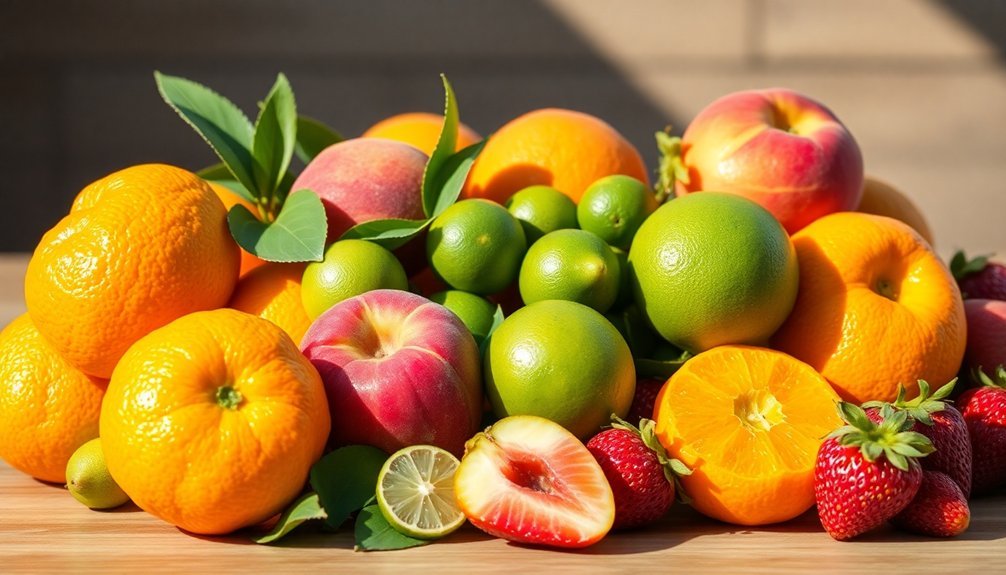
Beyond their therapeutic properties, summer fruit scents carry deep cultural significance across societies worldwide. You'll find these aromatic compounds woven into traditions, celebrations, and cultural identities, particularly during warm-weather gatherings.
The connection between these fragrances and health and liveliness runs deep in many societies, where they're valued for both physical and emotional well-being.
These scents matter to cultures because they:
Summer fruit scents unite communities, enrich traditions, mark seasonal celebrations, and create lasting bonds between generations through shared cultural experiences.
- Create shared memories that bind communities together
- Enhance traditional ceremonies and seasonal festivities
- Signal the arrival of harvest celebrations and summer gatherings
- Infuse cultural dishes with distinctive flavors and meanings
- Promote emotional connections through generational traditions
Through these fragrant elements, summer fruits continue to play an essential role in cultural practices, connecting people to their heritage and each other.
Frequently Asked Questions
Why Does Summer Smell so Good?
You'll notice summer's amazing scent because ripe fruits release sweet-smelling compounds in the warm air. These natural fragrances evolved to attract animals, and they'll trigger positive emotions in your brain too.
What Is the Most Pleasant Smelling Fruit?
You'll find citrus fruits like oranges and lemons are often considered the most pleasant-smelling fruits. They're packed with aromatic compounds that'll boost your mood, but personal preference ultimately determines your favorite fruity scent.
Why Does Fruit Smell so Good?
Fruits smell good because they've evolved to attract you and other animals with appealing volatile compounds. Your brain's limbic system links these pleasant aromas to positive emotions, making you crave and enjoy their scents.
Why Does Citrus Smell so Good?
You're naturally drawn to citrus scents because they're packed with limonene and other mood-boosting compounds that trigger your brain's endorphins. These energizing aromas have evolved to attract and please you instinctively.
In Summary
You've discovered how nature packages sunshine into fragrant summer fruits through complex chemistry and seasonal timing. Whether you're inhaling fresh citrus oils or blending your own fruit-inspired scents, these natural aromas offer more than just pleasant smells – they're mood lifters, stress relievers, and cultural touchstones. Next time you catch a whiff of summer fruit, you'll understand the science and significance behind that irresistible scent.