
When mixing fragrance bases, you'll want to focus on heart notes, which make up 70% of your composition. Start by allocating 30% heart notes, 20% top notes, and 50% base notes in your blend. Test combinations on fragrance strips and pair complementary scent families like floral with citrus or woody with spicy notes. Allow your blends to mature for several days, documenting each combination's evolution. Understanding these essential ratios and techniques will reveal your path to creating balanced, sophisticated fragrances.
Understanding Heart Note Characteristics
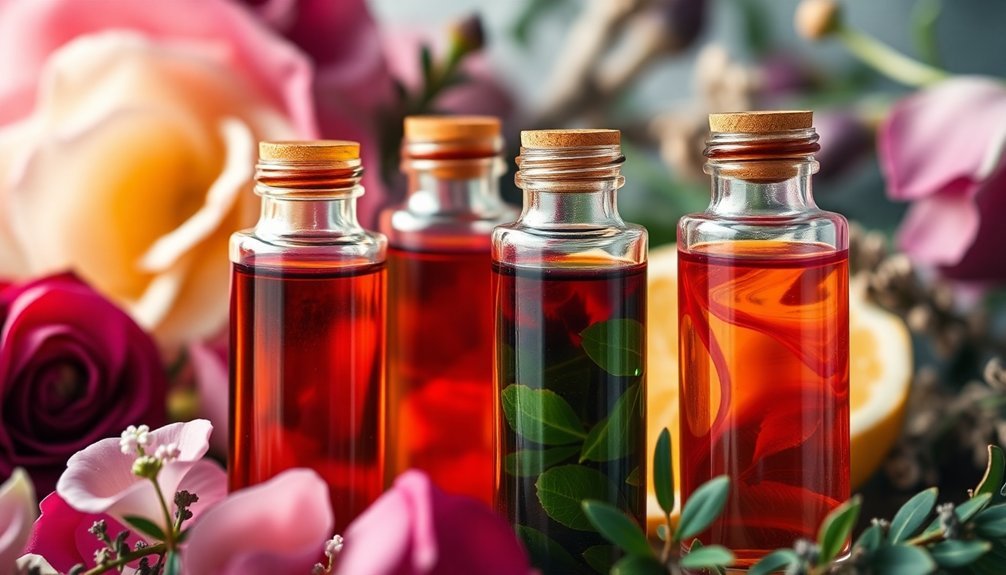
While top notes create the initial impression of a fragrance, heart notes form the essence of your scent creation, making up approximately 70% of the composition.
You'll find these middle notes emerging as the top notes fade, bringing depth and complexity to your fragrance blend.
When you're working with heart notes, you can explore a diverse range of ingredients, from floral oils like jasmine and geranium to warming spices such as cinnamon and pepper.
These components typically last several hours on the skin, bridging the gap between the initial burst of top notes and the long-lasting base notes.
Heart notes serve as the crucial bridge between fleeting top notes and lasting base notes, persisting for hours on skin.
You'll want to carefully consider how your heart notes interact with the base notes, as this relationship creates the balanced, well-rounded character that defines a successful fragrance.
Essential Blending Ratios for Middle Notes
Building on your understanding of heart notes, let's focus on the specific proportions needed for successful blending. When creating your fragrance, you'll want to guarantee heart notes make up 30% of your total blend to achieve the perfect balance. This middle layer serves as the bridge between your opening scent and the long-lasting base notes.
For ideal results, follow these essential ratios:
- Allocate 20% to top notes for initial impact
- Reserve 30% for heart notes to maintain balance
- Use 50% for base notes to anchor the fragrance
Testing your blend on fragrance strips is vital before finalizing. Pay special attention to how your heart notes, such as jasmine or cinnamon, interact with other layers.
This careful attention to proportions will help you create a well-structured, harmonious fragrance.
Selecting Complementary Scent Families
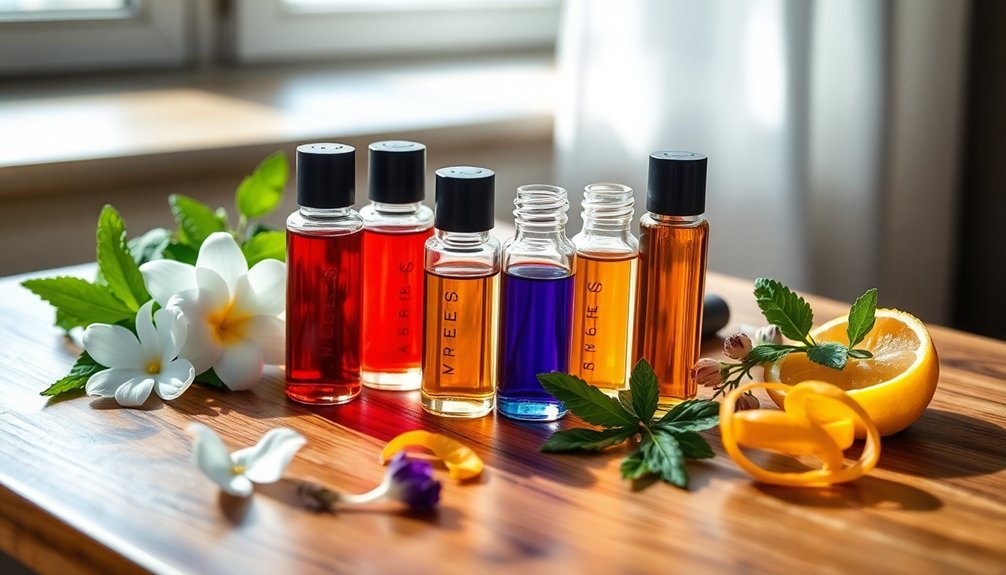
When you're combining fragrance bases, start by pairing similar accords like floral with citrus or woody with spicy notes to create balanced compositions.
You'll find that complementary scent families naturally enhance each other – for example, herbal notes elevate green accords while gourmand notes amplify sweet fruity bases.
The fragrance wheel serves as your guide to identifying these compatible pairings, helping you blend scents that work in harmony rather than competing for attention.
Compatible Note Pairings
To create enchanting fragrances, understanding compatible note pairings forms the foundation of successful blending. When you're working with top notes, consider how citrus elements like bergamot and lemon can brighten and enhance your heart notes, especially florals.
For lasting impact and complexity, try these proven pairing combinations:
- Combine sweet heart notes like vanilla with deep base notes such as sandalwood.
- Mix aromatic herbs with floral heart notes for sophisticated depth.
- Pair fruity heart notes with musky base notes for intrigue.
You'll find that contrasting elements often create the most dynamic results.
Don't be afraid to experiment with unexpected combinations – a touch of spicy notes can complement florals beautifully, while woody bases can ground and balance lighter top notes effectively.
Blending Similar Accords
The art of blending similar accords requires a deep understanding of scent families and their unique characteristics. When you're combining fragrances, stick to scents within the same family – whether that's floral, fruity, or spicy – to create a harmonious blend.
You'll achieve the best results by knowing how complementary notes enhance each other. For instance, you can pair floral heart notes with fruity top notes like bergamot for an uplifting experience.
To perfect your blend, experiment with different ratios: try using 50% heart notes, 30% top notes, and 20% base notes as a starting point.
Don't forget to use fragrance testing strips to evaluate how your chosen accords work together. This allows you to make necessary adjustments before finalizing your signature scent combination.
Testing and Evaluating Heart Note Combinations
When testing heart note combinations, you'll want to place a drop of each fragrance oil on separate blotter strips and label them clearly for your evaluation process.
After letting the strips dry briefly, wave them beneath your nose to experience how the heart notes interact with both the top and base layers of your fragrance.
Keep track of your findings by recording the specific heart notes, ratios, and your observations on a recipe card, which will help you perfect your blending technique over time.
Blotter Strip Test Methods
Understanding heart note combinations requires systematic testing with blotter strips, an essential method for evaluating how different scents interact.
You'll want to apply a single drop of each heart note oil on separate blotter strips, making sure to label them clearly for easy identification during your assessment process.
When testing with blotter strips, follow these key steps:
- Allow the strips to dry for several moments before evaluating.
- Wave the strips beneath your nose instead of direct sniffing.
- Document your impressions and observations of each combination.
You'll get better results by avoiding direct contact with the strips, as this helps prevent sensory overload and allows you to detect subtle nuances in the fragrances.
Keep detailed notes on successful combinations to refine your future blending efforts.
Assessing Scent Layer Harmony
Creating harmonious heart note combinations requires systematic evaluation of how different scent layers interact with one another.
Begin by applying small drops of heart notes to perfume testing strips, making certain to label each one clearly. You'll need to let them dry before evaluating to capture their true aromatic profiles.
As you test the heart notes, pay attention to how they blend with the top and base notes. You'll want to guarantee they complement the initial fragrance while smoothly shifting to deeper base notes.
Make detailed notes about how each combination develops over time. Don't rush to final judgment – allow your blended heart notes to settle for several days. This waiting period reveals how the scents truly harmonize and mature together, helping you perfect your fragrance combination.
Balancing Floral and Woody Elements
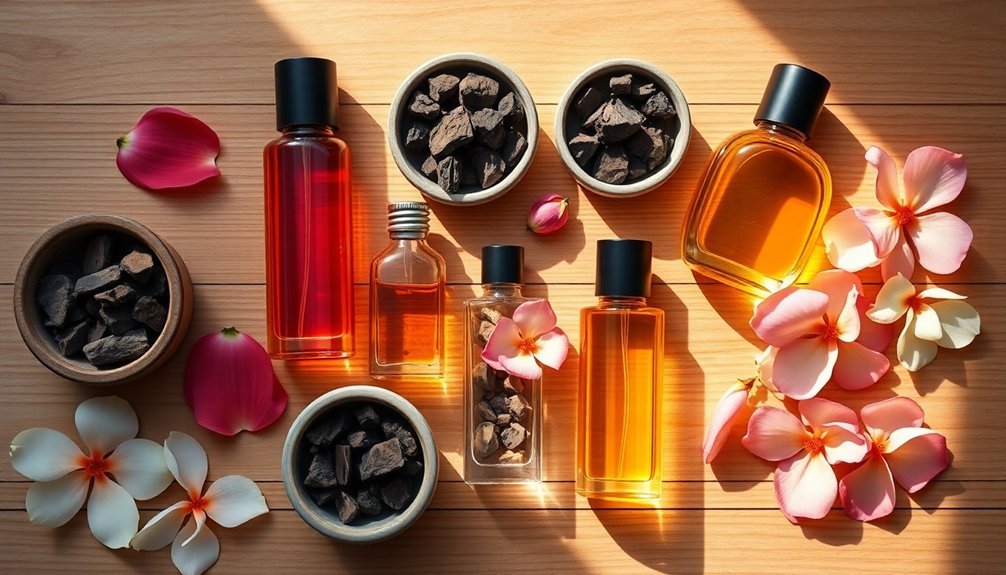
The art of balancing floral and woody elements lies at the heart of creating sophisticated fragrances.
You'll want to aim for a blend that combines about 30% floral notes for brightness with 50% woody notes for depth and longevity. The key is understanding how these components interact – floral notes add freshness while woody notes provide earthiness and warmth.
To achieve the perfect balance:
- Start with your primary floral notes like jasmine or rose
- Add heart notes such as geranium or violet to create a bridge
- Finish with woody notes like sandalwood or cedar for foundation
Let your blend rest for several days to see how the elements settle together.
You'll notice the interaction between florals and woods may evolve, creating a more complex and harmonious scent.
Harmonizing Spice and Citrus Components
When you're blending spice and citrus components, start by layering your bright citrus notes at 20% to create an uplifting top layer that'll complement your warmer spice elements.
You'll want to carefully balance your spice intensity in the heart notes at 30%, focusing on ingredients like cardamom or ginger that work synergistically with citrus.
For the perfect heat-fresh blend ratio, test your combinations on fragrance strips and let them settle for several days, ensuring the volatile citrus doesn't overpower the complex spice notes.
Layering Bright Citrus Notes
Bright citrus notes can transform an ordinary fragrance into a vibrant, uplifting blend, especially when paired thoughtfully with complementary spices.
When you're working with top notes like bergamot, lemon, and grapefruit, you'll want to create a balanced composition that maintains their rejuvenating character while incorporating deeper elements.
To achieve the perfect citrus-forward blend:
- Start with 30% citrus top notes to establish that initial burst of vitality
- Add 20% heart notes to bridge your citrus and spice elements
- Finish with 50% base notes to anchor the entire composition
Remember to let your creation rest for several days, as this allows the citrus and spice notes to fully develop.
You'll notice how the scent evolves, revealing new dimensions while maintaining its bright, invigorating character.
Balancing Spice Intensity
Successfully balancing spice intensity requires a delicate touch, as even small amounts of potent spices can overwhelm citrus notes in your fragrance blend.
When working with heart notes, you'll want to start with a dominant spice like cinnamon or cardamom, then carefully introduce citrus elements to create contrast.
Begin with a 30:70 ratio of spice to citrus components, adjusting as needed to achieve your desired effect. For subtle heart notes, opt for lighter spices; for bold statements, choose heavier spice elements.
You'll need to test your blend on perfume strips and allow it to settle for several days to fully understand how the components interact. This resting period reveals the true character of your blend as the spice and citrus notes evolve together.
Heat-Fresh Blend Ratios
Creating a harmonious heat-fresh blend requires precise ratios that balance the vibrancy of citrus with the warmth of spices.
You'll want to start with 20% citrus top notes, followed by 30% heart notes like ginger or cardamom, and anchor everything with 50% base notes.
For best results, follow these essential ratio guidelines:
- Begin with citrus components at 20% to create an invigorating opening
- Add heart notes at 30% to develop warmth and complexity
- Finish with 50% base notes to ground the composition
Remember to let your blend mature for several days after mixing.
This resting period allows the heat-fresh notes to meld together, creating a more refined and balanced fragrance.
You can adjust these ratios slightly to match your preferences while maintaining the basic structure.
Measuring and Documentation Methods
When blending fragrances, precise measurements and detailed documentation serve as your foundation for consistent, reproducible results.
You'll need to maintain a dedicated recipe card that includes the blend's name, creation date, description, and inspiration.
Follow a standard ratio of 20% top notes, 30% heart notes, and 50% base notes for balanced compositions. For small quantities, count drops of each oil carefully, while larger amounts require a scale or graduated cylinder for accuracy.
Record all measurements immediately on your recipe card.
Your documentation methods should include tracking how your blend evolves over several days after creation. Note any changes in the fragrance profile to improve your understanding of scent interactions and refine your blending techniques for future formulations.
Temperature and Storage Considerations
Proper storage and temperature control directly impact the longevity and quality of your fragrance blends.
You'll need to maintain a consistent temperature range of 60-70°F to preserve your perfume materials' integrity. Always store your fragrance oils in a cool, dark location away from areas with high humidity, like bathrooms, to prevent degradation and mold growth.
For ideal storage considerations, follow these essential steps:
- Use amber or cobalt glass bottles to protect against harmful UV rays
- Check container seals regularly to verify they're airtight
- Keep storage areas dry and temperature-controlled to prevent scent alterations
Scent Maturation and Development Phases
Understanding how fragrances mature and develop over time is essential for successful perfume creation. When you're working with different notes, you'll notice how they work together to create a lasting impression. Top notes make their initial impact within the first 15 minutes, while heart and base notes gradually emerge to shape the fragrance's character throughout the day.
| Phase | Duration | Notes Prominent |
|---|---|---|
| Initial | 5-15 mins | Top notes |
| Middle | 2-4 hours | Heart notes |
| Final | 6+ hours | Base notes |
For the best olfactory profile, you'll want to let your scent blends settle for several days. This allows the different facets of your fragrance to harmonize naturally. Make sure to test your creation multiple times during this period to understand how the notes develop and interact with skin chemistry.
Common Blending Mistakes to Avoid
Successful fragrance blending requires learning from common mistakes that can derail even experienced perfumers.
Mastering the art of fragrance creation means understanding and avoiding the pitfalls that challenge even seasoned perfumers.
You'll need to avoid relying too heavily on top notes, as they quickly dissipate and won't provide lasting depth to your creation. When mixing different scent categories, be mindful of overwhelming your blend with too many competing fragrances.
To create balanced, sophisticated blends, remember these vital steps:
- Document all blending ratios meticulously for future replication
- Allow your mixture to mature for several days before final assessment
- Use fragrance testing strips to evaluate scent combinations
Don't rush the process or skip these essential practices.
Testing strips are particularly important for understanding how different oils interact, while proper maturation time guarantees you're evaluating the true character of your blend.
Quality Control Techniques
To maintain consistent quality in fragrance blending, you'll need a systematic approach that covers every aspect of production. Start by creating detailed recipe cards for each blend, documenting precise measurements and any variations you observe.
Test your blends using fragrance strips to evaluate scent profiles before moving to final production.
Don't rush the process – let your blends settle for several days to detect any changes in the aroma. This resting period is essential for identifying potential issues in the fragrance composition.
Implement standardized testing of top, heart, and base note ratios to guarantee batch consistency. You'll also want to establish a regular testing panel to evaluate your fragrances, gathering feedback on strength, longevity, and overall scent satisfaction.
These evaluations will help you maintain high-quality standards across all your blends.
Advanced Heart Note Layering Strategies
Building on your quality control foundation, mastering heart note layering opens up new possibilities for creating distinctive fragrances.
Heart notes comprise 30% of your blend and form its core character, lasting several hours while bridging top and base notes.
Heart notes are the soul of your perfume, making up 30% of the composition and creating the essential bridge between opening and finish.
For successful heart note layering, follow these essential steps:
- Start with a 50:50 ratio when combining different heart notes, then adjust to achieve your desired effect.
- Pair complementary elements, such as floral notes with spicy ones (jasmine with cardamom, or rose with cinnamon).
- Allow your blended heart notes to mature for several days before finalizing.
Don't forget to document your successful combinations on recipe cards.
This practice helps you track which pairings work best and builds a valuable reference for future blending projects.
Frequently Asked Questions
How Do You Combine Fragrance Notes?
You'll need to blend 20% top notes, 30% heart notes, and 50% base notes. Test combinations on perfume strips, let the mixture settle for days, and document your measurements for future reference.
What Are Top Heart Base Notes in Fragrance?
You'll experience top, heart, and base notes as layers in your fragrance. Top notes hit first but fade quickly, heart notes form the core scent, and base notes provide lasting depth to your perfume.
How Do You Mix Perfume Base?
Start with 50% base notes like vanilla or musk, carefully measure drops, blend with heart notes, and let it settle for days. You'll need to maintain precise ratios for a balanced fragrance.
How to Blend Top, Middle, and Base Notes?
Start with 20% top notes, add 30% heart notes, and finish with 50% base notes. You'll want to test on fragrance strips and let your blend mature for several days before evaluating.
In Summary
You've learned the essentials of crafting balanced heart notes, from mastering blending ratios to avoiding common mistakes. Now it's time to experiment with your own unique combinations. Remember to let your blends mature, test thoroughly, and trust your nose. With practice and patience, you'll develop the confidence to create sophisticated middle notes that seamlessly bridge your fragrances' top and base elements.