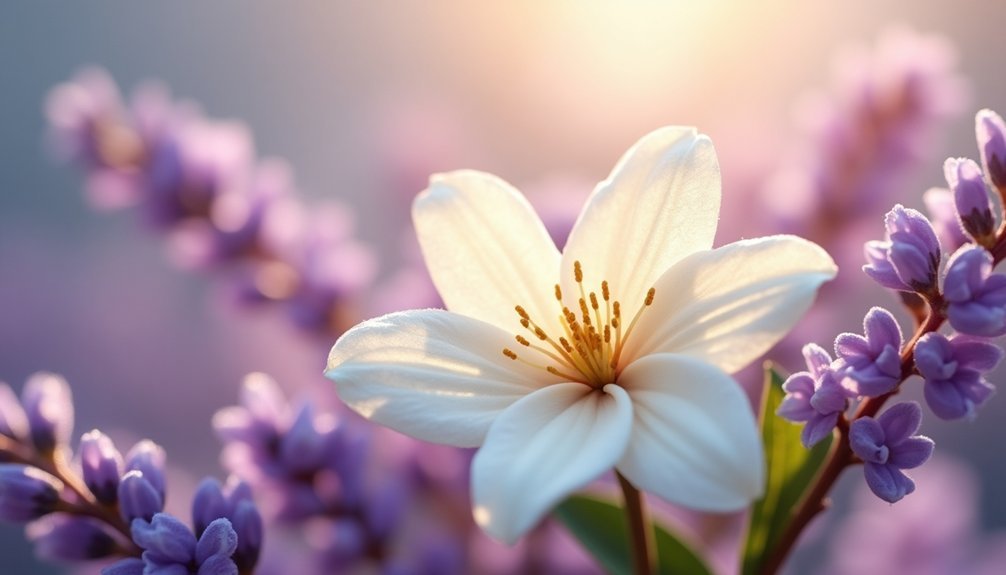
Floral notes create stunning fragrance combinations due to their shared molecular structures and complementary aromatic compounds like linalool and geraniol. You'll find that different flowers naturally enhance each other, with jasmine, rose, and ylang-ylang creating rich, layered aromas. Their varying volatility rates allow scents to unfold gradually on your skin, while traditional blending techniques capture their true essence. Discover how these botanical wonders transform into complex olfactory journeys through strategic pairing.
The Chemistry Behind Floral Note Harmony
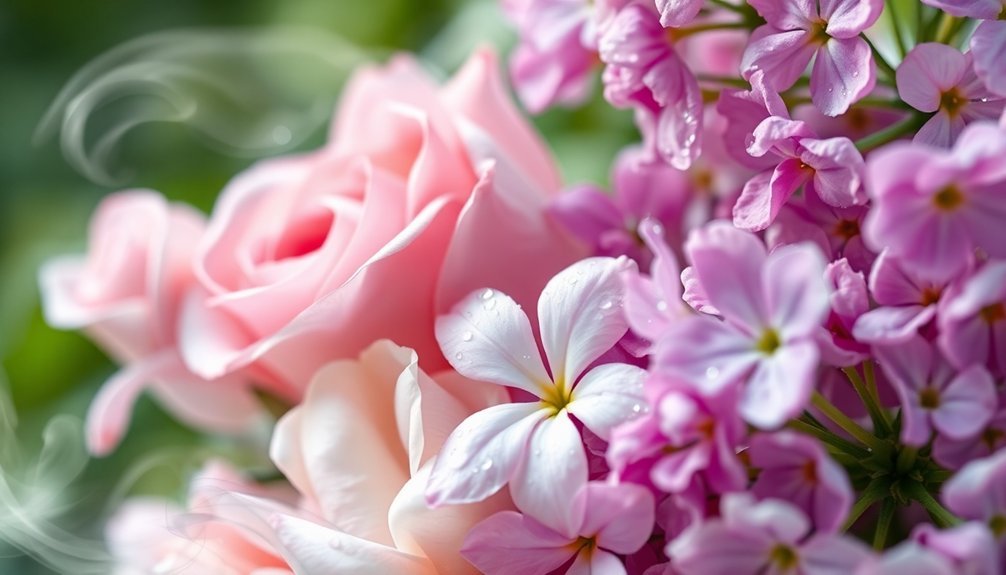
When floral notes blend together in a fragrance, they create an intricate dance of volatile organic compounds that captivates your senses. The secret lies in shared aromatic compounds like linalool and geraniol, which you'll find in various essential oils.
A complex ballet of aromatic compounds intertwines as floral notes merge, creating an enchanting fusion of natural chemical artistry.
These molecules work together to create a harmonious symphony that's more powerful than individual scents alone.
You'll notice how floral fragrances achieve their complexity through carefully balanced layers of top, middle, and base notes. This chemical synergy produces a scent that evolves on your skin, creating a more engaging experience.
When you wear these perfectly balanced compositions, they trigger your brain's limbic system, which is why you might feel more relaxed or uplifted. It's not just beautiful scents you're experiencing – it's chemistry at work.
Natural Synergies Among Different Flower Essences
Nature's floral essences create powerful synergies that elevate your fragrance experience beyond single-note scents. When you combine different floral notes, you'll discover how their unique volatile organic compounds interact to produce rich, layered aromas.
You'll notice how jasmine, rose, and ylang-ylang blend seamlessly due to their complementary aromatic profiles.
These floral scents don't just work well together – they also pair beautifully with other fragrance families. You'll find bright, energetic combinations when florals meet fruit notes, like violet and strawberry.
For depth and sophistication, floral notes marry wonderfully with woody or spicy elements, as demonstrated in luxury perfumes. The emotional qualities of different flowers, from rose's romance to lavender's calm, allow you to create fragrances that speak to specific moods and feelings.
Balancing Sweet and Fresh Floral Combinations
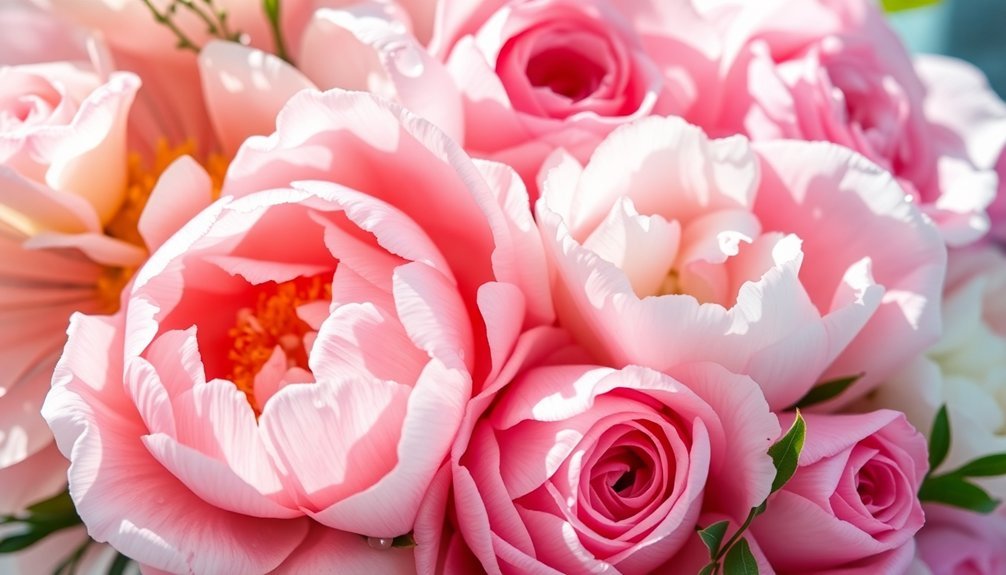
When you're creating or selecting a floral fragrance, you'll find that sweet and fresh notes work together in perfect harmony.
You'll notice how sweet floral elements like jasmine and gardenia provide depth and richness, while fresh notes such as lily of the valley add lightness and energy to the composition.
This natural balance lets you enjoy a more versatile fragrance that shifts seamlessly from day to evening wear while maintaining its alluring character throughout.
Sweet Meets Fresh Florals
The delicate art of combining sweet and fresh floral notes creates some of perfumery's most enchanting compositions. When you experience fragrances like Marc Jacobs Daisy or Dior Jadore, you'll notice how sweet floral notes like jasmine and gardenia intertwine perfectly with fresh florals such as peony and lily of the valley.
These combinations aren't just beautiful – they're emotionally evocative. You'll find that sweet florals provide depth and richness, while fresh florals add a light, airy quality that prevents the scent from becoming too heavy.
It's this careful balance that captures the essence of a blooming garden and creates a multi-dimensional experience. The result is a complex fragrance that can transport you to cherished memories while appealing to your modern sensibilities.
Nature's Perfect Aroma Blend
Creating a balanced floral fragrance mirrors the artistry found in nature's own garden compositions. When you blend sweet and fresh floral notes, you'll discover how they complement each other perfectly, just as they do in a natural garden setting.
The fragrance of flowers like jasmine and rose adds a luxurious sweetness that pairs beautifully with the crisp freshness of peony and lily of the valley.
You'll notice how this combination creates depth and complexity in your fragrance, evoking emotions from joy to tranquility. It's similar to how iconic perfumes like Dior J'adore have mastered this balance.
The versatility of these floral combinations allows them to enhance other scent families, whether you're looking to ground woody notes or elevate fruity accords. This natural harmony creates an experience that's both nostalgic and wonderfully sophisticated.
Creating Depth With Complementary Floral Notes
Mastering the art of floral note combinations elevates a fragrance from simple to sublime, as complementary flower essences work together to create rich, multi-dimensional scents.
When you experience a well-crafted floral fragrance, you'll notice how jasmine and rose intertwine to evoke emotional connections and cherished memories.
The magic happens when perfumers blend contrasting floral elements, like tuberose's sensuality with lily of the valley's crisp freshness.
These complementary floral notes create an intricate dance of light and deep accords, ensuring your fragrance evolves seamlessly throughout the day.
By incorporating diverse flower essences such as ylang-ylang and peony, perfumers craft unique bouquets that amplify each note's distinctive qualities.
It's this masterful blending that transforms individual floral elements into an enchanting olfactory journey you won't forget.
The Role of Molecular Structure in Floral Pairings
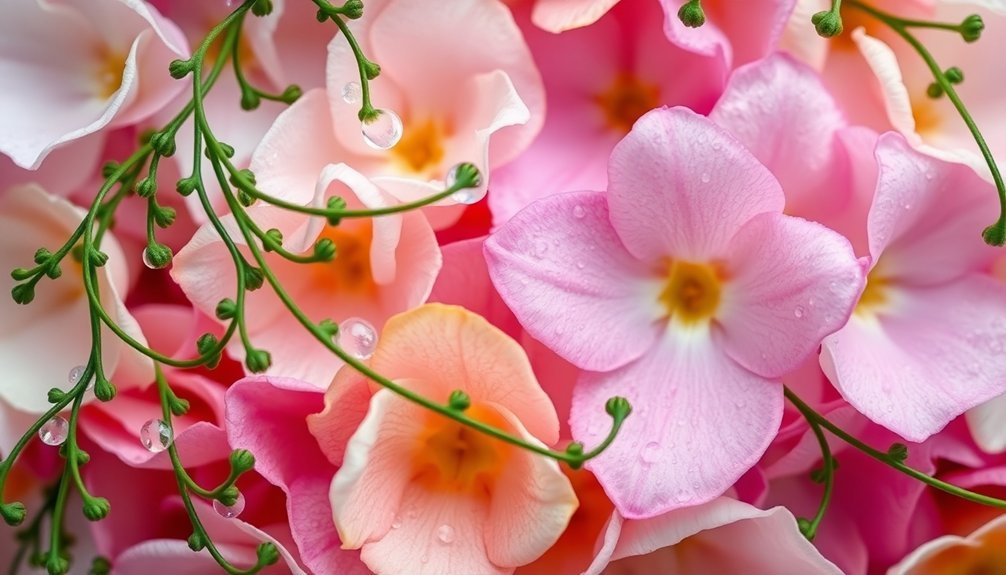
When you explore floral pairings in perfumery, you'll find that chemical bonds between different floral compounds create natural harmony through their shared molecular structures.
The intricate dance of volatile organic compounds allows rose and jasmine to blend seamlessly, as their overlapping molecular components enhance each other's signature scents.
You'll notice how the varying volatility rates of different floral notes enable them to unfold gradually on your skin, creating a dynamic fragrance experience that evolves over time.
Chemical Bonds Create Harmony
The intricate dance of molecular structures within floral notes reveals why certain combinations work so perfectly together. When you're experiencing floral perfumes, you're actually sensing the harmonious interaction of chemical bonds that naturally complement each other. This compatibility stems from their shared volatile organic compounds and similar molecular frameworks.
You'll find that floral notes containing matching functional groups, like alcohols and aldehydes, create a natural synergy. For example, when jasmine meets ylang-ylang, their common aromatic structure allows them to enhance each other's qualities rather than compete.
The presence of esters and terpenes in these flowers contributes to their seamless blending, ensuring that each note plays its part without overwhelming the others. This molecular harmony is what makes floral combinations so enchanting.
Nature's Molecular Dance
Deep within each floral essence lies a sophisticated molecular structure that orchestrates the perfect harmony between different flowers. When you experience floral perfumes, you're witnessing a complex dance of volatile organic compounds that naturally complement each other at the molecular level.
Take jasmine and tuberose, for instance – they share similar aromatic components that create an instinctive blend when combined.
The secret behind these harmonious pairings lies in compounds like linalool and geraniol, which give lavender and rose their distinctive scents.
These molecules interact with your olfactory receptors in ways that enhance rather than compete with each other. By understanding how these molecular structures work together, perfumers can create fragrances that not only smell beautiful but also trigger emotional responses and lasting memories.
Volatility Enhances Blending Potential
Building upon this molecular understanding, the volatility of floral notes reveals their remarkable blending potential. You'll find that their unique molecular structures allow them to interact seamlessly with other fragrance elements, creating dynamic scent profiles that evolve over time.
| Floral Note | Volatility Level | Common Pairings |
|---|---|---|
| Lavender | High | Citrus, Woods |
| Rose | Medium | Vanilla, Amber |
| Jasmine | Medium-High | Spice, Musk |
| Ylang-Ylang | Low | Oriental, Fruit |
When you're exploring floral fragrances, you'll notice how their varying volatility rates create a layered experience. The high concentration of VOCs in floral notes means they'll evaporate at different rates, allowing for complex combinations that unfold gradually on your skin. This natural progression makes floral notes exceptionally versatile in perfumery.
Traditional Middle Note Blending Techniques
Many traditional middle note blending techniques revolve around the delicate art of balancing floral essences.
You'll find that master perfumers use methods like steam distillation and enfleurage to capture the true spirit of flowers, creating harmonious combinations that sing together perfectly.
When you're exploring these techniques, you'll notice how floral notes are often layered with complementary scents like fruits or woods to achieve depth and complexity.
This approach has given birth to legendary fragrances like Dior Jadore and Chanel No. 5.
The olfactory hierarchy plays an essential role, as these middle notes emerge after the top notes fade, leaving a lasting impression.
What makes these blending techniques so effective is their ability to trigger emotional responses and memories, making the fragrances truly unforgettable.
Modern Approaches to Floral Note Layering
While traditional perfumery laid the groundwork, today's floral note layering has evolved through sophisticated extraction methods and innovative combinations.
Modern solvent extraction techniques, particularly CO2 extraction, capture the subtle intricacies of floral essences more effectively than ever before. You'll find this technical advancement has opened new possibilities for creative layering.
Today's perfumers skillfully blend floral notes with diverse accords to create multifaceted fragrances. You can experience this in combinations like jasmine with patchouli, or when floral elements meet fruity notes for a fresh, vibrant effect.
The addition of spicy accords brings warmth to floral compositions, while gourmand elements create an intriguing balance between sweet and elegant notes. These modern approaches showcase how versatile floral notes can be when paired with different fragrance families.
Seasonal Floral Note Combinations
As each season brings distinct moods and emotions, floral notes adapt remarkably to create perfectly matched seasonal fragrances.
In the world of floral perfumes, you'll discover how versatile these botanical notes can be throughout the year.
During spring and summer, you can experience the shift from fresh hyacinth and daffodil combinations to exotic blends of frangipani and ylang-ylang with tropical fruits.
The vibrant transition from springtime's delicate florals to summer's lush tropical blooms creates an enchanting olfactory journey through the warmer seasons.
As autumn arrives, you'll find deeper floral notes like carnation paired with warming sandalwood and amber.
Winter brings cozy combinations of jasmine and orange blossom enriched with vanilla and sweet spices.
You can always count on adaptable florals like rose and peony to evolve smoothly between seasons when paired with appropriate complementary notes, from bright citruses to rich woods.
The Art of Building Complex Floral Accords
Creating complex floral accords demands both artistic vision and technical expertise from perfumers who carefully layer multiple flower essences. You'll find this masterful blending in iconic fragrances like Dior Jadore, where jasmine, rose, and ylang-ylang combine to create a sophisticated bouquet.
To achieve the perfect balance, perfumers employ various extraction methods, including steam distillation, to capture flowers' true essence.
They'll often pair floral notes with complementary elements – woody undertones add depth, while fruity notes bring vibrancy, as demonstrated in Marc Jacobs Daisy's violet-strawberry fusion.
The key lies in orchestrating top, middle, and base notes to create a harmonious evolution of scent. When you wear these expertly crafted fragrances, you'll experience how each floral note unfolds uniquely, creating a personal journey of sophisticated aromas.
Essential Ratios for Floral Note Blending
When you're blending floral notes, you'll want to maintain a base-to-heart ratio of 30-50% to create a stable foundation for your fragrance.
You can achieve ideal concentration by starting with dominant florals like jasmine at higher percentages, then carefully introducing lighter supporting notes to build complexity.
For particularly potent florals such as tuberose or ylang-ylang, you'll need to reduce their proportions to around 15-20% to prevent them from overwhelming the overall composition.
Base-to-Heart Note Proportions
The art of balancing heart and base notes forms the foundation of successful floral fragrances, with ideal ratios typically falling between 60:40 and 70:30. You'll find that when you're creating floral compositions, the right proportion guarantees your fragrance maintains its character while lasting longer.
| Heart Notes | Base Notes |
|---|---|
| Jasmine | Sandalwood |
| Rose | Vanilla |
| Tuberose | Musk |
| Lily | Patchouli |
When you're blending these elements, remember that base notes aren't just supporting players – they actively enhance the floral heart notes, making them richer and more complex. You'll want to avoid overwhelming sweetness by carefully controlling your heart note proportions while guaranteeing sufficient base notes to maintain the fragrance's longevity. Expert perfumers use layering techniques to achieve this delicate balance, allowing the florals to shine while maintaining structural integrity.
Concentration Levels For Florals
Building on the heart-to-base note balance, specific concentration levels play a key role in floral note blending.
You'll find that floral notes typically make up 30-50% of a well-balanced fragrance composition, but their concentrations can vary considerably depending on the specific flowers used.
- Potent florals like jasmine and rose work best at 5-15% concentration to avoid overwhelming the blend.
- When combining florals with fruity or woody notes, aim for 20-30% floral concentration to maintain harmony.
- Light florals such as lily of the valley require higher concentrations for ideal presence.
- Heavy florals like tuberose need only 2-10% concentration due to their intense nature.
Understanding these concentration levels for florals helps you create balanced compositions where each note contributes without dominating the overall scent profile.
Balancing Strong Floral Notes
Successfully balancing strong floral notes requires mastering essential composition ratios while taking into account the interplay between different floral intensities.
You'll want to start with the classic 20-30% top notes, 40-60% middle notes, and 20-30% base notes distribution to create a well-structured fragrance.
When working with potent florals like jasmine or tuberose, you'll need to carefully blend them with lighter elements such as citrus or green notes to maintain harmony.
Try layering your floral compositions with woody or spicy accords to add depth and prevent any single note from overpowering the blend.
It's also vital to take into account the volatility of your chosen flowers – some evaporate quickly, so you'll need to incorporate stable notes to guarantee your fragrance maintains its intended character throughout its wear time.
Enhancing Longevity Through Strategic Pairing
Creating long-lasting floral fragrances requires strategic pairing of complementary notes and fixative ingredients. When you want to enhance your fragrance's longevity, combining floral notes with woody or gourmand base notes provides a solid foundation that lets the florals shine while maintaining their presence throughout the day.
- Pair rich floral notes like jasmine and rose with resins or balsams to slow down the evaporation process.
- Layer similar or contrasting florals to create depth and extended wear time.
- Choose fragrances that use modern CO2 extraction methods for better preservation of floral integrity.
- Look for balanced compositions featuring floral elements supported by long-lasting base notes like patchouli or vanilla.
These strategic pairings guarantee your floral fragrance remains vibrant and true to its character while lasting considerably longer on your skin.
Cultural Influences on Floral Note Selection
Throughout history, cultural traditions have shaped the selection and interpretation of floral notes in perfumery, creating distinct regional signatures in fragrance composition.
You'll find jasmine dominating Middle Eastern perfumes, reflecting the region's appreciation for its sensual and romantic qualities.
In Asia, cherry blossoms grace many fragrances, symbolizing the fleeting nature of beauty and seasonal renewal.
Western perfume traditions embrace rose and lily of the valley, drawing from centuries of European artistic expression.
Local environments also play a vital role – tropical regions naturally gravitate toward native flowers like frangipani and ylang-ylang in their compositions.
Even religious and cultural celebrations influence floral selection, as seen in Indian perfumery where marigold's sacred significance during Diwali inspires fragrance creation.
Experimental Combinations for Unique Signatures
Modern perfumers push boundaries by exploring unconventional floral combinations that challenge traditional fragrance norms.
Creating unique signature scents is a process that requires understanding how different notes interact and complement each other.
Mastering fragrance creation demands deep knowledge of note interactions, allowing perfumers to craft distinctive aromatic signatures.
You'll discover these exciting experimental combinations:
- Jasmine paired with grapefruit creates an energetic, fresh blend that awakens your senses.
- Woody notes like sandalwood enhance floral elements such as rose, adding sophisticated depth.
- Spicy accords of clove or cinnamon intensify floral components, creating rich, memorable signatures.
- Gourmand elements like praline or vanilla bring sweet warmth when combined with iris or jasmine.
Frequently Asked Questions
What Fragrance Notes Go Well Together?
You'll find that woody notes blend well with citrus, while spicy accords complement vanilla. Fruity scents pair nicely with florals, and musk works great with oriental notes, creating balanced, sophisticated fragrances.
Why Are Floral Scents Important?
You'll find floral scents are essential because they're versatile, evoke emotions, and promote well-being. They've been culturally significant since ancient times and can enhance other fragrance notes while reducing your stress levels.
How Do Floral Scents Make You Feel?
You'll feel a range of positive emotions when experiencing floral scents. They'll make you feel romantic, calm, and uplifted while boosting your mood and sense of well-being through natural memory associations.
Why Is Fragrance Important in Floral Design?
Fragrance in floral design enriches your sensory experience, creating emotional connections and memories. You'll find it transforms spaces, enhances the visual appeal, and makes your arrangements more meaningful and personally engaging.
In Summary
You'll find that understanding floral note pairings opens up endless possibilities in fragrance creation. Whether you're working with jasmine and rose or experimenting with lesser-known blooms, it's the molecular harmony that creates magic. Don't be afraid to push boundaries by mixing different floral families while respecting traditional ratios. Your signature scent lies in finding that perfect balance between science and artistry.