To sterilize perfume bottles safely at home, you'll need protective gear like gloves and a mask, plus cleaning supplies including distilled water and 96% ethanol. Start by cleaning bottles with lukewarm soapy water, then sterilize using either boiling water (for glass) or chemical solutions like hydrogen peroxide. Always rinse thoroughly and dry completely upside down. Proper ventilation and careful handling are vital. Discover essential techniques to keep your fragrances pristine and protected.
Why Sterilization Matters for Perfume Bottles
While many perfume enthusiasts focus on the fragrance itself, the cleanliness of the bottle plays an essential role in maintaining your perfume's quality and longevity.
Your perfume bottle can become a breeding ground for microorganisms that thrive in moist environments, potentially compromising the fragrance's stability and shelf life.
Moisture within perfume bottles creates ideal conditions for harmful microorganisms, putting your precious fragrances at risk of deterioration.
When you don't sanitize your bottles, they may harbor bacteria, fungi, or other pathogens that can alter your perfume's aromatic characteristics.
These unwanted organisms can degrade the quality of your fragrance and introduce off-putting odors.
If you're planning to reuse or refill bottles, sanitization becomes even more critical to prevent cross-contamination between different fragrances.
Regular cleaning with gentle household detergents helps preserve both the fragrance and the bottle's aesthetic appeal.
Proper sanitization guarantees you'll maintain the original scent profile while protecting your perfume from oxidation and contamination.
Essential Tools and Materials for Safe Sterilization
Before commencing the sterilization process, you'll need to gather specific tools and materials that guarantee both safety and effectiveness.
Think of these items as your sterilization toolkit – each serving an essential purpose in making certain your perfume bottles are properly sanitized.
- Protection gear: You'll want gloves, a mask, and protective clothing to shield yourself from cleaning agents and fumes.
- Cleaning equipment: Borosilicate beakers, stainless steel funnels, and graduated cylinders for precise measurements.
- Sanitizing agents: Sterile mine tablets, distilled water, and 96% ethanol for thorough disinfection.
- Drying materials: Clean paper towels and tree racks to make sure your bottles dry completely without contamination. A set of thin wooden dowels can be installed in the rack system for optimal drying support.
Remember to store these items separately from your regular cleaning supplies to maintain their effectiveness for perfume bottle sterilization.
Step-by-Step Bottle Cleaning Process
Four key stages make up an effective perfume bottle cleaning process: preparation, cleaning, drying, and refilling.
Start by emptying your bottle completely and identifying its material. For glass bottles, you'll want to use lukewarm soapy water or a vinegar solution, while plastic bottles need gentler handling. Don't use harsh chemicals that could damage the material. For optimal pre-cleaning, use ultrasonic warm water to effectively remove surface dirt and contaminants.
Clean thoroughly using small brushes to reach all corners, and pay special attention to the atomizer, which you'll need to clean separately.
Once cleaned, let your bottles air dry completely, and store them upside down in a clean area away from sunlight.
When you're ready to refill, use a funnel or syringe to avoid spills. Remember to check that your perfume is compatible with the bottle material, and inspect regularly for wear or blockages.
Hot Water Sterilization Methods
Since proper sterilization is essential for reusing perfume bottles, hot water treatment offers an effective and accessible method.
You'll need a large pot filled with enough water to fully submerge your bottles and maintain it at a rolling boil (212°F/100°C).
- Carefully lower your glass bottles into the boiling water using tongs, ensuring they're completely submerged.
- Boil the bottles for 5-10 minutes, keeping a close eye on the temperature.
- Remove bottles with heat-resistant gloves or tongs, then quickly rinse with cold water.
- Let bottles cool gradually to prevent thermal stress, then dry thoroughly.
Remember to handle crystal bottles with extra care, and avoid this method for plastic containers as they may warp or release harmful chemicals.
For best results, use sterilized bottles while they're still warm.
Chemical Sterilization Options
While hot water sterilization offers a straightforward approach, chemical sterilization provides an effective alternative for perfume bottles that can't withstand high temperatures.
You'll find several reliable options, including hydrogen peroxide solutions and chlorine dioxide treatments, which effectively eliminate microorganisms without damaging your bottles.
When choosing a chemical sterilization method, you'll need to check your bottle's material compatibility first.
Hydrogen peroxide is often the safest choice for home use, while ethylene oxide is better left to professional settings.
Mix your sterilizing solution according to the product's instructions, and guarantee proper exposure time for complete sanitization.
Don't forget to rinse thoroughly afterward to remove any chemical residue.
Remember to wear protective gloves and work in a well-ventilated area when handling sterilizing chemicals.
Proper Drying and Storage Techniques
After sterilizing your perfume bottles, proper drying and storage techniques become vital for maintaining their integrity and protecting future fragrances.
Place your bottles upside down on a clean towel in a well-ventilated area, letting them air dry completely before use. Avoid using heat or direct sunlight, as these can damage your bottles.
For maximum preservation of your perfume bottles, follow these important steps:
- Store bottles in a cool, dark place with temperatures between 15-20°C (59-68°F)
- Keep caps tightly sealed to prevent oxidation and scent alteration
- Use original boxes or UV-protective containers for added protection
- Avoid humid areas like bathrooms and kitchens, which can compromise both bottles and future fragrances
Regular inspection of your stored bottles guarantees they remain in perfect condition for their next use.
Safety Precautions During Sterilization
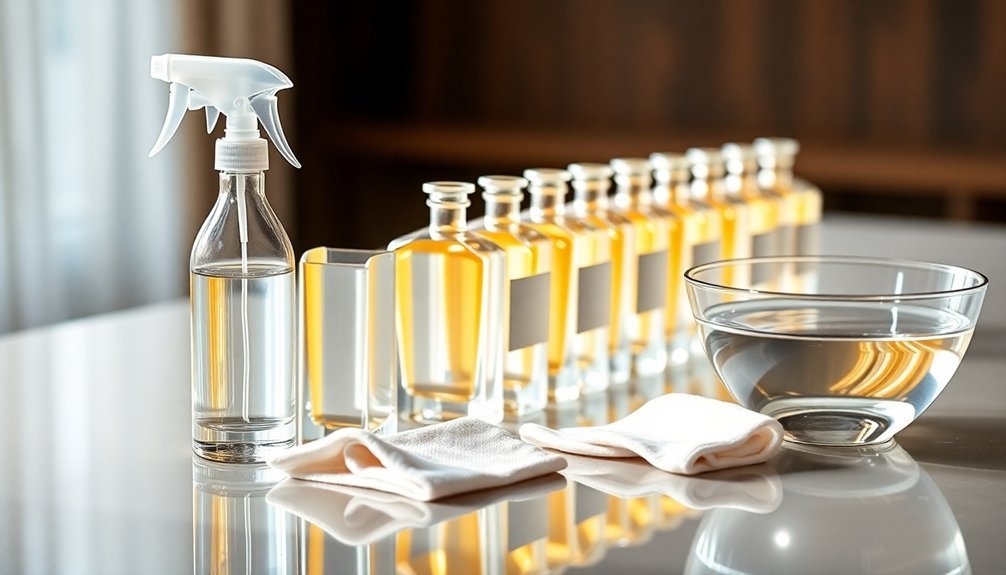
You'll need to wear gloves, a face mask, and protective eyewear when handling sterilization chemicals for perfume bottles to prevent exposure to harmful fumes and splashes.
Store all sterilization solutions in clearly labeled, child-proof containers away from direct sunlight and heat sources.
Make sure your workspace has adequate ventilation, such as an open window or exhaust fan, to prevent the buildup of chemical vapors during the sterilization process.
Protective Equipment For Sterilizing
Before starting the sterilization process for perfume bottles, proper protective equipment is essential for your safety and the integrity of the procedure.
You'll need to protect yourself from chemical exposure and prevent contamination of the sterilization materials.
- Wear protective gloves and a lab coat with elastic cuffs to prevent skin contact with chemicals and keep loose clothing away from the work area.
- Put on safety goggles and a face mask to shield your eyes and prevent inhalation of chemical vapors.
- Verify you're wearing closed shoes to protect against accidental spills, and tie back long hair.
- Keep sanitizer nearby for regular hand cleaning, and use lint-free cloths to maintain a sterile environment.
Remember to work in a well-ventilated area and keep your workspace organized to minimize the risk of accidents during the sterilization process.
Chemical Storage Best Practices
Proper chemical storage during perfume bottle sterilization plays a critical role in maintaining safety and efficiency.
You'll need to store your cleaning solutions in well-ventilated areas away from heat sources and keep them in tightly sealed containers to prevent spills and exposure.
Always label your chemical containers clearly with contents and expiration dates, and maintain an up-to-date inventory of your supplies.
Don't forget to set up protective barriers around stored chemicals and restrict access to authorized personnel only.
If you're dealing with specialized cleaning solutions, guarantee they're properly segregated from other chemicals.
Keep emergency contact information readily available and establish a spill response plan.
Remember to check expiration dates regularly and dispose of expired solutions according to local regulations to maintain both safety and effectiveness.
Proper Ventilation Requirements
While sterilizing perfume bottles, maintaining adequate ventilation stands as a critical safety requirement.
You'll need proper airflow to prevent the buildup of flammable vapors and VOCs during the sterilization process, especially when using ethanol-based cleaning solutions.
- Verify your workspace has adequate ventilation by opening windows and doors, or running your HVAC system at least 24 hours before starting.
- Use exhaust fans if you don't have central air conditioning to increase air exchange rates.
- Monitor the room's air quality and humidity levels to maintain ideal conditions.
- Keep air circulation consistent throughout the sterilization process to prevent chemical fumes from accumulating.
Remember to coordinate your ventilation strategy with your sterilization schedule, as this helps maintain the sterility of your newly cleaned bottles while protecting your health.
Common Sterilization Mistakes to Avoid
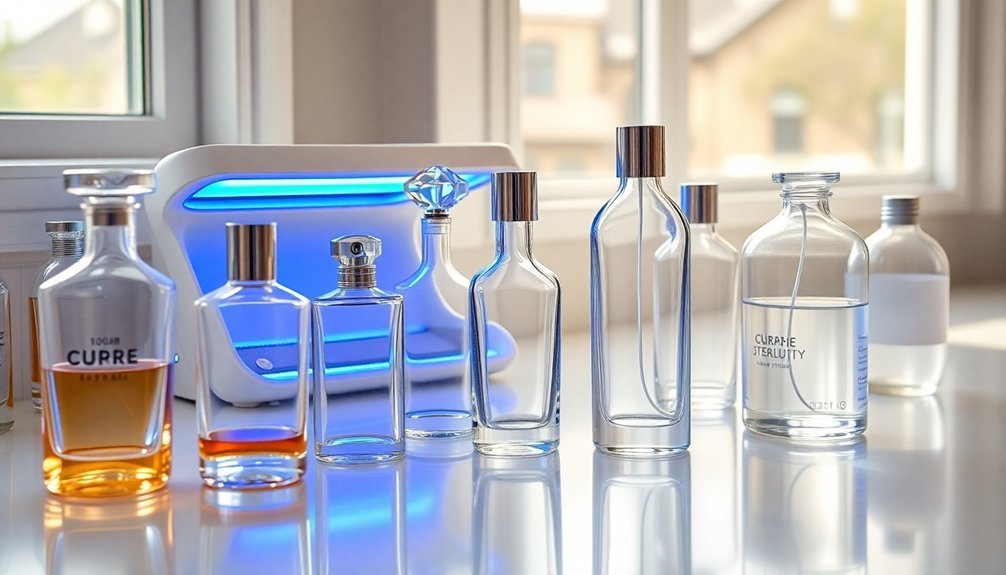
Successfully sterilizing perfume bottles requires avoiding several critical mistakes that could damage your bottles or compromise their cleanliness.
Don't use harsh chemicals or abrasive materials like baking soda, as they'll scratch glass surfaces and damage delicate engravings. You'll want to avoid acetone and strong solvents, especially with plastic bottles, as they can cause deterioration.
Pay special attention to often-overlooked components like the atomizer, nozzle, and internal stoppers. These areas can harbor bacteria if not properly cleaned.
Make sure you're thoroughly rinsing away soap residue and drying bottles completely to prevent mold growth. When cleaning intricate designs, use gentle pressure to protect the bottle's integrity.
Always handle bottles with clean hands and store them in a dust-free environment to maintain their sterility.
Frequently Asked Questions
Can I Reuse Perfume Bottles for Storing Different Essential Oils?
Yes, you can reuse perfume bottles for different essential oils after thorough cleaning with vodka. However, don't use them for skin-contact blends, and avoid reusing bottles that held sensitive oils like cinnamon.
How Long Do Sterilized Perfume Bottles Remain Sanitized in Storage?
Your sterilized perfume bottles will stay sanitized for up to 72 hours under ideal conditions. You'll need to store them in airtight containers in a cool, dark place to maintain their sterility.
Will Sterilization Affect Decorative Elements or Metallic Finishes on Bottles?
Yes, sterilization can affect your bottle's decorations. You'll need to be careful with heat transfers, silk screening, and metallic finishes. Harsh chemicals and high temperatures may damage delicate elements like gold leafing.
Can I Sterilize Antique Perfume Bottles Without Damaging Their Value?
You shouldn't attempt to sterilize antique perfume bottles, as it can damage their value. Instead, consult an expert for proper preservation. Focus on gentle cleaning with a soft brush and mild vinegar solution.
Is UV Sterilization More Effective Than Traditional Methods for Perfume Bottles?
Yes, you'll find UV sterilization more effective than traditional methods, as it kills 99.99% of bacteria in just 6 minutes, doesn't leave residue, and won't damage your perfume bottles or affect their contents.