Start with a 10-20% dilution ratio when making oil perfumes, using 60-80 drops of fragrance oil per ounce of carrier oil. If you're new to perfume-making, begin at 5% concentration (30-40 drops) and always conduct a patch test on your skin first. Store your blends in dark glass bottles at 60-70°F, away from sunlight and humidity. Don't exceed 25% concentration with synthetic oils. These foundational guidelines will help you create safe, effective perfume blends.
Understanding Basic Dilution Percentages for Safe Perfume Making
When creating your own perfume, understanding proper dilution ratios is essential for both safety and effectiveness. For everyday use, you'll want to stick to a 10-20% dilution of fragrance oils in your carrier oil or alcohol base. This means using 60-80 drops of essential oil per ounce of carrier oil for a 10% dilution.
If you're new to perfume making, start with lower concentrations like 5% (30-40 drops per ounce) or 2.5% (15-20 drops per ounce). Don't exceed 25% dilution unless you're working with synthetic fragrance oils.
Choose neutral carriers like jojoba, sweet almond, or grapeseed oil to let your fragrances shine. Remember, you can't use water as a carrier. Always conduct a patch test on your skin before regular use to check for any sensitivities.
Once mixed, let your perfume mature in a cool, dark place for at least 48 hours.
Essential Oil to Carrier Oil Ratios for Different Skin Types
Three key factors determine the perfect essential oil dilution for your skin: skin type, sensitivity level, and intended use.
For sensitive skin, stick to a 1% dilution or less, using gentle carrier oils like jojoba or sweet almond oil. You'll need about 6 drops of essential oil per ounce of carrier oil.
If you have normal to oily skin, you can safely use a 2-3% dilution ratio, which means 12-18 drops per ounce of carrier oil. Grapeseed oil works well for oily skin, while coconut oil's antimicrobial properties help with acne-prone skin.
For facial applications, always use a lower concentration of 0.5-1%, regardless of your skin type. Improper dilution can lead to lasting skin sensitization, making you permanently reactive to certain essential oils.
Remember to adjust these ratios based on your skin's response and the specific essential oils you're using.
Selecting the Right Base Oils for Your Perfume Blend
Choosing the right base oils forms the foundation of a successful perfume blend, as they directly impact how your fragrance develops and lasts on the skin.
You'll want to focus on oils that offer both stability and skin compatibility while complementing your chosen scent profile. The proper dilution ratio of 15-30 drops of essential oil per ounce of carrier oil ensures safe application and optimal fragrance development.
When selecting your base oils, consider these essential factors:
- Jojoba oil's molecular structure closely resembles human sebum, making it ideal for long-lasting perfumes.
- Fractionated coconut oil provides excellent stability and won't turn rancid.
- Sweet almond oil offers a perfect balance of absorption and moisture retention.
- Grapeseed oil's lightweight nature makes it perfect for subtle, delicate fragrances.
Remember to experiment with different combinations of these carrier oils to find your perfect blend.
You can start with a single base oil and gradually incorporate others as you develop your signature scent.
Safety Guidelines for High-Concentration Essential Oils
Now that you've selected your ideal base oils, understanding proper dilution and safety protocols is paramount for creating safe, wearable perfumes.
Always start with a 1% dilution ratio (5-6 drops per ounce of carrier oil) and perform a patch test before applying your blend more broadly.
Keep your perfume blends away from children and use child-proof caps when possible.
If you're working with phototoxic oils, particularly citrus-based ones, don't apply your perfume before sun exposure to prevent skin reactions. Instead, save these blends for evening wear.
Never apply undiluted essential oils directly to your skin, regardless of how tempting it might be to create a stronger scent.
If you experience any irritation, wash the area immediately with soap and water, and discontinue use of that particular blend.
Measuring and Mixing Techniques for Precise Dilution
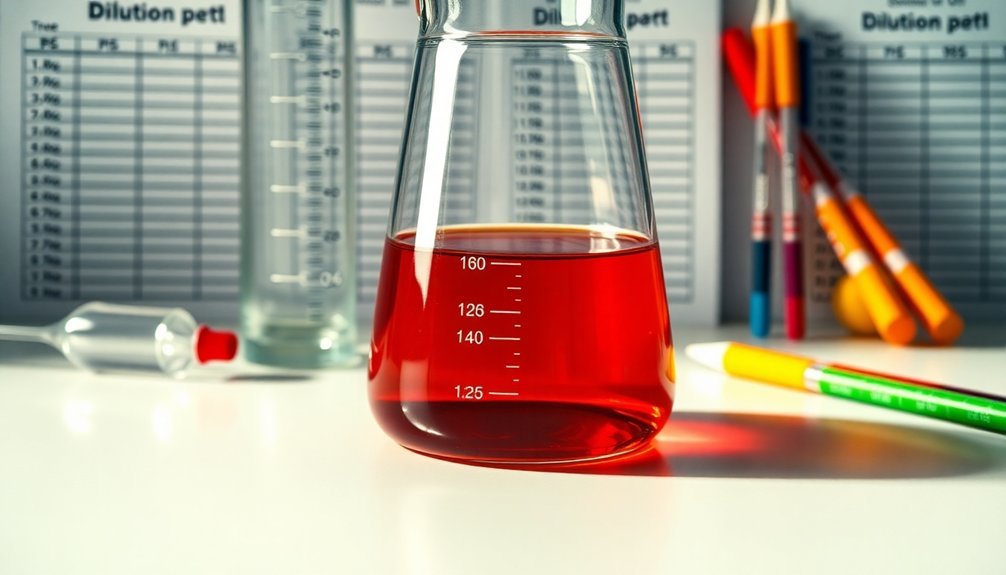
Precise measurement lies at the heart of successful perfume creation.
You'll need proper tools and careful attention to detail when mixing your essential oils with carrier oils or alcohol-based solvents. For accurate measurements, always use a pipette and tare your scale before adding ingredients.
When creating your perfume blends, follow these essential techniques:
- Use ethanol at 10% concentration for initial blending, or choose neutral carrier oils for alcohol-free options
- Convert measurements carefully, remembering that 1 ounce typically needs 3-12 drops of essential oil
- Store your blends in HDPE or amber/cobalt blue bottles to prevent degradation
- Keep thorough records of your dilution ratios using spreadsheets or perfumery apps
For body care products, maintain essential oils at 2% or less of total volume, while perfumes can range from 10-20% concentration depending on desired strength.
Common Dilution Mistakes to Avoid in Perfume Creation
When creating perfumes, even experienced crafters can fall into common dilution traps that compromise their final product's safety and quality.
You'll want to avoid using essential oils at concentrations higher than 2% for most formulations, though perfumes can go up to 5%.
Never use water as your carrier agent – it won't mix properly with oils and can ruin your blend.
Don't skip patch testing before using new oils, and remember that different oils have varying potencies. What works for one might be too strong for another.
Always select appropriate carrier agents, like perfumer's alcohol, that won't interfere with your fragrance profile.
Be particularly mindful of citrus oils that can cause sun sensitivity and consider your target user's needs, especially for children or those with health conditions.
Special Dilution Requirements for Sensitive Areas
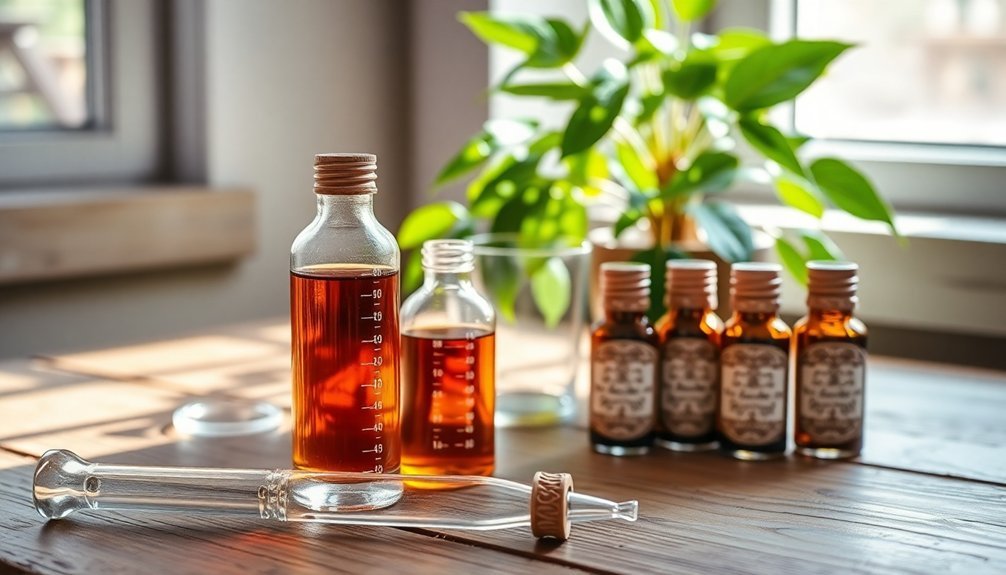
Different areas of the body require specific dilution ratios to guarantee both safety and effectiveness when applying essential oil blends.
You'll need to be especially careful with facial applications and when creating products for sensitive individuals or age groups.
For your safety and best results, follow these key dilution guidelines:
- Keep facial cosmetics and deodorants between 0.5-1.2%, never exceeding 1% for masks and oils.
- Use ultra-low concentrations of 0.2-1% for sensitive skin, paired with gentle carriers like jojoba or sweet almond oil.
- Limit concentrations to 0.5% for children and 1% for elderly individuals.
- Select appropriate carrier oils, like organic apricot or fractionated coconut oil, to enhance absorption and stability.
Always conduct a 24-48 hour patch test before applying any new blend, particularly on sensitive areas or delicate skin.
Proper Storage Methods for Diluted Oil Perfumes
Proper storage practices play an essential role in maintaining the quality and longevity of your diluted oil perfumes.
You'll want to keep your oils in a cool, stable environment between 60-70°F, away from heat sources and direct sunlight.
Store your perfumes in dark-colored or opaque glass bottles, and place them in a drawer or cupboard to protect against UV rays.
Don't keep them in your bathroom, as high humidity can affect the fragrance quality. Instead, aim for spaces with moderate humidity levels of 50-60%.
Always make sure your bottles are tightly sealed with screw-top caps or stoppers to minimize air exposure.
When applying your perfume, recap the bottle quickly to prevent oxidation and evaporation.
These simple storage methods will help preserve your diluted oil perfumes and maintain their intended fragrance.
Risk Factors and Patch Testing Protocols
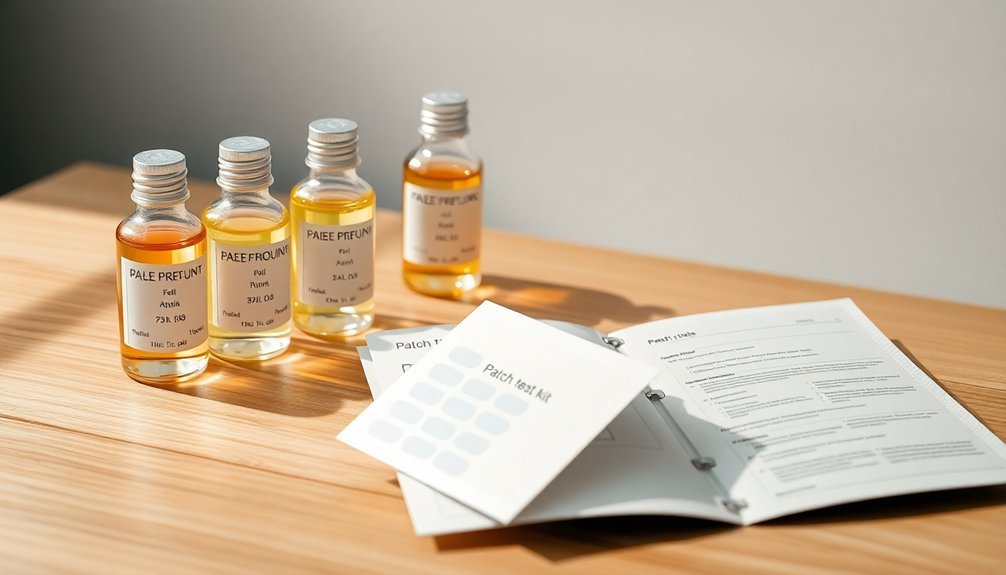
Safety concerns with essential oil perfumes shouldn't be overlooked, as these concentrated plant compounds can cause adverse reactions ranging from mild irritation to severe chemical burns if not properly diluted.
To protect yourself, always conduct a patch test before using any new essential oil blend.
When performing a patch test:
- Dilute the oil properly with a carrier oil, following the 2-5% ratio for perfumes
- Apply a small amount to your inner elbow or behind your ear
- Cover the area with a band-aid
- Wait 48 hours to check for any adverse reactions
If you experience redness, itching, or inflammation during the patch test, discontinue use immediately and consult a healthcare provider.
Remember that some essential oils can make your skin more sensitive to sunlight, so avoid sun exposure after application.
Essential Oil Shelf Life and Potency Guidelines
Once you've confirmed the safety of your diluted oils through patch testing, maintaining their potency becomes your next priority.
Store your oils in dark glass bottles between 60°F and 70°F, away from sunlight and humidity. Most oils will last 2-5 years when stored properly, but citrus oils typically expire within 1-2 years.
You'll extend your oils' shelf life by keeping them in a cool, dark place with minimal temperature fluctuations. If you're working with citrus oils, store them in your refrigerator.
For oils past their prime, don't throw them away – they can still be useful in cleaning products. Just remember to store these separately from your fresh oils and always check their condition before use.
Some oils, like Patchouli and Sandalwood, actually improve with age and can last up to 8 years.
Frequently Asked Questions
Can I Mix Different Carrier Oils Together for a Custom Perfume Base?
Yes, you can mix different carrier oils for a custom perfume base. You'll benefit from combining their unique properties, like absorption rates and fragrance longevity, while creating a blend that's perfect for your skin.
How Long Should I Wait Between Applying Different Oil Perfumes?
You'll want to wait 15-30 seconds between applying different perfume oils to let each scent settle. If you're layering multiple fragrances, start with the heaviest scent first and work towards lighter ones.
Does Adding More Essential Oil Make the Fragrance Last Longer?
Yes, adding more essential oils typically makes your fragrance last longer, but you'll need to be careful – too high a concentration can cause skin irritation and won't necessarily improve longevity beyond a certain point.
Can I Use My Oil Perfume Blend in a Diffuser?
You shouldn't use personal oil perfume blends in your diffuser. They're typically too concentrated and may contain ingredients unsafe for diffusing. Instead, create separate blends specifically for diffuser use with proper dilution ratios.
Why Do Some Oil Perfumes Change Color Over Time?
Your oil perfumes change color mainly due to oxidation when they're exposed to air and light. Natural ingredients in your blend are especially prone to this, and temperature changes can speed up the process.
In Summary
You've learned the essential safety guidelines for creating your own oil perfumes. Remember to always follow proper dilution ratios, conduct patch tests, and store your blends correctly. Don't skip safety steps, even if you're enthusiastic to start mixing. By maintaining these practices and respecting the potency of essential oils, you'll create safe, enjoyable fragrances that you can wear with confidence.