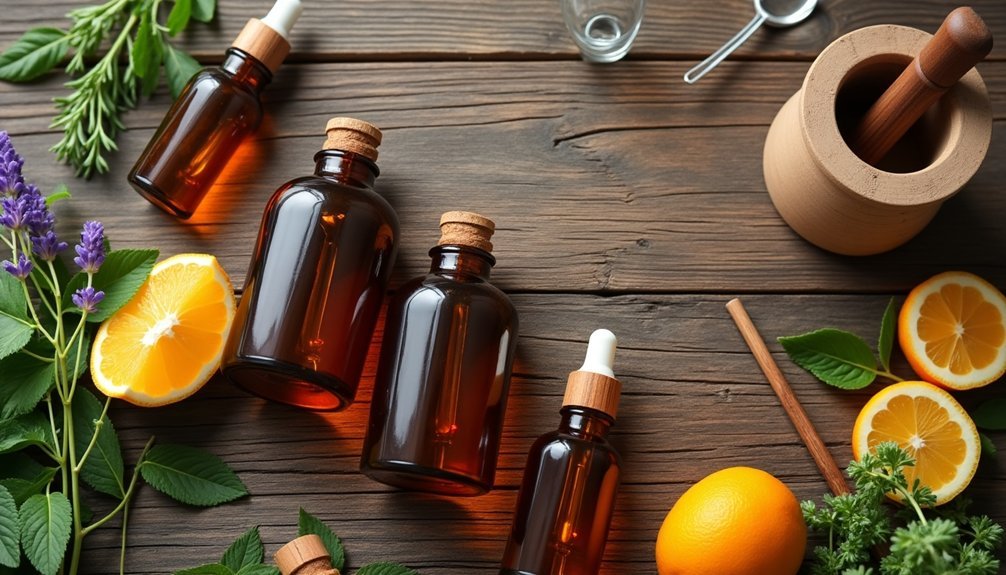
You'll need several essential supplies to start making your own perfumes: digital scales, glass beakers, pipettes, and protective gear for precise measurements and safety. Stock up on both natural ingredients (essential oils, absolutes) and synthetics for your fragrance blends, plus carrier solutions like alcohol and fixatives. Don't forget dark glass bottles for storage and proper documentation tools to track your recipes. The right supplies will transform your perfume-making journey from basic to professional.
Essential Tools for Perfume Making Success
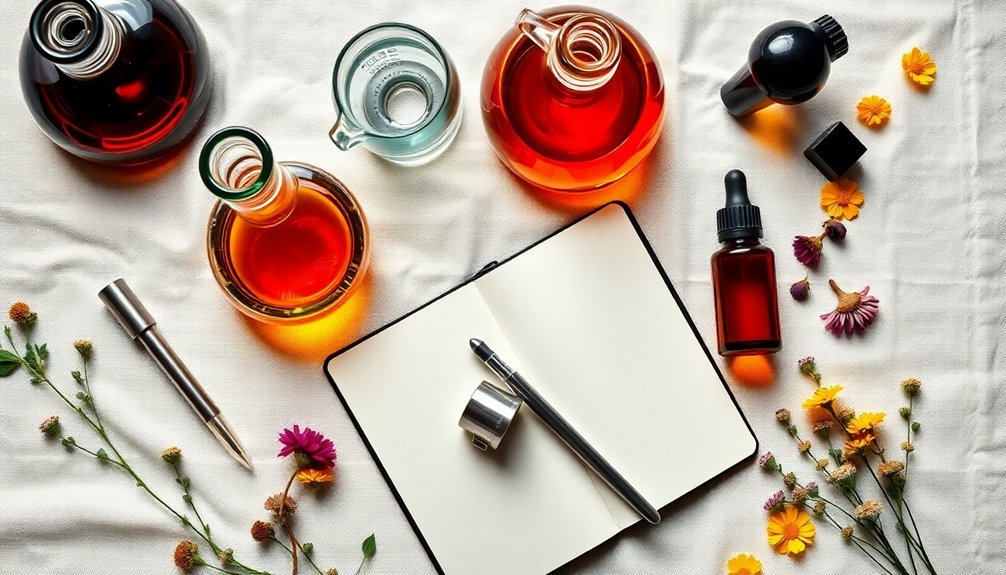
When starting on your perfume-making journey, you'll need a carefully selected set of tools to guarantee precision and success. Your basic toolkit should include digital scales for exact measurements, measuring spoons, and pipettes for accurate liquid transfers.
Don't forget essential glass beakers and stirring rods for mixing your fragrances. You'll also need proper storage equipment, including dark glass containers to protect your oils from light damage and various bottles for your blends and final products. A quality small funnel will make transferring your precious oils much easier and prevent waste.
Safety can't be overlooked, so invest in protective gear like gloves and safety glasses. To evaluate your creations, keep scent strips and fragrance blotters on hand.
Remember to maintain detailed records of your formulations using a notebook and labels, ensuring you can replicate successful blends in the future.
Must-Have Natural and Synthetic Fragrances
To create enchanting perfumes, you'll need a diverse collection of both natural and synthetic fragrances.
Start with essential oils like lavender and citrus for their therapeutic properties and unique scent profiles. Include rose absolutes and other natural extracts to add depth and character to your blends.
Don't overlook synthetic fragrances – they're essential for achieving consistency and longevity in your perfumes. Using modern synthetics ensures your perfumes are 100% non-toxic when properly formulated. Stock up on nature-identical synthetics that can replicate delicate scents like strawberry and peach, which can't be extracted naturally.
These synthetics also help stabilize your natural ingredients and enhance their performance.
Remember to store both types properly to maintain their quality.
You'll find that combining natural and synthetic fragrances gives you the best of both worlds: the authenticity of nature and the reliability of lab-created scents.
Base Ingredients and Carrier Solutions
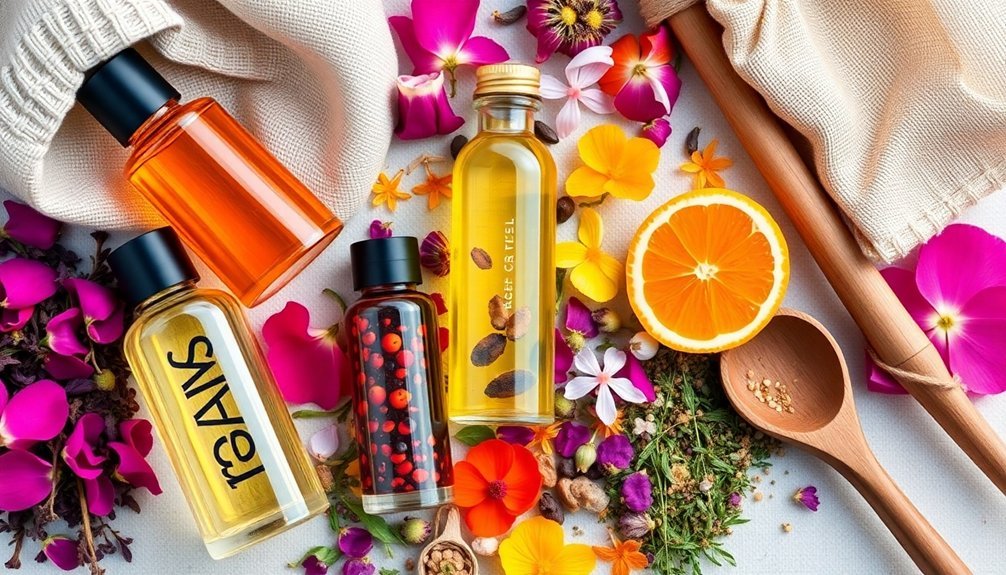
To start making your own perfume, you'll need carrier oils like jojoba, sweet almond, or fractionated coconut oil to dilute and stabilize your fragrance.
A high-proof alcohol base, such as vodka or Everclear, will help disperse the essential oils evenly while ensuring proper evaporation. Most recipes call for 5 ounces of alcohol as the standard measurement for cologne bases.
Natural fixatives including glycerin and witch hazel will extend your perfume's longevity while helping the oils blend seamlessly with water.
Essential Carrier Oil Options
Selecting the right carrier oil serves as the foundation for creating a successful DIY perfume.
You'll want to take into account your skin type and fragrance goals when choosing among the top options. Jojoba oil mimics your skin's natural oils and maintains scent integrity, while sweet almond oil offers gentle nourishment for sensitive skin.
If you're looking for a lightweight feel, try fractionated coconut oil, which stays liquid and blends easily with essential oils.
For those with oily skin, grapeseed oil's non-greasy formula and neutral scent make it an excellent choice. Apricot kernel oil's silky texture and rich vitamin content provide additional skin benefits.
Remember to test your chosen carrier oil with a small amount of essential oils first, using 15-30 drops per ounce of carrier oil for best results.
Alcohol Base Solutions Required
When crafting your DIY perfume, choosing the right alcohol base solution proves essential for achieving a professional-quality fragrance.
You'll want to use cosmetic grade Trade Specific Denatured Alcohol (TSDA) as your primary base, as it's specifically designed for perfumery and can handle up to 30% fragrance load.
If you can't source TSDA, 190 proof Everclear makes a suitable alternative. While vodka or gin can work, their lower alcohol content reduces their effectiveness.
Avoid rubbing alcohol and methanol entirely, as they're unsuitable for skin application and can affect your fragrance's quality.
For best results, maintain an 80:20 ratio of carrier agents to fragrance oils.
You can add up to 5% water to dilute the alcohol, but be careful as too much can cause oil separation.
Natural Fixative Ingredients
Natural fixatives serve as the backbone of your DIY perfume, anchoring volatile fragrance molecules and extending their longevity.
You'll find several effective options, from plant-based ingredients like cedarwood, cistus, and clary sage to resinoids such as benzoin, frankincense, and myrrh.
For your carrier oils, consider jojoba oil, which mimics your skin's natural sebum, or sweet almond oil, rich in essential fatty acids.
Fractionated coconut oil offers a lightweight, non-greasy alternative that stays liquid at any temperature.
You can also explore classic fixatives like sandalwood, vanilla, and patchouli for their deep, lasting aromas.
While traditional ambergris isn't readily available, synthetic alternatives like Ambroxan provide similar amber and cedar-like notes to anchor your perfume blend.
Storage Containers and Packaging Options
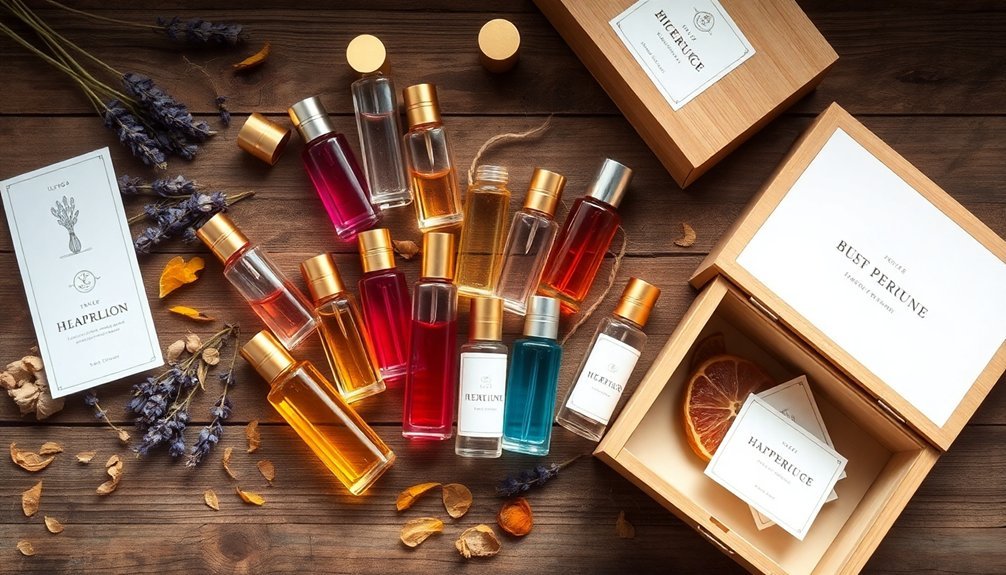
When choosing containers for your DIY perfume, you'll need to decide between decorative glass bottles that offer classic elegance and plastic options that provide durability and break resistance.
Glass containers excel at preserving fragrance integrity and creating a premium look, while high-quality PET or HDPE plastic containers work better for travel and everyday carrying.
Whether you opt for glass or plastic, guarantee your container includes proper sealing mechanisms and protection from light exposure to maintain your perfume's quality.
Decorative Glass vs. Plastic
Choosing between decorative glass and plastic containers for your DIY perfume can greatly impact both aesthetics and functionality.
Glass containers offer elegance and durability, effectively preserving your fragrance while showcasing its color and clarity. You'll find that glass is resistant to chemical reactions, making it ideal for maintaining perfume quality over time.
Plastic containers, while less luxurious, provide practical advantages. They're more cost-effective, lighter, and perfect for travel-sized portions and samples. You can easily transport them without worrying about breakage.
Both options work well with various storage solutions, such as rotating organizers or tiered displays. Consider using glass for your main collection and plastic for travel versions or samples.
The choice ultimately depends on your specific needs, budget, and how you'll use your perfume.
Travel-Safe Container Solutions
Traveling with your DIY perfumes requires smart container choices to prevent spills and maintain fragrance quality. You'll find the most reliable options in small glass dropper bottles and stainless steel containers, especially those with replaceable rubber seals.
| Container Type | Size Range | Best Features |
|---|---|---|
| Glass Droppers | 5-10ml | Excellent compatibility |
| Steel Flasks | 5-15ml | Virtually unbreakable |
| Sample Vials | 2-5ml | Proven leak resistance |
| Travel Atomizers | 5-10ml | Easy dispensing |
For efficient transfers, use miniature funnels and plastic pumps to fill your travel containers. Don't forget to protect your perfumes from light exposure by choosing dark-colored containers or storing them in protective cases. If you're dealing with a leaky container temporarily, wrap it with cling film until you can transfer it to a more suitable vessel.
Measuring and Blending Equipment
To create professional perfumes at home, you'll need precise measuring and blending equipment that guarantees consistent results.
Start with a set of glass measuring cylinders and a digital scale to guarantee accurate measurements of your ingredients. You'll also want to invest in a 4-cup glass measuring cup for larger volumes and measuring columns for smaller quantities.
For blending, you'll need both standard and disposable pipettes to transfer oils precisely without waste. A set of funnels will help you move liquids between containers smoothly.
Consider getting testing strips to sample your creations safely. For more advanced perfume making, look into filtration systems with microporous membrane filters and mixing vessels with temperature controls.
These tools will help you achieve professional-quality results in your home perfumery workspace.
Preservation and Safety Supplies
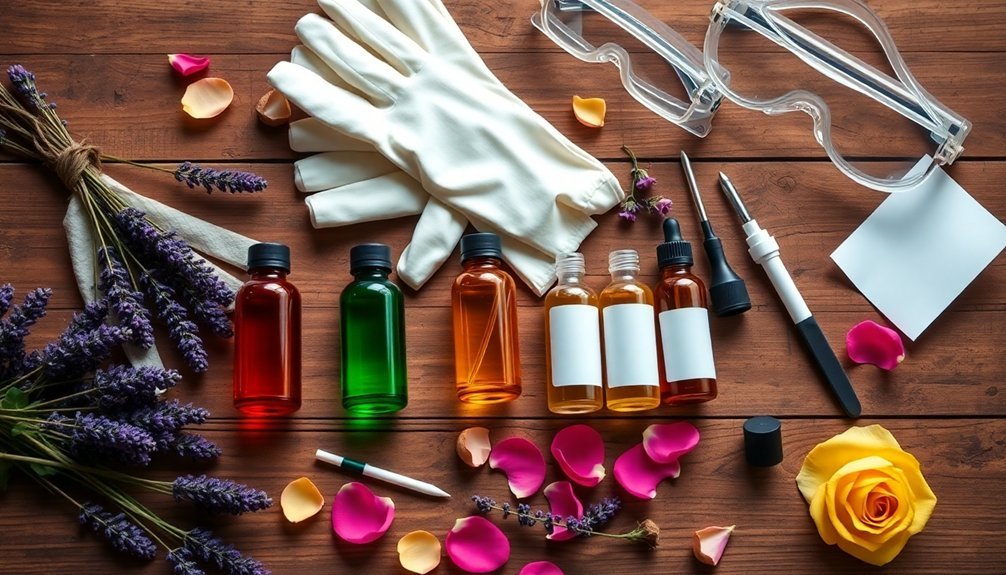
You'll need a set of dark amber or cobalt glass bottles with airtight lids to protect your handmade perfumes from light damage and oxidation.
For natural preservation, stock up on vitamin E oil, benzoin resin, and rosemary antioxidant to extend your perfume's shelf life.
Keep your workspace equipped with a lockable storage cabinet or decorative box that maintains stable temperatures between 50-70°F to safely store both your finished perfumes and raw materials.
Safe Storage Solutions
Protecting your handcrafted perfumes starts with proper storage solutions that preserve their quality and extend their shelf life.
Store your creations in dark glass bottles with tight-fitting lids, preferably in opaque containers that prevent light exposure and chemical reactions.
Keep your perfumes in cool, dark spaces away from direct sunlight and heat sources. Your bedroom's dresser drawers or wardrobe shelves make better storage spots than humid bathrooms.
Consider using a beauty mini-fridge to maintain consistent temperatures or repurpose vintage cabinets for added style.
Don't forget to secure your bottles with foam or felt inserts to prevent damage.
Label each creation with the blend name, date, and oil ratios.
You'll also want to shake your homemade perfumes regularly to maintain the perfect mix of ingredients.
Natural Preservative Methods
Proper storage alone won't guarantee your perfume's longevity – natural preservatives play an essential role in maintaining your blend's integrity. You'll need to incorporate these elements strategically to protect your creation from bacteria, mold, and oxidation.
| Preservative | Usage Rate |
|---|---|
| Apple Cider Vinegar | 1 tsp per recipe |
| Essential Oils | 1-2% by weight |
| High-Proof Alcohol | 40% minimum |
For water-based perfumes, consider using Bragg apple cider vinegar for its antiseptic properties and balanced pH. If you're working with oil-based formulations, vitamin E oil and rosemary extract can provide antioxidant protection. When incorporating essential oils like tea tree or thyme for their antimicrobial benefits, keep concentrations low to avoid skin irritation. Remember that high-proof alcohol serves both as a preservative and a solubilizer for your essential oils.
Maturation and Testing Materials
Once your perfume ingredients are combined, maturation becomes an essential phase that transforms your fragrance from a simple mixture into a sophisticated blend.
You'll need proper storage containers and a cool, dark space to guarantee ideal maturation, which can take several weeks to months.
For testing and evaluation, gather these essential tools: glass beakers or measuring cylinders for precise blending, pipettes for transferring small amounts of oils, and testing strips for sampling your creation's development.
You'll also want filtration materials to remove any impurities after maceration. During this process, you'll need to regularly stir your mixture and monitor its progress using testing strips.
Scent Note Building Blocks
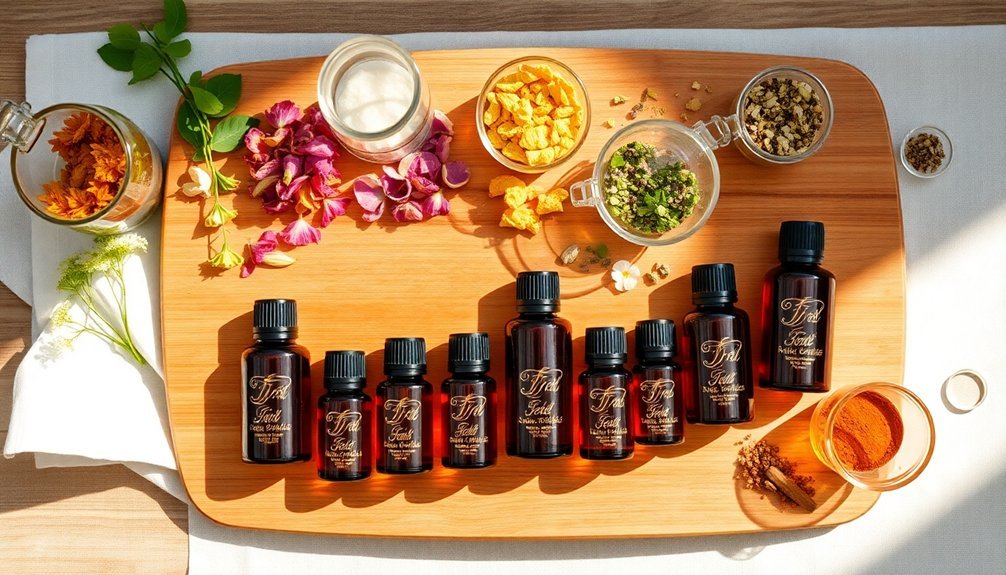
Understanding scent notes forms the foundation of creating sophisticated perfumes.
You'll need to master three distinct layers – top, middle, and base notes – each playing a vital role in your fragrance's development.
- Top notes feature citrus and herbs like bergamot, lemon, and basil, creating that vital first impression but evaporating within 15 minutes.
- Middle notes, your fragrance's heart, include florals and spices like rose, jasmine, and cinnamon, lasting about 20 minutes.
- Base notes provide the lasting foundation with woods and resins like sandalwood, cedar, and amber.
- Essential oils span all three note categories but must be diluted in carrier oils for safety.
Perfume Making Documentation Tools
Keeping detailed records of your perfume formulations transforms a casual hobby into a precise craft.
You'll want to establish both digital and physical documentation systems to track your creative journey.
Start with a dedicated perfume journal where you'll record recipes, ratios, blending processes, and aging observations. Use this to document your experiments and gather feedback on different formulations.
For digital organization, consider specialized software like Formulair that lets you build a personal raw materials database, calculate dilutions, and visualize fragrance pyramids.
Don't forget to note essential details like supplier information, IFRA limits, cost per gram, and purchase dates for your ingredients.
These records will help you avoid using expired materials and guarantee you can replicate successful blends with precision.
Keep thorough guides nearby for technical reference.
Cleaning and Maintenance Supplies
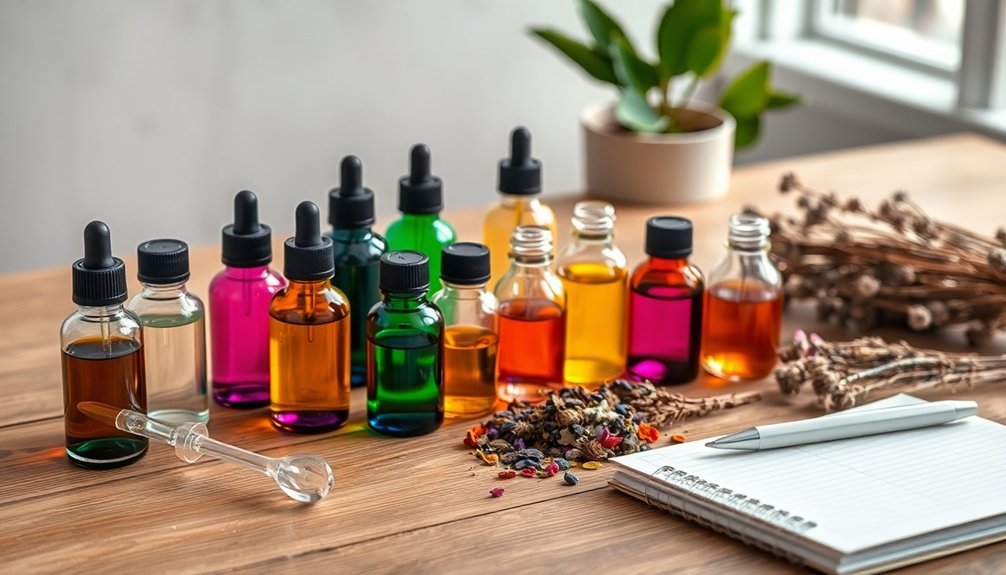
Proper cleaning supplies and maintenance tools are essential for crafting quality perfumes and ensuring your equipment remains in pristine condition.
You'll need specific solutions and tools to maintain your perfume-making equipment effectively.
- Mix equal parts white vinegar and warm water to tackle oily residue, or use a simple soap solution that removes over 90% of surface oils from bottles.
- Keep small brushes handy for cleaning intricate bottle designs, along with clean cloths and paper towels for wiping down equipment.
- Use rubbing alcohol for quick cleaning of atomizers, but avoid harsh chemicals or abrasive cleaners that can damage your bottles.
- Remember to thoroughly rinse bottles multiple times and let them dry completely before reuse – lingering moisture can lead to mold growth and compromise your fragrances.
Fragrance Development Accessories
Beyond clean equipment, successful perfume creation depends on having the right development tools at your fingertips.
You'll need a selection of pipettes and transfer tools to handle your ingredients with precision – both disposable plastic ones for everyday use and glass Pasteur pipettes for working with concentrated oils and solvents.
Don't forget your testing materials: scent strips let you sample fragrances safely, while scent cards help track your formulas.
Organize your workspace with staging trays, and keep detailed notes of your recipes.
For storage, invest in dark glass containers to protect your blends from light damage.
When you're ready to bottle your creation, you'll want elegant glass perfume bottles or roll-ons with secure caps.
Remember to keep carrier oils on hand for diluting your concentrated scents.
Frequently Asked Questions
How Long Does Homemade Perfume Typically Last Before the Scent Starts Fading?
Your homemade perfume's scent will typically last 3-5 years if it's alcohol-based, or about 1 year if it's oil-based. You'll keep it fresh longer by storing it in a cool, dark place.
Can I Recreate My Favorite Commercial Perfume at Home?
While you can attempt to recreate commercial perfumes, it's challenging due to their complex proprietary formulas. You'll likely create something similar but not identical. Consider making your own unique signature scent instead.
Why Does My DIY Perfume Smell Different on Different People?
Your DIY perfume smells different because everyone's body chemistry is unique. Your skin's pH levels, natural oils, hormones, and even what you've eaten can change how the fragrance interacts with your skin.
How Many Drops of Essential Oil Make One Complete Perfume Recipe?
You'll typically need 20-30 drops total for a complete perfume recipe. Most blends combine 2-5 different oils, like the Fresh and Bright Blend using 20 drops or Simple Perfume Recipe using 30 drops.
What Causes My Homemade Perfume to Change Color Over Time?
Your perfume's color changes mainly due to oxidation when fragrance ingredients react with air. You'll also notice changes from light exposure and temperature fluctuations, especially if you're using sensitive ingredients like vanillin or citrus oils.
In Summary
You're now equipped with everything needed to start your DIY perfume journey. Remember to stock up on essential tools, quality fragrances, and proper storage containers before beginning. Don't forget to document your creations and maintain clean equipment for the best results. With these supplies at hand, you'll be ready to craft unique, personalized scents that reflect your creativity and style.