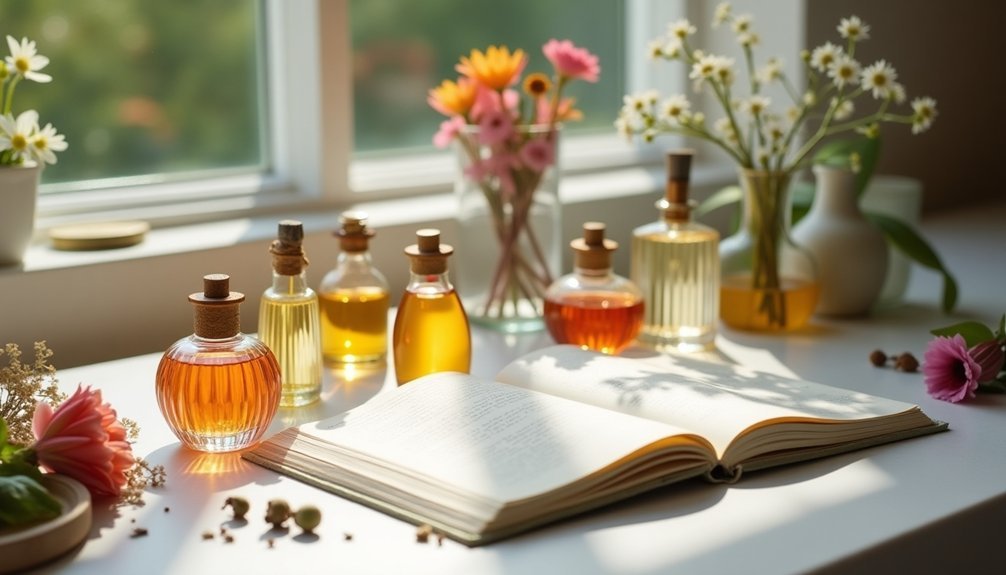
Building your perfect fragrance starts with understanding the four main scent families: floral, oriental, woody, and fresh. You'll want to begin with clean, moisturized skin and apply your chosen base notes first at pulse points like wrists and neck. Layer middle notes next, followed by top notes, keeping complementary scents in mind. Don't rub fragrances together – let each layer settle naturally. This foundational approach opens the door to creating your signature scent combination.
Understanding the Basics of Fragrance Families
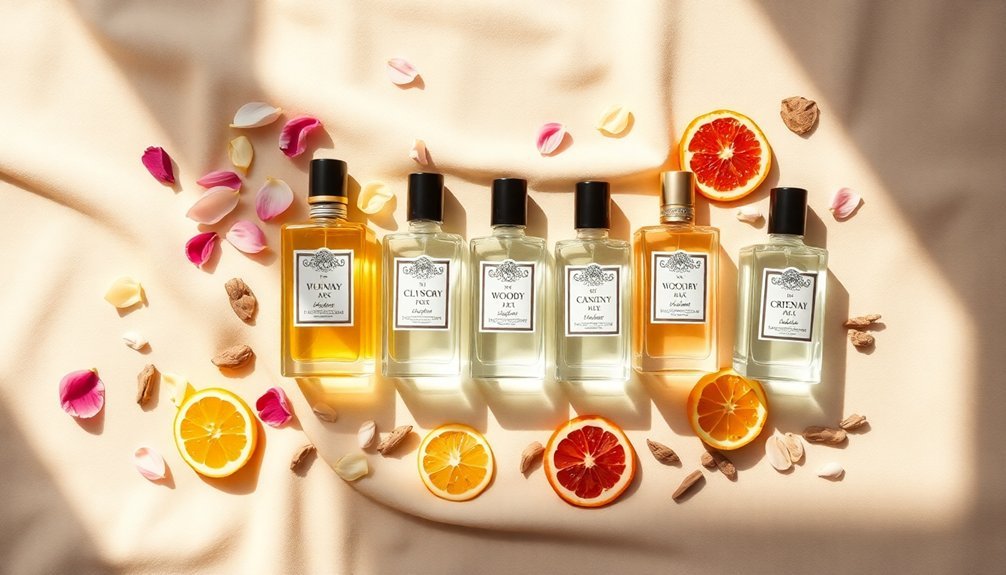
While creating your perfect perfume accord may seem challenging, understanding fragrance families provides a solid foundation for your journey.
There are four main families you'll need to know: floral, oriental, woody, and fresh. Each has distinct characteristics that make them suitable for different occasions and seasons. Paul Parquet introduced the first recognized fragrance family system to help classify these distinct scent categories.
Floral scents showcase single flowers or bouquets, perfect for spring and summer wear.
Oriental fragrances offer rich, exotic notes like amber and vanilla, ideal for evening events.
You'll find woody scents featuring earthy notes like sandalwood and cedar work well for everyday use, especially in autumn.
Fresh fragrances, dominated by citrus and aquatic notes, are your go-to for summer and casual occasions.
Within each family, you'll discover subfamilies that add nuance and complexity to these basic categories.
Essential Elements of Skin Preparation
Creating your perfect perfume accord starts with proper skin preparation. You'll want to begin by moisturizing your skin thoroughly, as hydrated skin helps fragrances last longer. Apply a gentle, scented lotion to create an effective barrier that enhances your perfume's longevity, paying special attention to drier areas like elbows and knees. Since the Natural Moisturising Factor helps maintain optimal skin hydration, proper moisturizing is essential before applying fragrances.
| Step | Action | Purpose |
|---|---|---|
| 1 | Cleanse skin | Remove residue |
| 2 | Apply base lotion | Create foundation |
| 3 | Let absorb | Allow settling |
| 4 | Layer fragrances | Build complexity |
| 5 | Don't rub | Preserve notes |
Remember to select compatible base products that complement your chosen fragrance. You'll achieve the best results by using lotions or oils with similar scent profiles. Always patch test new combinations and avoid over-layering to protect your skin while creating your signature scent.
The Art of Base Note Selection
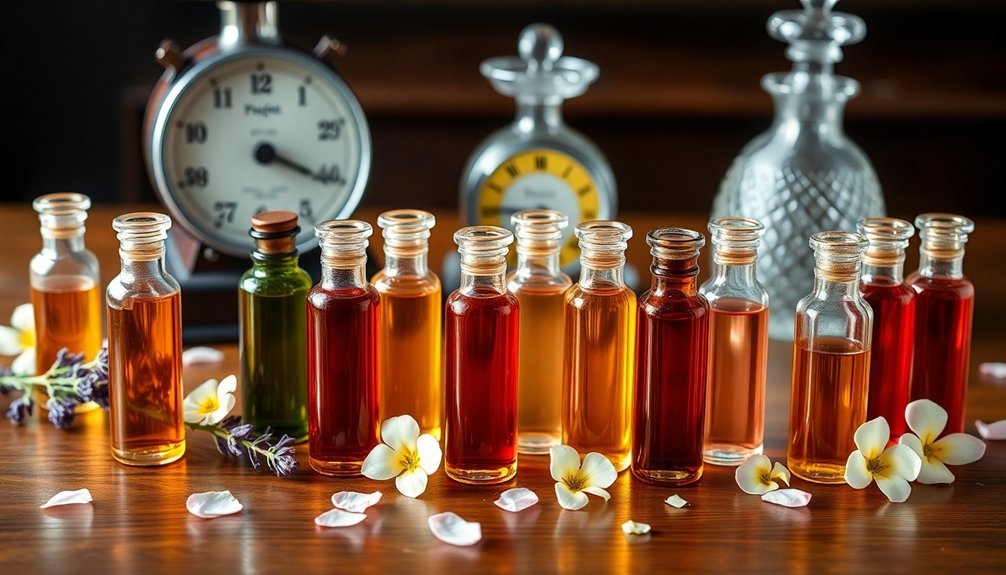
Three essential factors define the success of your perfume: longevity, depth, and character – all of which stem from your base note selection.
When choosing your base notes, you'll want to focus on ingredients that provide lasting power and richness to your fragrance.
Your best options include classic woods like sandalwood and cedar, which offer sophistication and persistence.
You can enhance the warmth and staying power by incorporating resins such as benzoin or frankincense.
For a sensual touch, consider adding musk or amber, both of which excel at extending your perfume's life on the skin.
If you're seeking an earthy dimension, patchouli or moss will ground your creation perfectly.
The combination of natural and synthetic materials in your base notes will create the most complex and well-rounded fragrance profile.
Mastering Middle Note Combinations
Since middle notes form the heart and soul of your perfume, mastering their combinations requires careful consideration of both chemistry and artistry. You'll want to focus on creating harmonious blends that shift smoothly from your top notes while preparing for your base notes.
| Middle Note Type | Recommended Pairings |
|---|---|
| Floral | Rose + Geranium, Lavender + Violet |
| Spicy | Cinnamon + Sweet Marjoram |
| Green | Pine + Eucalyptus |
| Herbal | Fennel + Green Tea |
When selecting your middle note combinations, consider their olfactory properties. Floral notes like rose and lavender contain calming compounds that create a mellow, rounded character. You'll find that spicy and herbal combinations add depth, while green notes provide a fresh, natural dimension. The key is balancing these elements to maintain your fragrance's narrative while ensuring a seamless progression through your accord.
Top Note Application Techniques
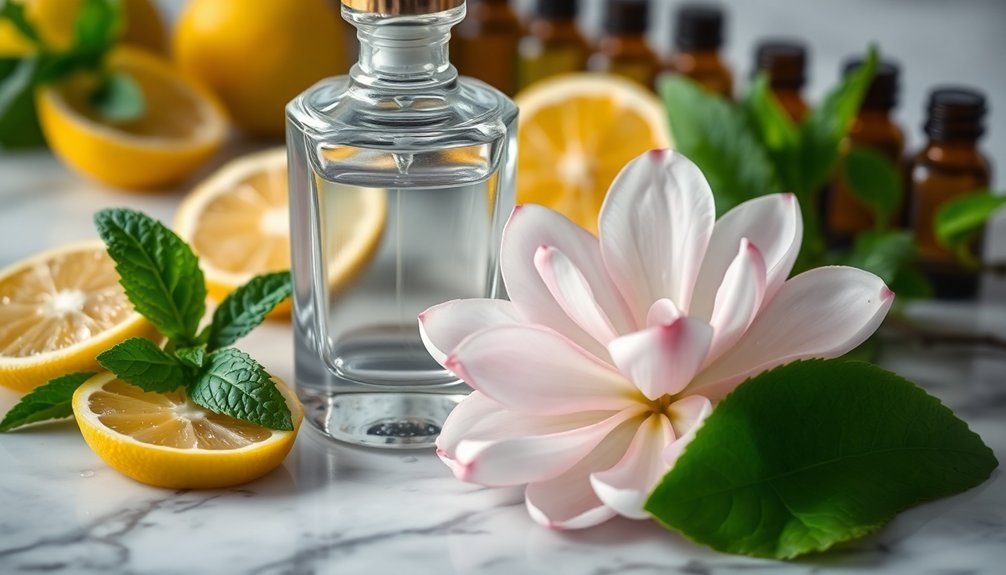
When applying your perfume's top notes, you'll get the best results by targeting specific pulse points like your wrists, neck, and inner elbows.
You can control the fragrance intensity by adjusting your spray distance—keep the bottle about six inches away for an even distribution.
These strategic placement points, combined with proper spray technique, will help your top notes create the perfect opening statement for your perfume accord.
Pulse Point Positioning
The strategic placement of top notes on your body's pulse points can dramatically enhance your fragrance's impact and longevity. Focus on applying your perfume to areas where blood vessels run close to the skin's surface, particularly your wrists, neck, and behind your ears.
Don't overlook less common but equally effective spots like your inner elbows and behind your knees, especially when wearing shorts or skirts. These areas generate heat that helps diffuse your fragrance throughout the day.
Remember to dab, never rub, as this can break down the scent molecules. For best results, moisturize your skin before application, as hydrated skin holds fragrance longer.
You'll find that targeting these pulse points lets you use less perfume while achieving a more vibrant, long-lasting scent experience.
Quick-Spray Distance Control
Mastering proper spray distance transforms your perfume application from guesswork into an art form.
You'll want to hold your perfume bottle 5-7 inches away from your skin to achieve the perfect distribution of those delicate top notes like bergamot, lemon, and grapefruit.
For ideal application, follow these key techniques:
- Maintain a consistent 6-8 inch distance for an even, fine mist
- Use light spritzing motions rather than heavy sprays
- Avoid rubbing the fragrance after application to preserve the scent molecules
Remember to apply your perfume on clean, moisturized skin when your pores are most receptive – typically after showering.
If you're seeking a subtler effect, try the walk-through method: spray into the air and step through the fragrant cloud.
Strategic Pulse Point Mapping
Understanding how to map your pulse points strategically can transform your fragrance experience from fleeting to long-lasting. Focus on the key areas where your blood vessels run closest to your skin's surface: your inner wrists, neck base, behind your ears, and inner elbows.
Apply your fragrance to clean, moisturized skin at these points, where natural body heat will activate and diffuse the scent throughout the day.
Don't rub the fragrance after application, as this can break down the molecules. Instead, spray from 3-6 inches away and let it settle naturally.
For best results, choose 2-3 pulse points and layer your scent deliberately. The combination of your body's warmth and these strategic locations will create a personalized fragrance signature that evolves beautifully with your natural chemistry.
Seasonal Scent Layering Methods
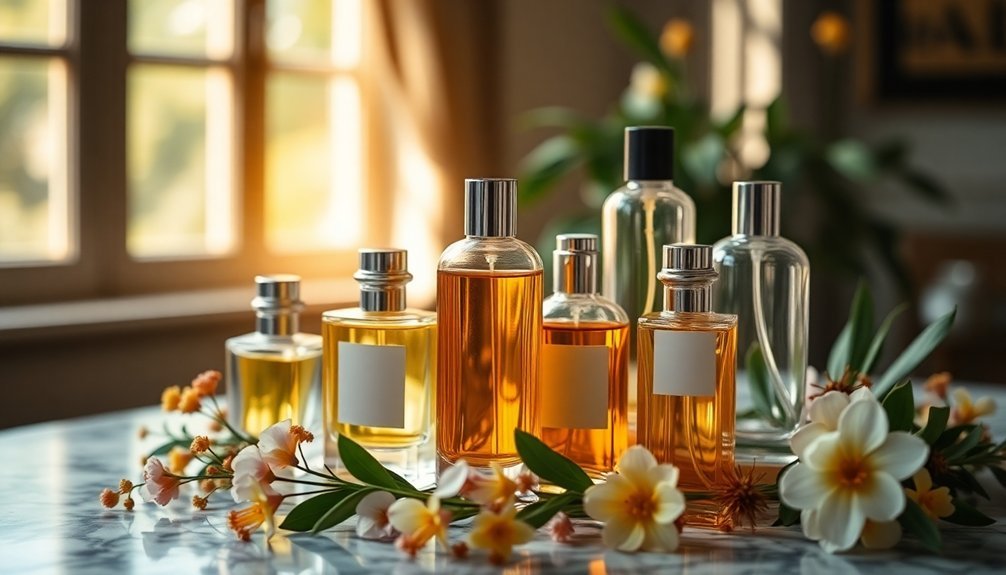
You'll discover that mastering seasonal scent layering can transform your fragrance game throughout the year.
In summer, combine light citrus and floral notes for a rejuvenating blend that won't overpower in the heat, while focusing on bright top notes like lemon and peach.
When winter arrives, switch to rich combinations of amber, vanilla, and woody bases that provide warmth and lasting power in cold weather.
Summer Fresh Combinations
Summer beckons a lighter, breezier approach to fragrance layering, where the art of combining scents can transform your signature perfume into a revitalizing seasonal masterpiece.
Start with a neutral base featuring musk, vanilla, or amber notes to create a balanced foundation that won't overpower your layering journey.
To achieve the perfect summer blend, follow these essential steps:
- Begin with your neutral base on pulse points, ensuring it's light enough to accommodate additional layers.
- Add citrus notes like bergamot or mandarin to introduce a fresh, energetic dimension.
- Top with delicate floral elements such as jasmine or tiaré flower for an elegant finish.
Remember to moisturize your skin before application and build your layers gradually.
You'll find the magic happens when these elements harmonize, creating a unique summer symphony that's distinctly yours.
Winter Warmth Layering
While summer calls for light and airy fragrances, winter's crisp air demands a different approach to scent layering that embraces warmth and depth.
Start by prepping your skin with an unscented moisturizer to combat the season's drying effects and enhance fragrance longevity.
Focus on rich, complex scent families like amber, woody, and gourmand notes. You'll want to layer strategically – apply heavier scents directly to pulse points where body heat naturally diffuses the fragrance, then add lighter fragrances on top or on clothing.
Consider combining warm spices like cinnamon with deep woods or resins for sophistication. Don't exceed three different fragrances to maintain balance.
Remember to test your combinations before fully committing, and keep your skin well-hydrated throughout the season for ideal scent projection.
Product Format Compatibility Guide
Creating a successful fragrance product requires understanding the compatibility between different formats and their regulatory requirements. When formulating your product, you'll need to take into account VOC limits and choose appropriate bases to meet compliance standards.
- For room sprays and air fresheners, keep VOC levels at 18% or below by using water as your primary base and adding Polysorbate 20 to stabilize fragrance oils.
- If you're creating personal fragrances, select your concentration wisely – parfum needs 20-30% oils while eau de cologne requires just 2-4%.
- Match your base to your desired outcome: alcohol bases provide better projection but higher VOCs, while carrier oils offer longer-lasting scents with zero VOCs.
Remember to mix your fragrance oil with a solubilizer before adding it to your chosen base for ideal stability and clarity.
Creating Signature Scent Combinations
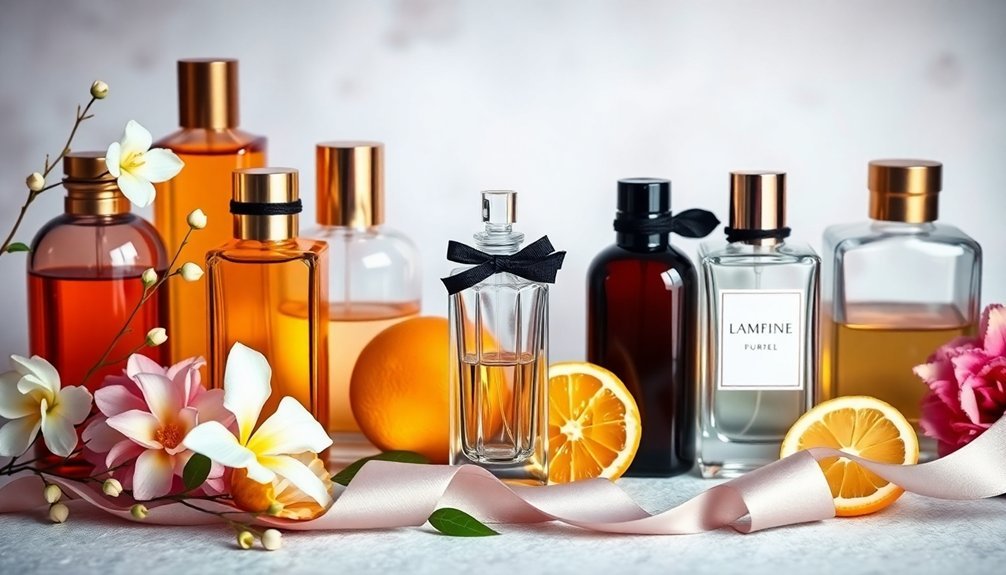
Beyond understanding product formats, mastering the art of scent combinations opens up endless possibilities for unique fragrances.
You'll find that floral notes blend beautifully with citrus and fruity accords, while woody scents complement spicy and floral elements. For example, try pairing rose with lemon verbena or cedarwood with jasmine.
To create your signature blend, start with clean, moisturized skin and apply your strongest scent first. Layer complementary fragrances on pulse points, like wrists and neck, for ideal diffusion.
Consider seasonal appropriateness – light citrus-floral combinations work best in summer, while warm vanilla-musk pairings suit winter months.
Don't forget to experiment with contrasting notes, such as fresh citrus with pink pepper, to discover unexpected harmonies that reflect your personal style.
Fragrance Longevity Enhancement
You'll maximize your fragrance's staying power by strategically applying it to pulse points like your wrists, neck, and behind your ears, where increased blood flow activates the scent throughout the day.
Start with well-moisturized skin using an unscented lotion to create a base that locks in fragrance molecules more effectively.
These heat-activated spots work in harmony with your body's natural warmth to release the scent gradually, ensuring your perfume remains noticeable longer.
Strategic Pulse Point Application
When it comes to maximizing your perfume's impact, strategic pulse point application stands as one of the most effective techniques in fragrance wear. These areas, where blood vessels run close to your skin's surface, emit heat that naturally amplifies your chosen scent throughout the day.
For ideal fragrance projection, target these key pulse points:
- Your neck and behind your ears, where the carotid artery provides consistent warmth.
- Inner wrists and elbow creases, which activate the scent through natural movement.
- Behind your knees, a often-forgotten spot that maintains heat and extends fragrance life.
Remember not to rub your wrists together after application, as this can break down the fragrance molecules. Instead, let the perfume dry naturally on your skin for the best longevity and sillage.
Lock Moisture First
Creating a lasting fragrance experience starts with proper skin preparation. The key to maximizing your perfume's longevity lies in moisturizing your skin before application. Your scent will last considerably longer when applied to well-hydrated skin, as fragrance molecules cling better to moisturized surfaces.
For best results, apply an unscented, oil-based moisturizer immediately after showering while your skin is still slightly damp. If you're using scented products, choose ones that match your perfume to create a layered effect that enhances the overall fragrance profile.
This strategic approach not only locks in the scent but also reduces the need for frequent reapplication throughout your day.
Remember not to rub your wrists together after applying perfume, and let the fragrance dry naturally on your moisturized skin for optimal results.
Heat-Activated Scent Spots
Beyond moisturizing, understanding heat's role in fragrance longevity opens up strategic opportunities for perfume application.
While heat can accelerate fragrance evaporation, you can use your body's natural warm spots to your advantage when applying perfume.
Your body's heat-activated zones can work as natural diffusers for your fragrance. Here's how to maximize your scent's staying power:
- Target pulse points behind your ears, wrists, and inner elbows where blood vessels are closest to the skin.
- Apply perfume at the base of your throat and between your breasts, as these areas generate consistent warmth.
- Spray fragrance on your hair or clothes, which release scent gradually due to their distance from direct body heat.
Choose perfumes with strong base notes and higher concentrations (EDPs) for better longevity in warm conditions.
Troubleshooting Common Layering Mistakes
Although perfume layering can elevate your signature scent, several common mistakes can derail your efforts to create the perfect fragrance combination.
To avoid clashing scents, don't mix incompatible fragrance families, like florals with orientals. Instead, consult the fragrance wheel for harmonious pairings.
Pay attention to your application order – always start with lighter scents before moving to heavier ones, and let each layer dry completely.
You'll want to maintain balance by avoiding too many dominant top notes or overwhelming base notes. Consider the concentration and volatility of each fragrance you're using.
When applying, don't spray fragrances directly on top of each other. Start with clean skin, use a primer if needed, and test small amounts first.
Remember that layering more than three scents can lead to sensory overload.
Frequently Asked Questions
Can Perfume Layering Trigger Allergies or Skin Sensitivities?
Yes, layering multiple perfumes can increase your exposure to allergenic compounds like limonene and linalool, raising your risk of skin reactions. You're fundamentally doubling or tripling the concentration of potential irritants.
How Many Different Fragrances Can Be Safely Layered at Once?
You shouldn't layer more than three fragrances at once. It's best to start with two scents and build up your experience. Combining too many can create an overwhelming smell and increase skin sensitivity risks.
Will Layering Different Brands' Perfumes Void Their Quality Guarantee?
You won't void quality guarantees by layering different perfume brands. Manufacturers typically don't restrict how you use their fragrances together, unless specifically stated. It's always smart to check individual product terms though.
Does Altitude or Climate Affect How Layered Fragrances Develop?
Yes, your layered fragrances will develop differently based on altitude and climate. You'll notice faster evaporation at high altitudes, stronger scents in humidity, and need richer base notes in cold weather.
Can Fragrance Layering Stain or Damage Delicate Fabrics and Jewelry?
Yes, layered fragrances can stain or damage your delicate fabrics and jewelry. You'll want to avoid spraying directly on silk, satin, pearls, or plated metals, as the concentrated ingredients can cause discoloration.
In Summary
You've now mastered the fundamentals of creating your perfect perfume accord through layering. With your knowledge of fragrance families, proper skin prep, and strategic note combinations, you're ready to experiment confidently. Remember, there's no wrong way to layer – it's about finding what works for you. Keep testing different combinations, and you'll discover your signature scent that's uniquely yours.
References
- https://www.hausofgloi.com/blogs/haus-herald/a-guide-to-fragrance-layering
- https://storiesparfums.com/en-de/blogs/news/beginners-guide-to-fragrance-chapter-5-how-to-layer-fragrance
- https://pure.manchester.ac.uk/ws/portalfiles/portal/74978081/650132_1_.pdf
- https://phlur.com/blogs/perfumery-dictionary/fragrance-layering-tips
- https://herbandroot.com/blogs/self-love/fragrance-layering-tips-for-the-novice
- https://nyc.ph/blogs/inspiration/perfume-families-101-a-guide-to-understanding-and-choosing-your-next-natural-and-sustainable-fragrance
- https://layermor.com/blogs/blog/a-beginner-s-guide-to-fragrance-layering
- https://www.fragrancex.com/blog/fragrance-wheel/
- https://houseofsillage.com/blogs/blog/how-to-layer-perfume
- https://www.alphaaromatics.com/blog/fragrance-wheel/