
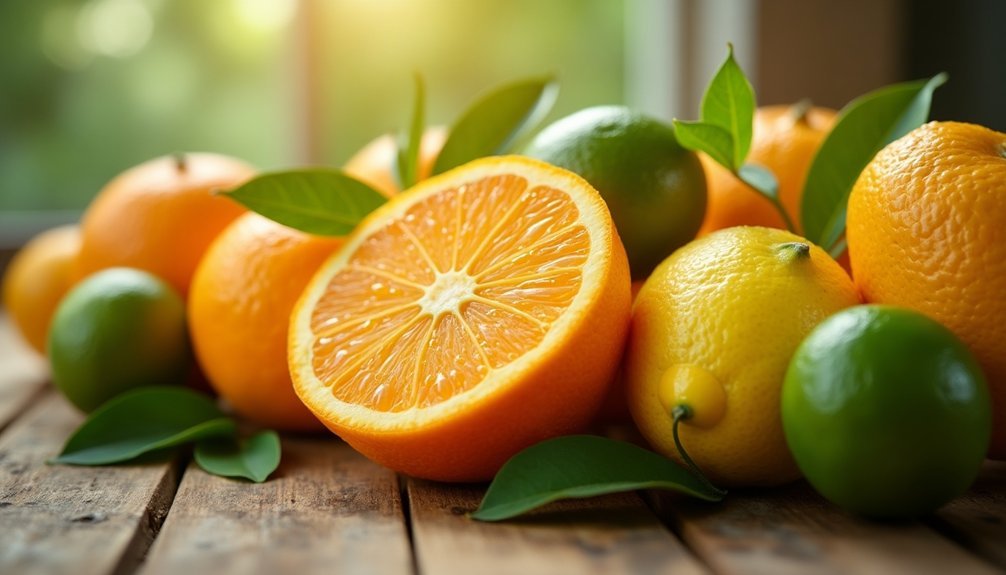
Citrus oil blends smell incredibly fresh because they're packed with natural volatile compounds, particularly limonene, which makes up 90-98% of their composition. When you smell these oils, their unique terpene compounds trigger your brain's limbic system, creating an uplifting emotional response. They work like nature's aromatherapy, releasing micro-jets of fragrance that instantly energize your senses. Understanding the science behind these powerful scents can help you create perfect blends for your space.
The Science Behind Fresh Citrus Scents

When you peel or squeeze a citrus fruit, microscopic pockets of oil burst open, releasing jets of fragrant compounds into the air. High-speed cameras have captured these micro-jets in action, showing how this natural mechanism guarantees maximum fragrance dispersal.
It's nature's way of attracting animals to help spread the fruit's seeds.
What you're experiencing isn't just a pleasant smell – it's triggering specific responses in your brain. The limbic system, which controls your emotions and memory formation, reacts positively to these citrus scents. However, research shows that the perceived pleasantness of the scent, rather than the specific citrus compounds themselves, is what influences our emotional response.
Your orbitofrontal cortex becomes particularly active when processing these vibrant notes, while the amygdala helps modulate your emotional response.
When you see and smell citrus simultaneously, your brain activity increases, creating that unmistakable sensation of freshness that you've come to associate with citrus oils.
Natural Chemical Compounds in Citrus Oils
When you smell citrus oils, you're mainly detecting limonene, the dominant compound that makes up 90-98% of orange oils and creates that unmistakably fresh scent.
Terpenes like α-pinene, β-pinene, and myrcene work together with limonene to create the complex aroma profile you associate with citrus.
The combination of these compounds with volatile aromatics, including aldehydes and alcohols, gives each citrus oil its unique character and creates the bright, uplifting fragrance that's so appealing in blends. The oils are primarily obtained through cold pressing and distillation of the fruit rind to preserve their natural aromatic qualities.
Limonene's Fresh Scent Impact
Among the most distinctive compounds in citrus oils, limonene stands out for its bright, invigorating scent that defines the essence of fresh citrus fruits.
You'll find this powerful compound makes up about 90% of the volatile compounds in citrus species, contributing considerably to their characteristic aroma profile. This natural compound is derived from steam distillation to ensure maximum purity and potency.
When you experience the revitalizing qualities of citrus-based products, you're primarily sensing limonene's impact.
It's why citrus oil blends are so effective in:
- Creating clean, zesty fragrances in natural perfumes and aromatherapy products
- Adding a revitalizing dry citrus note to household cleaners and soaps
- Delivering an airy, invigorating scent that enhances emotional wellbeing
This naturally-derived compound's fresh scent characteristics make it invaluable in both therapeutic and practical applications, from aromatherapy to eco-friendly cleaning products.
Terpene Compounds Explained
Although citrus oils are known for their invigorating scents, it's the terpene compounds within them that create their distinctive aromas and therapeutic properties.
You'll find two main types in citrus oils: monoterpenes and sesquiterpenes, with monoterpenes being more abundant.
When you experience the fresh scent of an orange or lemon, you're actually smelling specific terpenes like limonene, α-pinene, and β-myrcene.
These natural compounds don't just smell good – they serve multiple purposes. You'll find them in your everyday products, from cleaning solutions to perfumes and medicines.
Scientists identify and analyze these compounds using sophisticated methods like gas chromatography and mass spectrometry.
Each citrus species has its own unique terpene fingerprint, which is why a lime smells distinctly different from an orange.
Volatile Aromatic Components
Volatile aromatic compounds dominate the chemical makeup of citrus essential oils, comprising 85-99% of their total oil content.
You'll find over 200 distinct compounds in these oils, with limonene being the most abundant – making up to 98% in sweet orange oil. The rich chemical diversity gives citrus oils their characteristic fresh scents.
When you're exploring citrus oil blends, you'll encounter three main groups of volatile compounds:
- Terpenes and their derivatives, including limonene, pinene, and camphene
- Non-terpene compounds like aldehydes, alcohols, and ketones
- Aromatic compounds and specialized terpenes that contribute unique fragrance notes
These compounds are typically extracted through cold pressing or hydrodistillation to preserve their natural aromatic properties.
The precise composition varies depending on the citrus species, fruit maturity, and extraction method used.
Top Citrus Essential Oil Combinations
You'll discover endless possibilities when combining citrus oils, from sweet and spicy blends like orange with cinnamon to invigorating citrus-floral pairings such as bergamot with lavender.
Your summer diffuser can come alive with vibrant combinations like the "Summer Citrus Blend," which perfectly balances sweet orange and bergamot mint with subtle lavender notes.
These versatile oils let you create custom blends that match your mood, whether you're seeking an energizing boost or a calming atmosphere.
Sweet and Spicy Blends
The most popular citrus essential oil combinations feature sweet and spicy blends that offer both therapeutic benefits and delightful aromas.
You'll find these blends particularly effective when combining orange or blood orange with warming spices like cinnamon bark and cardamom. These combinations create a grounding atmosphere while supporting your immune system and respiratory health.
- Mix orange and cinnamon bark for a cozy, antibacterial blend that purifies the air
- Combine blood orange with cardamom to reduce anxiety and enhance mental clarity
- Blend grapefruit with warming spices to create an energizing, immune-boosting aroma
When using these sweet and spicy combinations, remember to follow proper dilution guidelines and use only pure, high-quality oils.
These blends work exceptionally well in diffusers or as room refreshers during colder months.
Citrus-Floral Harmony Pairings
Creating harmonious citrus-floral blends opens up a world of aromatic possibilities that can transform your aromatherapy experience. You'll find that combining bright citrus oils with delicate florals creates balanced, energizing scents that can uplift your mood and enhance creativity.
| Blend Type | Key Ingredients | Effects |
|---|---|---|
| Energizing | Orange, Rose, Geranium | Boosts energy, creativity |
| Balancing | Bergamot, Ylang Ylang | Promotes relaxation |
| Fresh | Lemon, Lime, Lemongrass | Motivates, refreshes |
| Long-lasting | Grapefruit, Patchouli | Purifies, grounds |
To make your citrus blends last longer, you'll want to anchor them with base notes like patchouli or sandalwood. Whether you're diffusing these blends or applying them topically with carrier oils, you'll discover that citrus-floral combinations offer versatile aromatherapy solutions for any mood or occasion.
Fresh Summer Mix Ideas
Building on the concept of citrus-floral pairings, summer calls for even brighter and more invigorating oil combinations.
You'll find the most revitalizing blends combine citrus oils with cooling mint notes or woody undertones for dimension and depth.
- Try the energizing blend of lemon (50%), lime (37.5%), and peppermint (12.5%) for an instant mood boost and cooling sensation.
- Create a sweet, sophisticated aroma by mixing orange (5 drops), grapefruit (3 drops), and bergamot (1 drop) for a bright, uplifting atmosphere.
- Combine grapefruit (41.7%), lime (33.3%), and rosewood (16.7%) with a touch of black pepper (8.3%) for a complex blend that's both fresh and grounding.
These summer-inspired combinations work beautifully in diffusers or as room sprays to create an energizing environment during warm weather months.
Creating Your Perfect Citrus Blend
Ready to craft your perfect citrus blend? Start by applying the 30/50/20 rule: use 30% citrus oils as your top notes, 50% middle notes, and 20% base notes.
You'll want to select from oils like lemon, orange, bergamot, or mandarin for your fresh top notes.
Test your blend using the toothpick method – dip toothpicks in your chosen oils and place them in a zip lock bag. After 30 minutes and again after 12 hours, assess how the scent develops.
Since citrus oils are fleeting and volatile, you'll need strong middle notes (like florals or spices) and base notes (such as woody scents) to anchor your blend.
Don't forget to take into account seasonal preferences and adjust accordingly. If you're using bergamot, opt for the bergaptene-free version to avoid phototoxicity issues.
Balancing Sweet and Tart Notes
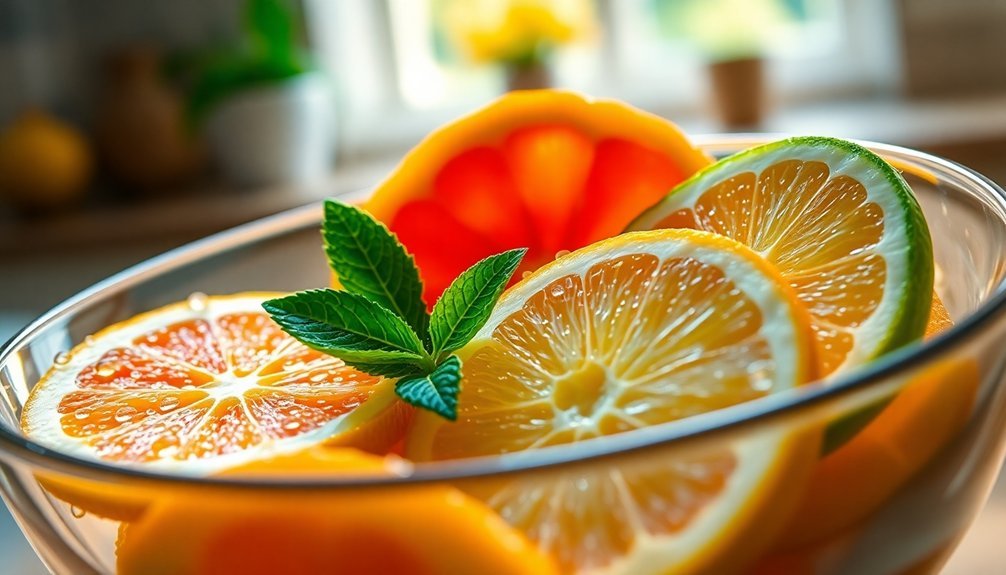
When crafting citrus oil blends, the delicate balance between sweet and tart notes determines the blend's overall impact. You'll find sweet oils like orange, tangerine, and mandarin create warm, cheerful aromas, while tart oils like grapefruit, lime, and lemon deliver invigorating freshness.
By combining these notes in specific ratios, you can create harmonious scents that aren't one-dimensional.
- Blend 5 parts sweet orange with 4 parts bergamot mint for a balanced signature scent
- Add complementary aromas like mint or eucalyptus to enhance freshness
- Consider using non-phototoxic oils for skin-safe applications
You'll notice these balanced blends don't just smell amazing – they can boost your mood, enhance mental clarity, and promote relaxation.
The key is ensuring no single note overpowers the others, creating a fresh, complex aroma that uplifts your senses.
Enhancing Citrus Blends With Complementary Oils
To elevate your citrus oil blends beyond their basic zesty profiles, you'll want to explore complementary oils that add depth and complexity.
You can start by blending different citrus oils together, like sweet orange, lemon, and grapefruit, to create an energizing base.
Then, experiment with floral oils such as lavender or geranium to add a soft, soothing touch that balances the bright citrus notes.
For an invigorating twist, try adding minty oils like peppermint or spearmint, which create a cool, revitalizing sensation.
If you're seeking warmth and grounding, incorporate spicy oils like cinnamon or woody notes from cedarwood.
These complementary oils don't just enhance the aroma – they also bring additional therapeutic benefits to your blends.
Storage Tips for Lasting Freshness
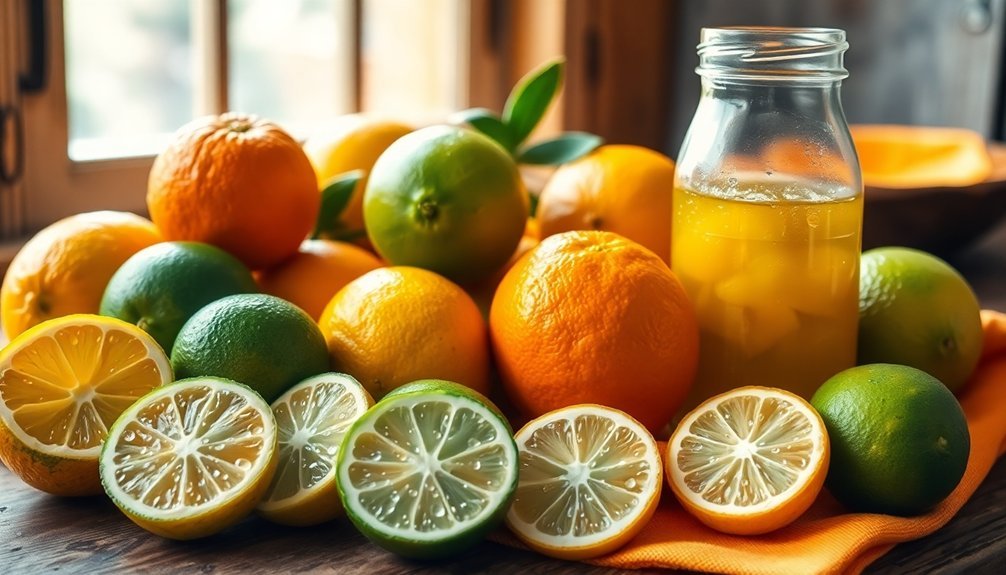
Proper storage techniques can greatly extend the life and potency of your citrus oil blends. Since citrus oils typically last only 1-2 years, you'll want to take extra care to preserve their fresh, vibrant qualities.
Store your blends in dark amber or cobalt glass bottles at temperatures between 5-30°C, and keep them away from direct sunlight and humid areas.
To maintain your citrus oil blends' freshness:
- Always secure bottle caps tightly after each use to minimize air exposure
- Pour drops directly into your hands instead of touching the dropper to skin
- Keep a log of purchase dates and regularly check for changes in aroma or appearance
Common Mistakes When Blending Citrus Oils
Many aromatherapy enthusiasts make critical mistakes when creating citrus oil blends, potentially compromising both safety and effectiveness.
You'll want to avoid measuring oils by drops, as this can lead to inconsistent results and potential skin reactions. Instead, use weight measurements for precise blending.
Don't substitute one citrus oil for another without research, as each has unique chemical properties and safety guidelines.
Remember that citrus oils are phototoxic, so you'll need to follow proper dilution rates and avoid sun exposure after application.
Additionally, you're compromising your blend's quality if you skip the 24-48 hour rest period needed for the oils to properly synergize.
Watch your ratios carefully – stronger citrus oils should be used in smaller amounts to create a balanced blend that won't overwhelm your senses.
Seasonal Blending Strategies for Citrus Oils
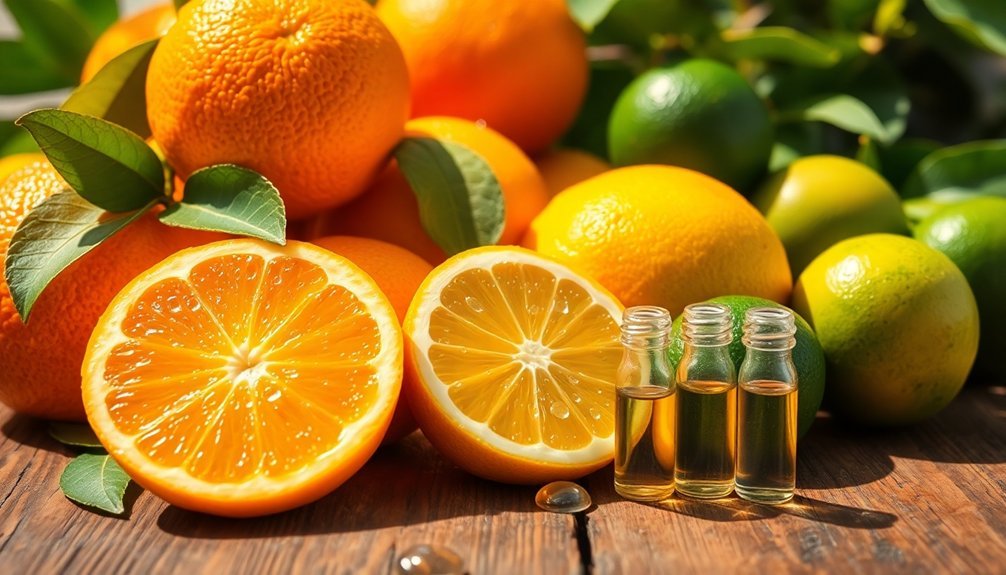
When creating citrus oil blends throughout the year, you'll need to adjust your formulations to complement each season's unique characteristics.
During summer months, you'll want to focus on invigorating combinations that incorporate mint and herbal notes for a cooling effect. You can achieve this by blending multiple citrus oils with complementary elements.
For best results, consider these seasonal blending strategies:
- Combine sweet orange and bergamot with ylang-ylang for a tropical summer blend
- Mix lemon and lime with peppermint for a cooling refresher
- Balance tart citrus oils with sweeter ones for well-rounded aromas
Remember to store your seasonal blends in dark glass bottles away from sunlight and heat.
You'll extend their shelf life by using carrier oils like jojoba or sweet almond oil, which help prevent oxidation and maintain the blend's potency.
Frequently Asked Questions
Can Citrus Essential Oils Stain Fabrics or Surfaces?
Yes, you'll find that citrus essential oils can definitely stain your fabrics and surfaces. They contain natural dyes and acidic compounds that'll leave marks, especially on light-colored materials if you don't dilute them properly.
How Long Does the Fresh Scent of Citrus Oil Blends Last?
You'll notice citrus oil blend scents typically last 4-6 hours when diffused, though they can remain fresh for several days in cleaning solutions and up to 2 years when properly stored in dark bottles.
Are Citrus Essential Oils Safe to Use Around Pets?
No, you shouldn't use citrus essential oils around pets. They're toxic and can cause serious health issues including respiratory problems, digestive issues, and organ damage. Keep your pets safe by avoiding these oils entirely.
Can Citrus Oils Cause Photosensitivity When Applied to Skin?
Yes, some citrus oils can make your skin sensitive to sunlight, especially cold-pressed varieties. You'll need to avoid sun exposure or use steam-distilled versions to prevent potential burns and skin reactions.
Do Citrus Essential Oils Lose Potency if Exposed to High Temperatures?
Yes, your citrus essential oils can lose potency when exposed to high temperatures above 100°F (38°C). They're especially vulnerable if they're cold-pressed, and heat exposure can alter their therapeutic properties and fragrance.
In Summary
You'll find that citrus oil blends offer an unmatched fresh scent because of their unique combination of natural compounds like limonene and citral. When you're creating your own blends, remember to balance sweet and tart notes while properly storing your oils away from light and heat. With the right mixing techniques and complementary oils, you'll enjoy vibrant, uplifting citrus fragrances that bring nature's freshness into your space.
References
- http://www.soap-making-resource.com/summer-citrus-essential-oil-blends.html
- https://www.mdpi.com/2079-6412/13/8/1420
- https://gyalabs.com/blogs/essential-oils/citrus-essential-oil-blends
- https://www.cag.edu.tr/uploads/site/lecturer-files/387-2-english-vocabulary-in-use-pre-intermediate-and-intermediate-redman-2017-4th-264p-sayfalar-silindi-3br9.pdf
- https://www.perfumerflavorist.com/flavor/regulatory-research/article/22921669/iff-essential-oils-and-citrus-blends-maintaining-quality-amidst-rising-costs-and-adulteration
- https://www.frontiersin.org/journals/psychology/articles/10.3389/fpsyg.2016.00074/full
- https://www.alphaaromatics.com/blog/citrus-perfumes/
- https://www.escentric.com/blogs/news/the-psychology-of-scent
- https://www.technologynetworks.com/tn/videos/how-do-citrus-fruits-create-such-a-strong-smell-321489
- https://www.apa.org/monitor/2011/02/scents